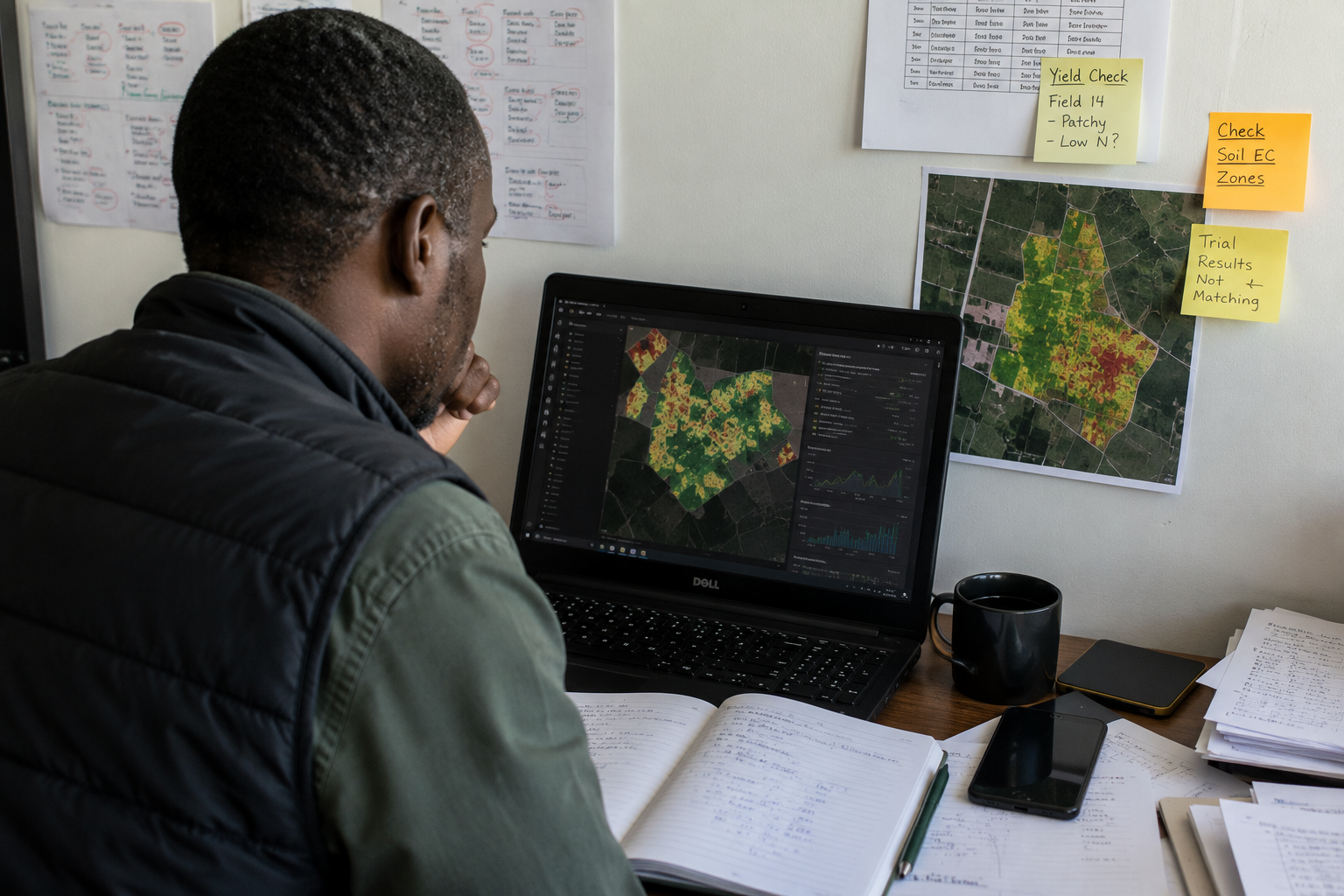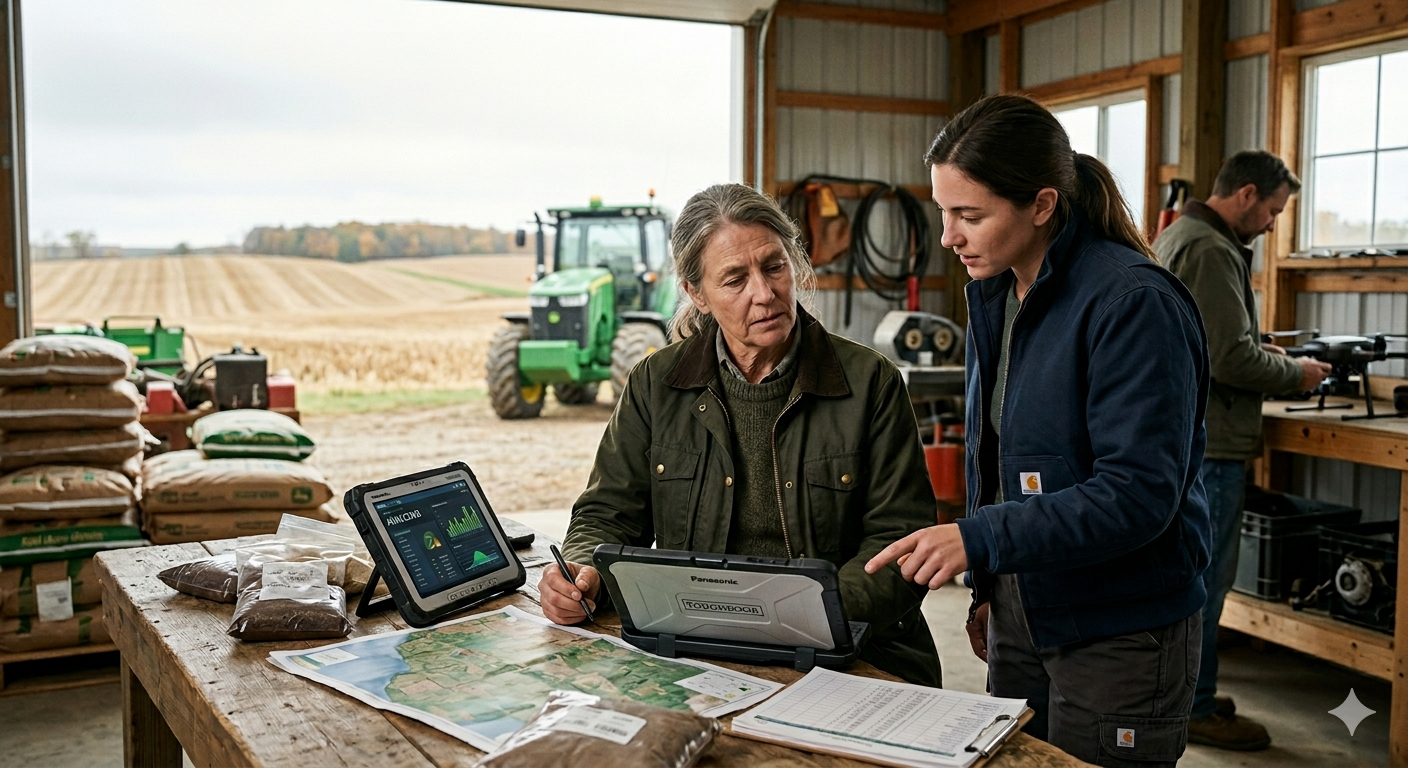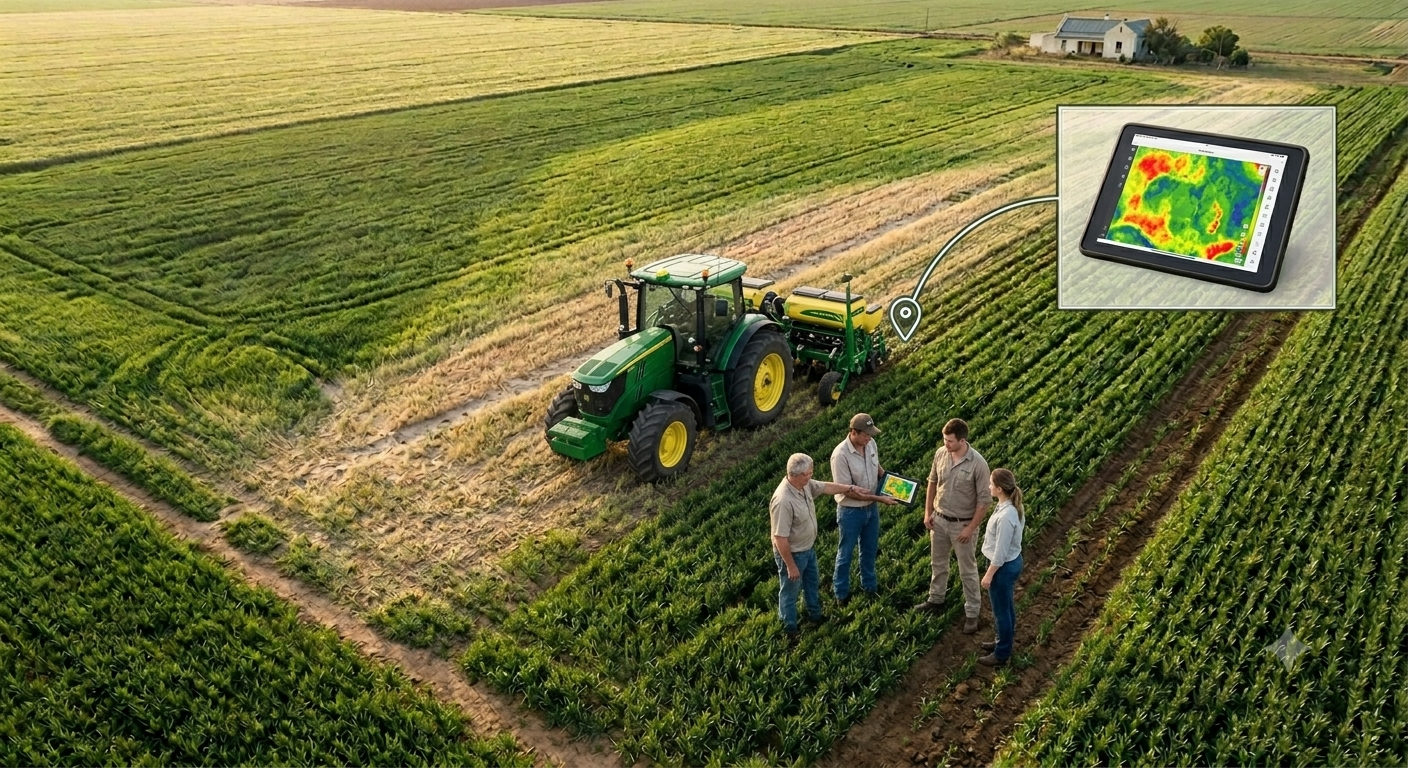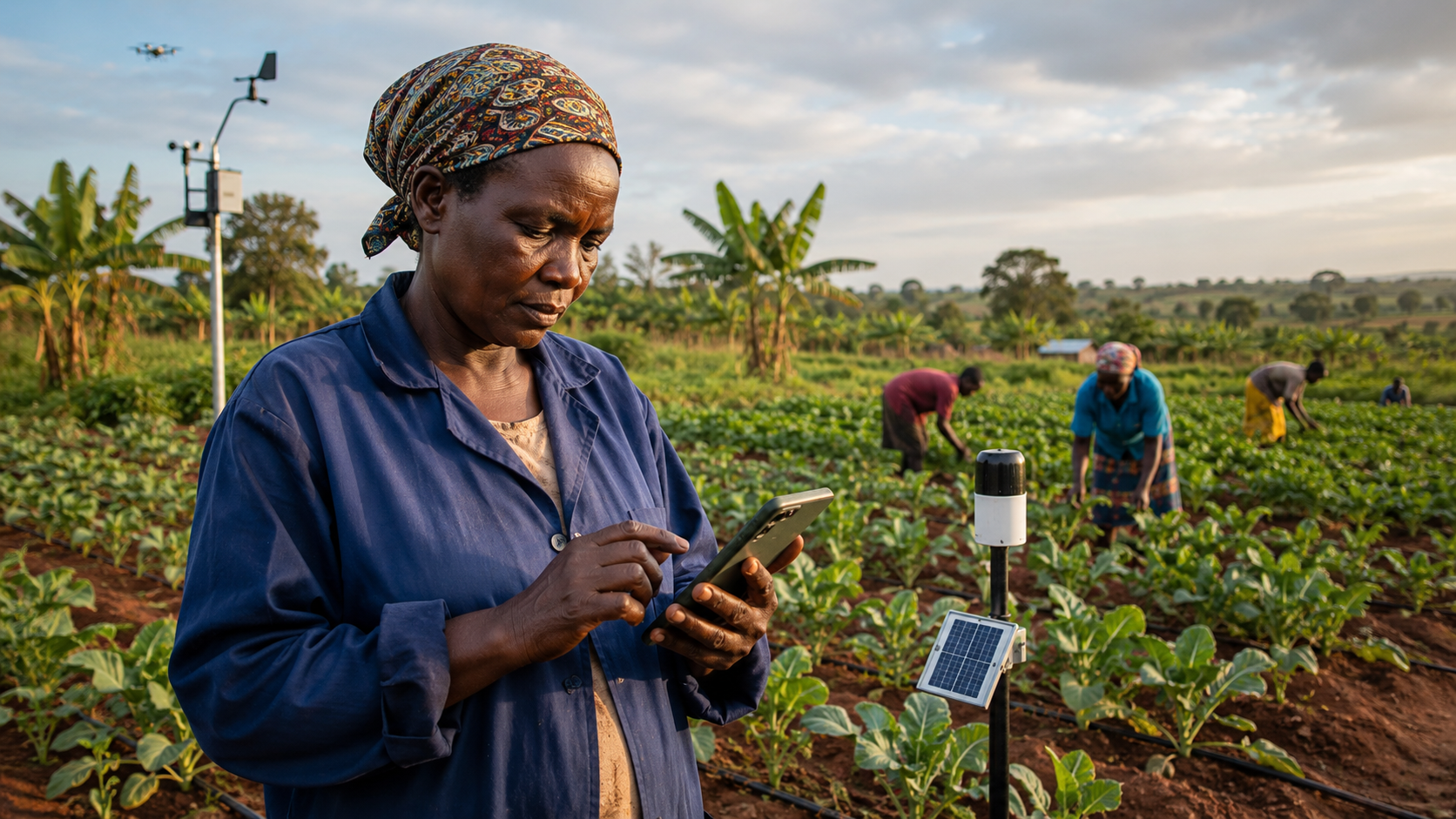
Ask a farmer what stands between them and a better harvest, and the answers come quickly. Rain that arrives late or not at all. Seed and fertilizer that cost more each season. Pests that appear overnight. All of it is real. But behind those answers sits something quieter and harder to name. Most small farmers make their biggest decisions half blind, without a reliable read on the soil beneath them, the weather ahead, or the price waiting at the market. The missing input on many farms is not a thing you can buy in a sack. It is information.
That gap matters more than it first appears, because of who does the farming. Around the world, the smallest farms carry a share of the work far out of proportion to their size.
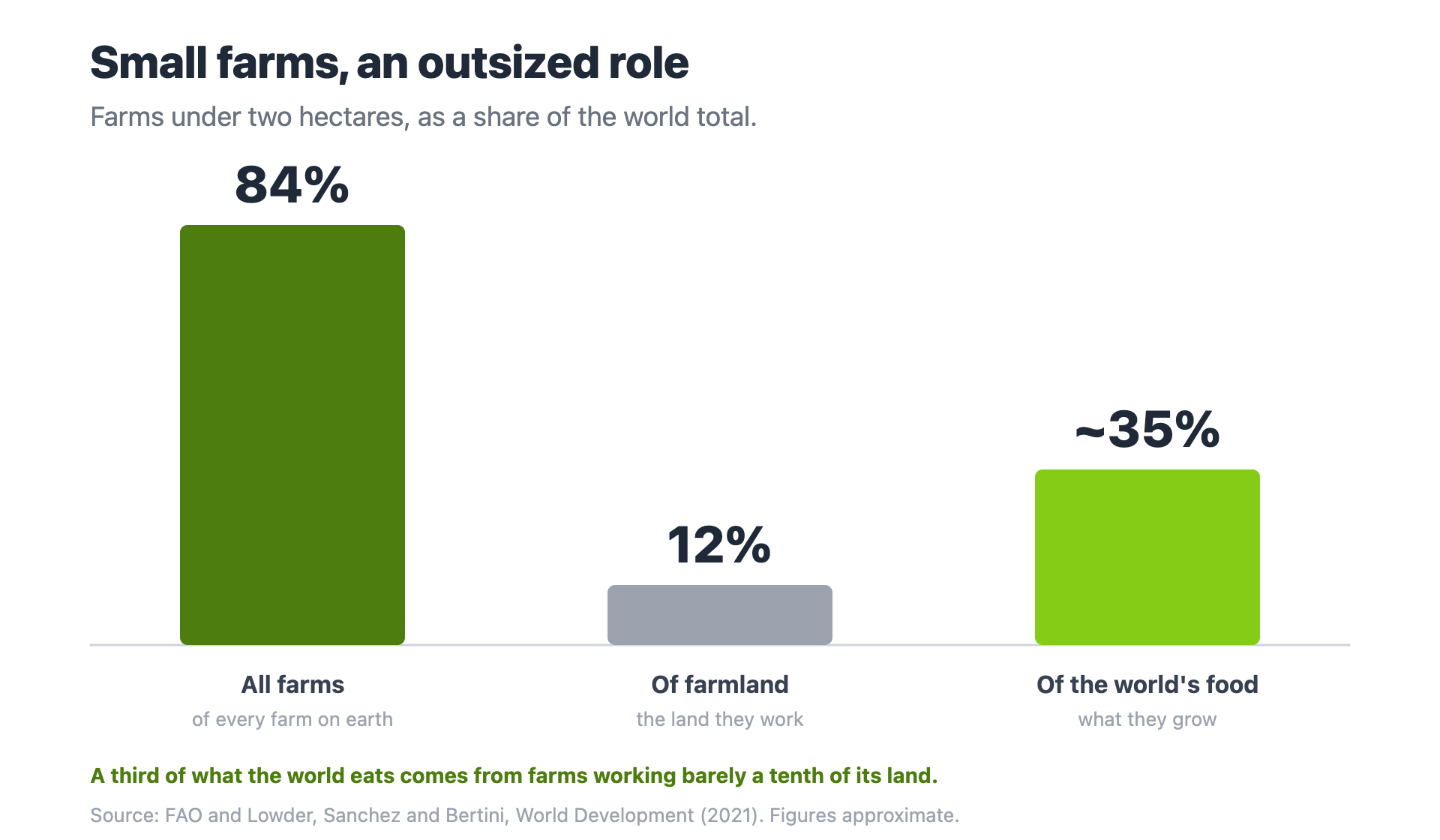
Farms under two hectares make up the great majority of all farms on earth, work only a slim portion of its land, and still grow roughly a third of the food we eat. These are the households least served by data and advice, yet they are feeding a large part of the planet. Close the information gap for them, and the effect is not marginal. It is enormous.
This is really what precision farming means, once you strip away the picture of gleaming machines. At its heart it is not hardware. It is a steady flow of trustworthy information reaching the person holding the hoe: the soil is drying three days before the crop shows stress, this stretch of field needs less fertilizer than that one, and the rain will hold off long enough to dry the harvest. Each signal turns a guess into a decision. Multiply one good decision across watering, feeding, spraying, and timing, and the distance between a season that pays and one that does not becomes plain.
So why, if the case is this clear, do so few small farmers take it up? The honest answer is that most tools arrive as finished products when farming is a living, cautious practice. A farmer who has carried a household through a dozen uncertain seasons using a known method will not gamble that livelihood on a promising gadget. Evidence alone does not move them, and it should not. What moves them is trust and a way to try the new thing without risking the harvest that feeds their family. Slow adoption is not stubbornness. It is a sign that the risk has not yet been taken off the farmer's shoulders.
The economics reward patience rather than spectacle. Margins on a small farm are thin, so the prize is not one dramatic bumper year. It is consistency. A modest gain in how efficiently inputs are used, from water applied at the right moment to fertiliser matched to the plant's real need, lands straight on a slender profit line. Steadier yields let a family predict, plan and reinvest. Success on a small farm looks less like a record harvest and more like the quiet disappearance of the disastrous one.
As farms begin to generate data, a fair question follows. Who owns it? The farmer should, without argument. But ownership only means something if it buys something. Data becomes an asset when it earns a farmer better access to credit, a stronger position in the market, or advice shaped to their exact field. Left as numbers a farmer merely holds, it is worth nothing to them and often a great deal to everyone else.
There is a real danger worth naming. Left purely to the market, precision tools reach the well-resourced first, and the gap between large commercial operations and small households widens. The same technology, designed with fairness in mind, can do the opposite. Shared infrastructure, cooperative ownership, and subsidized entry open the door to those without land title or spare capital, among them the women and young people who so often farm through groups rather than as landholders. Whether these tools narrow inequality or deepen it is a choice, not a foregone conclusion.
The stubborn barrier to reaching everyone is not the software. It is the ground it runs on. Connectivity, reliable power, and someone nearby who can fix a broken sensor or answer a hard question. Pilots shine under careful conditions and then stall at a national scale for want of that everyday support. The way through is to treat infrastructure as something improving rather than fixed and to build the partnerships between telecoms, local government, and private firms that carry a good idea past the pilot.
The stubborn barrier to reaching everyone is not the software. It is the ground it runs on. Connectivity, reliable power, and someone nearby who can fix a broken sensor or answer a hard question. Pilots shine under careful conditions and then stall at a national scale for want of that everyday support. The way through is to treat infrastructure as something improving rather than fixed and to build the partnerships between telecoms, local government, and private firms that carry a good idea past the pilot.
None of this replaces the farmer. Automation and data sharpen judgement; they do not stand in for it. The best harvests will keep coming from experience meeting good information; a grower who reads their own land joined to tools that help them read it sooner. Farmers can already start with the ordinary decisions the season turns on, from knowing what their land is suited to grow to reading the weather before it arrives. The technology is catching up to the farmer. What it has to earn, one steady season at a time, is trust.