Every farmer knows the corner that lets the field down. The hollow that drowns in a wet year. The sandy strip that burns first in a dry one. The patch along the old fence line that outyields everything else no matter what the season does.
Then the planter arrives, and all of it gets treated the same. One seed rate. One fertilizer rate. One pass, calibrated to the average of a field that is not average anywhere.
This is worth pausing on, because uniform treatment is not some law of farming. It is a compromise that arrived with machinery. When fields were small enough to know on foot, farmers worked them unevenly on purpose. More manure here, an earlier sowing there, that corner left fallow because it never paid. Mechanization brought scale, and scale demanded simplicity. The average became the rule, and the knowledge of the field's many personalities quietly fell out of the system.
The cost of that compromise hides in plain sight. Fertilizer spread at one rate overfeeds the poor ground, where the crop cannot use it, and underfeeds the strong ground, where it would have paid for itself twice. The overfed patches leak nutrients into waterways. The underfed ones leave yield standing in the field as a number nobody sees. Multiply that by every pass, every season, and the average is one of the most expensive habits a farm carries.
Variable rate technology exists to end the compromise. Strip away the acronyms and it does one thing: it lets the machine treat each part of the field as the distinct place it has always been.
It does this in two ways, and the difference between them is easiest to think of as memory versus reflexes.
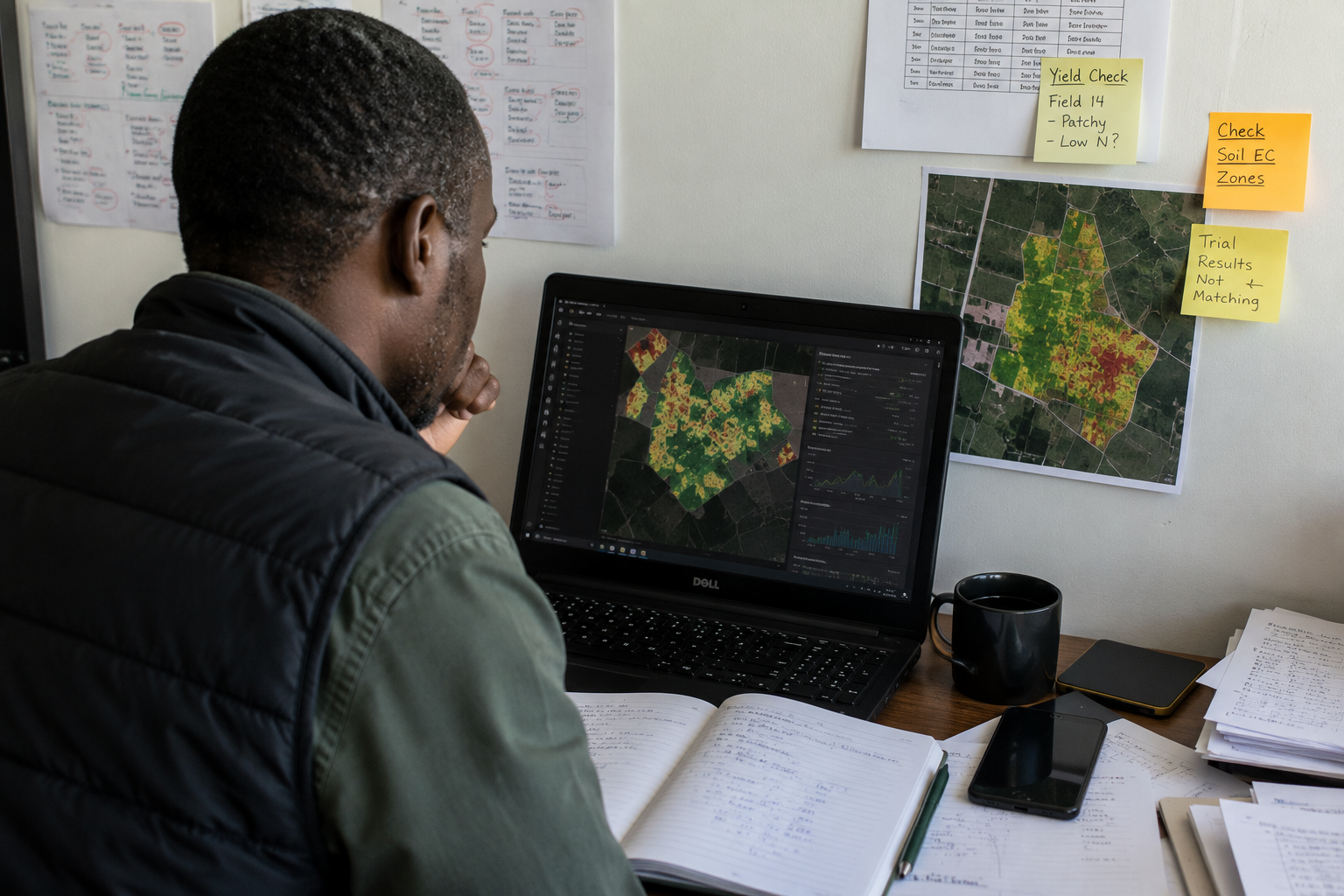
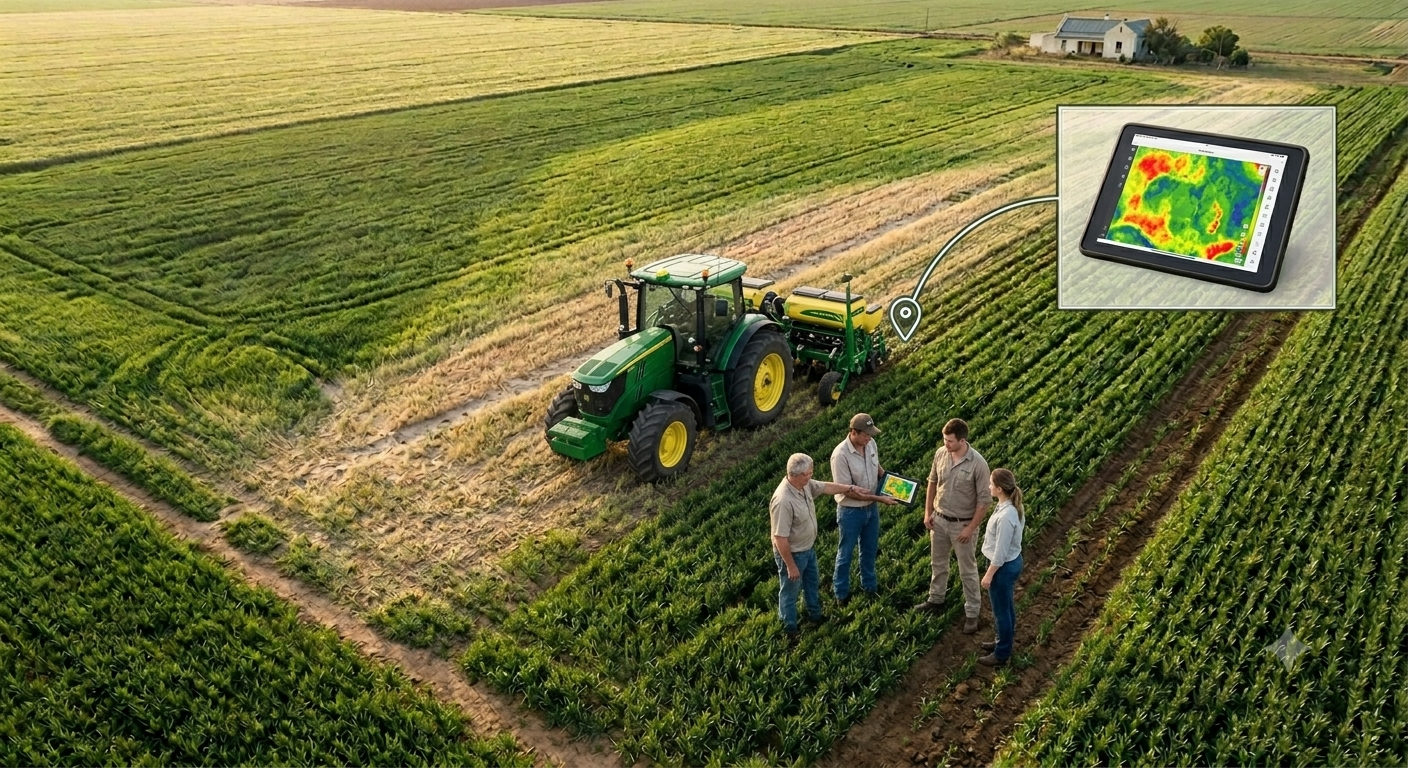
The memory approach works from a prescription map built ahead of time. Years of yield records, soil sampling, and elevation data get combined into a picture of how the field actually behaves, zone by zone. The equipment then follows that picture, raising and lowering rates as it crosses each boundary. The intelligence lives in the preparation. The machine simply carries out what the data already knows.
The reflex approach skips the archive and reads the field live. Sensors on the equipment or in the ground measure moisture, nutrient status, and how the crop itself is looking, then adjust the application on the spot. Nothing is decided in advance. The field speaks and the machine answers, metre by metre.
Neither is the winner. Memory is stronger where a field's patterns repeat year after year. Reflexes are stronger where conditions swing inside a single season. The farms getting the most from this technology tend to use the map as the plan and the sensor as the correction.
The economics explain why adoption keeps climbing. Input prices have made every wasted kilo of fertilizer a visible loss, and industry forecasts expect spending on this technology to more than triple over the coming decade, led by the large grain operations where small per-hectare savings multiply across serious area. But the direction of travel matters more than the market figures. The cost of the tools keeps falling, and what once required a flagship tractor increasingly runs on retrofitted equipment and a phone.
One honest caveat belongs in any serious discussion of this. The technology is only as good as the variability it has to work with, and the data describing it. A genuinely uniform field gains little. A variable field with no soil tests and no records gains nothing at all, because the machine has no knowledge to act on. The unglamorous first step is not buying hardware. It is measuring the field, which is also the step a smallholder can take with nothing more than a soil test and a notebook. The principle of variable treatment does not require a machine. Farmers applied it by hand for centuries. The machine just lets it survive at scale.
That is the right way to see this technology. Not as something new arriving in agriculture, but as something old returning to it. The field was never one place. For a few mechanized decades, farming had to pretend otherwise. It no longer does.