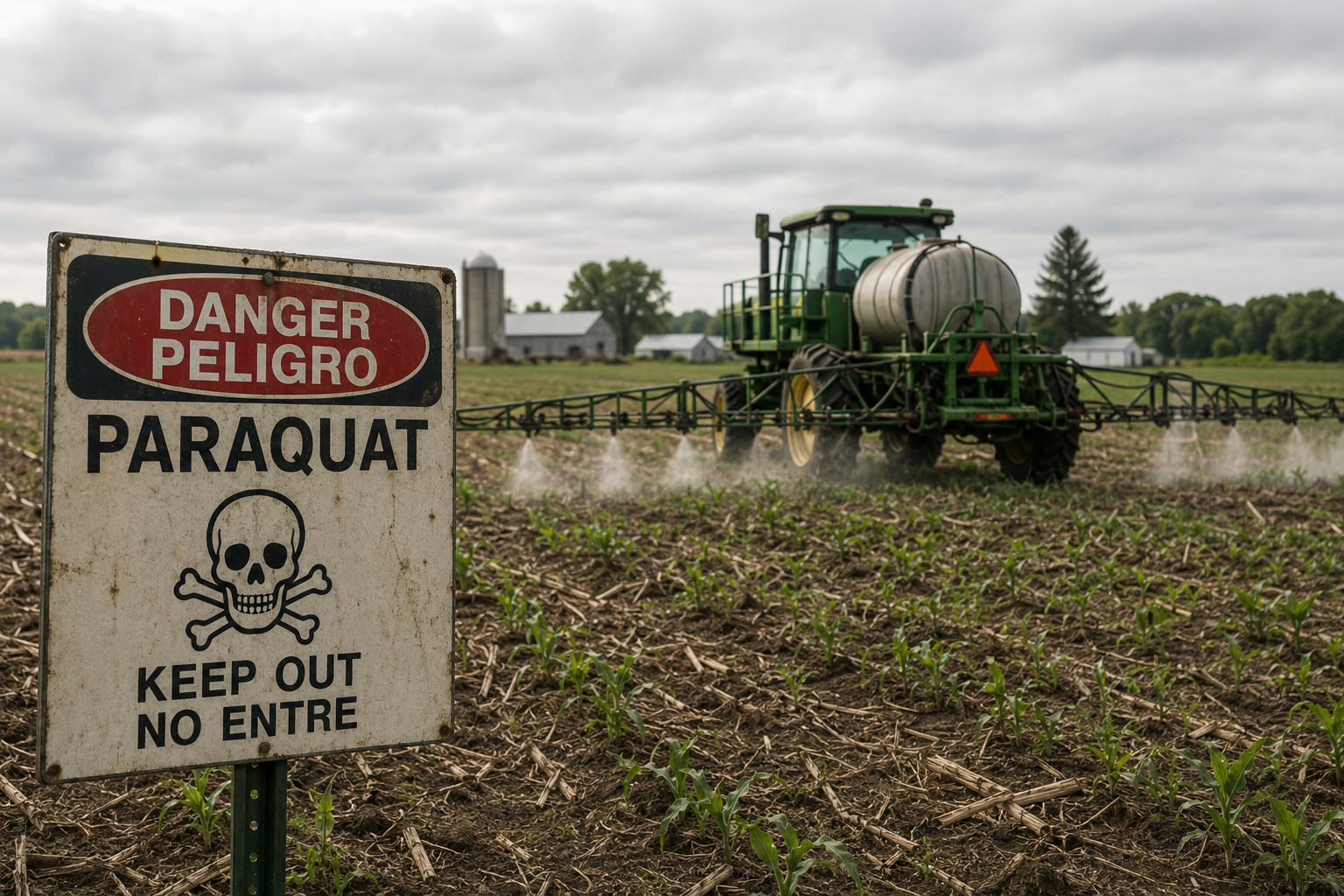
For more than sixty years, a weedkiller called paraquat has been a fixture on farms around the world. It clears broadleaf weeds and grasses quickly and cheaply, which is why it became one of the most widely used herbicides anywhere, sprayed on crops from soybeans and corn to grapes, peanuts, and cotton. Most people who eat the food it helps produce have never heard of it. That quiet anonymity may be coming to an end.
In a first for the United States, the state of Vermont has banned paraquat, with lawmakers pointing directly to research linking the chemical to Parkinson's disease, the incurable and progressive brain condition that slowly robs people of their ability to move and speak. The decision is small in geographic terms but large in what it signals, and it lands at a moment when pressure for a wider ban is building fast.
What Vermont actually did
Vermont's governor, Phil Scott, signed the legislation into law, with the ban set to take effect on the first of November. It is not absolute. The law carves out special permits for certain fruit and berry crops, allowing limited use on orchards and small-fruit growers through the end of 2030. It also requires yearly reporting on any paraquat use in the state and funds a study to help farmers find safer alternatives.
The vote did not come without friction. Some lawmakers worried that banning the chemical would put Vermont's farmers at a disadvantage while growers in other states kept spraying it freely. Others argued the science still needed more time to settle. But the prevailing view was blunt. The risk of keeping paraquat on the market outweighed the risk of pulling it. When the possible harm is a disease with no cure, caution wins the argument.
The science behind the fear
The debate over paraquat has been heated for years, and the stakes explain why. Earlier versions of the Vermont bill cited multiple studies showing that exposure substantially raises the risk of developing Parkinson's. Other research has tied the chemical to non-Hodgkin lymphoma and childhood leukemia. Scientists have found that paraquat damages the dopamine-producing neurons in the brain whose loss drives Parkinson's in the first place.
Paraquat is already known to be acutely dangerous. Swallowing even a small amount can be fatal, which is why regulators have long restricted how it is handled. The fiercer fight has been over the slower, quieter harm, the question of whether long-term exposure helps trigger a degenerative disease that may take years to appear.
The manufacturer's long shadow
For decades, the chemical's primary maker was Syngenta, which has consistently maintained that there is no credible evidence connecting its product to Parkinson's. Yet the company now faces more than 8,000 lawsuits in US courts over exactly that allegation. It has quietly settled a number of cases without admitting liability and has been working to resolve the bulk of the remaining claims.
Internal corporate records stretching back decades, brought to light by investigative reporting, paint an uncomfortable picture. They show the company and its predecessors grappling privately with concerns about paraquat's links to Parkinson's and other health problems, while publicly working to downplay research, discredit independent scientists, and shape regulatory decisions in ways that protected sales.
In April, Syngenta announced it would stop making paraquat and would no longer sell its paraquat products in the US or other markets. That sounds like a clean break, but it is not. Generic versions of the chemical remain widely available from other suppliers, which means a single company stepping back does not remove paraquat from the world's fields.
A chemical already unwelcome in much of the world
What makes Vermont's move notable is how late it arrives by global standards. Paraquat has already been banned in dozens of countries, including across much of Europe and in places that once relied on it heavily. In many of those regions, regulators concluded years ago that the dangers, both the immediate poisoning risk and the mounting evidence of chronic harm, were reasons enough to act.
That gap has not gone unnoticed. Neurologists who study the environmental roots of brain disease have called the US a striking outlier, arguing that a national paraquat ban is long overdue. Within the US, Vermont is now the first to act, but lawmakers in several other states have introduced similar bills, and some federal legislators have called for a country-wide ban. Advocacy groups focused on Parkinson's research are pushing hard for others to follow.
Why this matters beyond one state
The urgency comes from a broader trend. Cases of Parkinson's have more than doubled over the past 25 years, according to the World Health Organization, and they are projected to keep climbing. Longer lifespans explain part of that rise, but the steepness of the increase has pushed researchers to look harder at environmental causes, including the chemicals used to grow our food.
That is the real question underneath Vermont's decision. How much of a disease we treat as bad luck is actually something we manufactured and sprayed before fully understanding the cost? Paraquat is one product made by one company in one corner of a vast global system, but the story it tells is bigger. It is about who carries the burden of proof, who profits in the meantime, and how long the rest of the world is willing to wait.
One state has now drawn its line. The more interesting question is how many others will follow and whether the countries still spraying paraquat will eventually decide the gamble is no longer worth it.