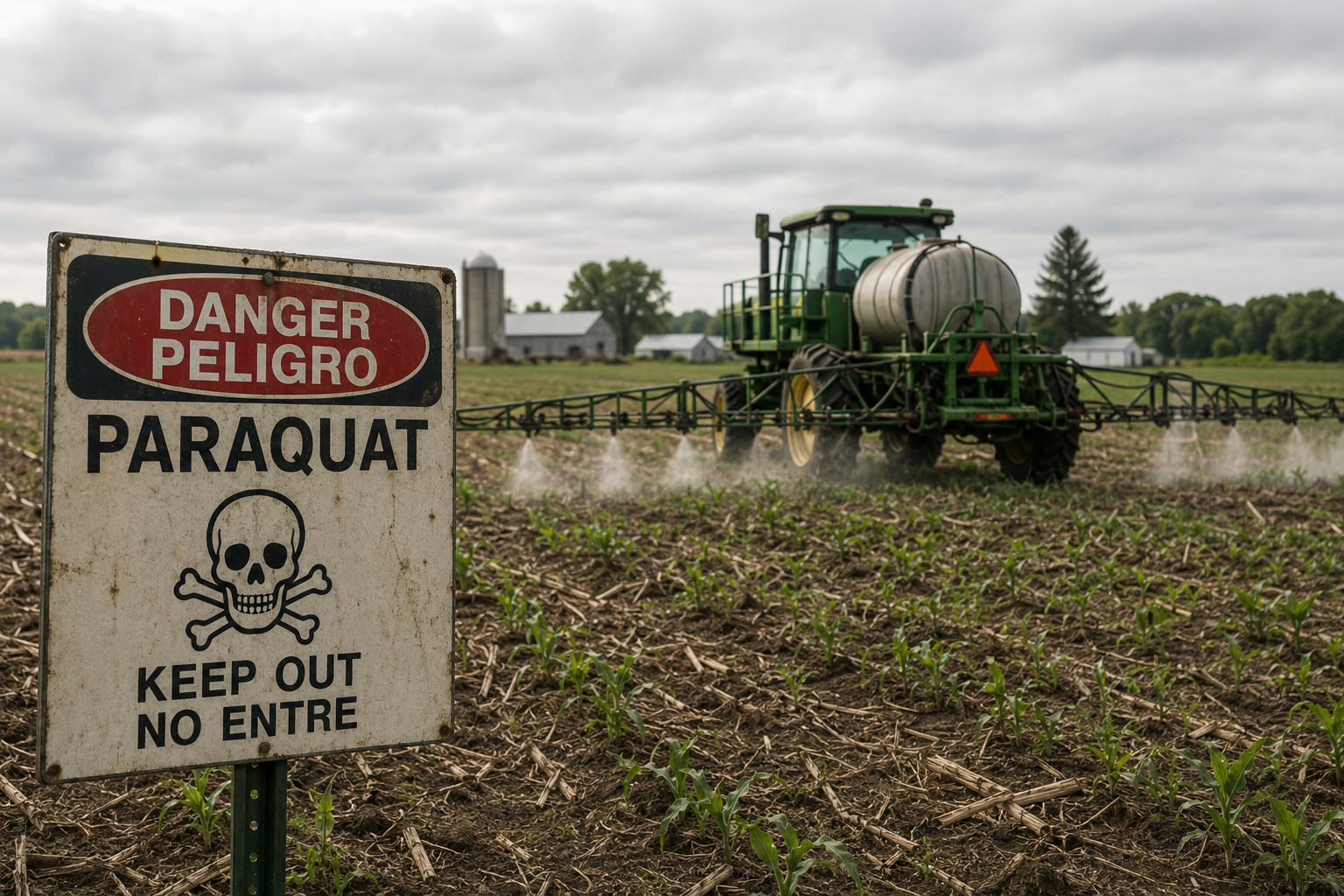
Few agricultural inputs have generated as much heat over the last decade as glyphosate. The world's most widely used herbicide has been the subject of headline-grabbing court verdicts, regulatory reviews on multiple continents, and a public debate that often runs hotter than the science. After international health researchers classified it as "probably carcinogenic" in 2015, tens of thousands of lawsuits followed, and billions of dollars have changed hands in settlements.
Most major regulators around the world have reached a different conclusion, finding that glyphosate is unlikely to cause cancer when used as directed. But juries are not regulators, and the courtroom has become a parallel arena for shaping how, and whether, farmers will keep using it. Some manufacturers have already reformulated consumer versions of glyphosate-based products to limit further legal exposure.
That tension matters far beyond the courtroom. Glyphosate is not harmless, and farmers cannot lean on a single chemistry forever. But it is also one of the cheapest, most effective, and by several measures lowest-impact herbicides available today. Pulling it off the shelves before better tools are ready would not make agriculture safer or greener. It would almost certainly mean more plowing and more reliance on harsher chemicals.
The smarter path is to build something better.
Why a Sudden Exit Would Be a Step Backward
Glyphosate became dominant for two reasons. It is inexpensive, and it pairs neatly with herbicide-tolerant genetically modified crops, allowing farmers to spray weeds without killing the crop itself. Today, growers of staple commodities like corn, soybeans, cotton, and wheat use it before planting, after harvest, and during the growing season.
Despite its scale of use, glyphosate has a relatively low impact on wildlife compared with many of the herbicides farmers might turn to in its absence. Standardized environmental impact metrics consistently rank it as less toxic to birds, fish, pollinators, and earthworms than most alternatives used on the same crops. Some of the chemicals that have filled the gap where glyphosate-resistant weeds have spread are significantly more harmful, particularly to mammals and pollinators.
Just as important, glyphosate enabled a quiet revolution in how soil is managed. Because it allows weed control without mechanical tillage, it helped scale the rise of no-till and reduced-till farming. Less plowing means less soil erosion, less fertilizer runoff into rivers, lower fuel use, less dust, and less disruption to soil microbes and ground-nesting wildlife. Cropland erosion rates in major agricultural economies have fallen sharply over recent decades, with conservation tillage and glyphosate-based weed management widely credited as drivers.
Strip glyphosate out of that system abruptly, and the consequences cascade. Farmers spray more toxic chemistries. They plow more often. Costs climb, yields wobble, and some of the environmental gains of the past forty years quietly unravel.
The Real Concerns Are Worth Taking Seriously
None of this is an argument that glyphosate is benign. It is a broad-spectrum herbicide designed to kill a wide range of plants, and that includes vegetation pollinators and other wildlife depend on. Studies have linked the spread of herbicide-tolerant cropping systems to declines in milkweed, the host plant of monarch butterflies, with knock-on effects for the species' migration.
Certain glyphosate-based formulations also raise concerns for aquatic life, often because of the surfactants mixed in alongside the active ingredient. And widespread overuse has driven the rise of resistant weeds, forcing farmers into more complex, more expensive, and sometimes more damaging weed-control systems.
These are real problems. They are also exactly the kinds of problems that should push agriculture toward better technology, not back toward older, harsher tools.
Innovation Is Quietly Rewriting the Playbook
The most promising work in this space is not happening in courtrooms. It is happening in fields, greenhouses, and laboratories, where a wave of agricultural technology is reshaping what weed control can look like.
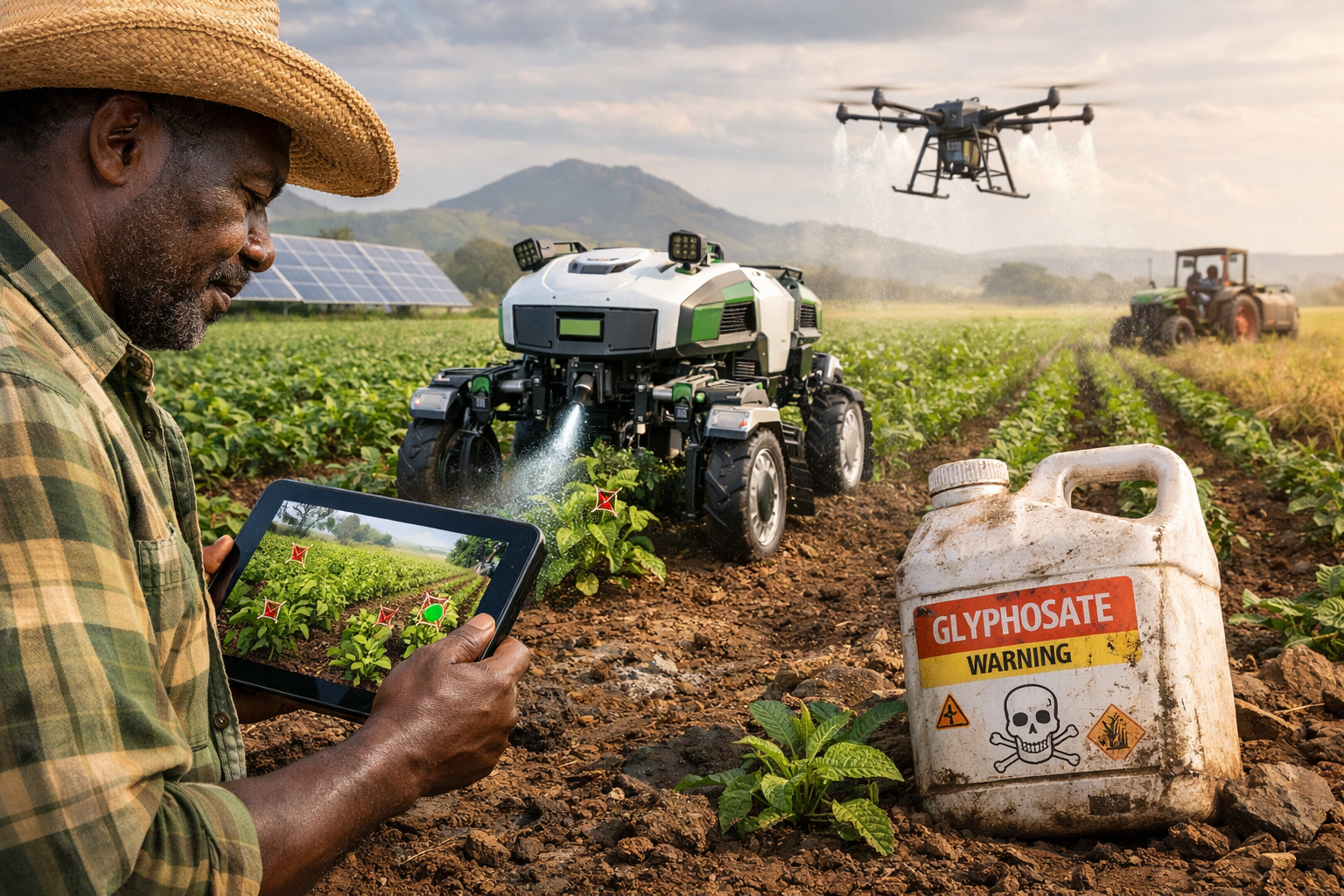
Precision application is the most immediate shift. Instead of spraying entire fields, new equipment uses computer vision, sensors, and machine learning to identify individual weeds and treat them one by one. Some commercial systems target weeds with millimeter-level accuracy and report cutting herbicide use by as much as 99 percent. The savings on chemical inputs are striking, but the bigger win is that whatever is sprayed lands almost exclusively on the weeds, not the soil, the crop, or the wider ecosystem.
Mechanical and laser weeding is moving herbicide use out of certain crops altogether. Robotic platforms now distinguish crops from weeds in real time and either pull weeds physically or vaporize them with brief, targeted laser pulses. In high-value vegetable production, these approaches are already commercially viable, and the technology is steadily working its way down to lower-margin crops as costs fall.
New chemistries are being designed to outperform glyphosate on safety as well as efficacy. Among the most interesting are molecular tools that trigger the destruction of specific proteins inside weeds and pests, rather than blocking a single biochemical pathway. The aim is greater specificity, lower environmental impact, and a path around the resistance problem that has dogged conventional herbicides for years.
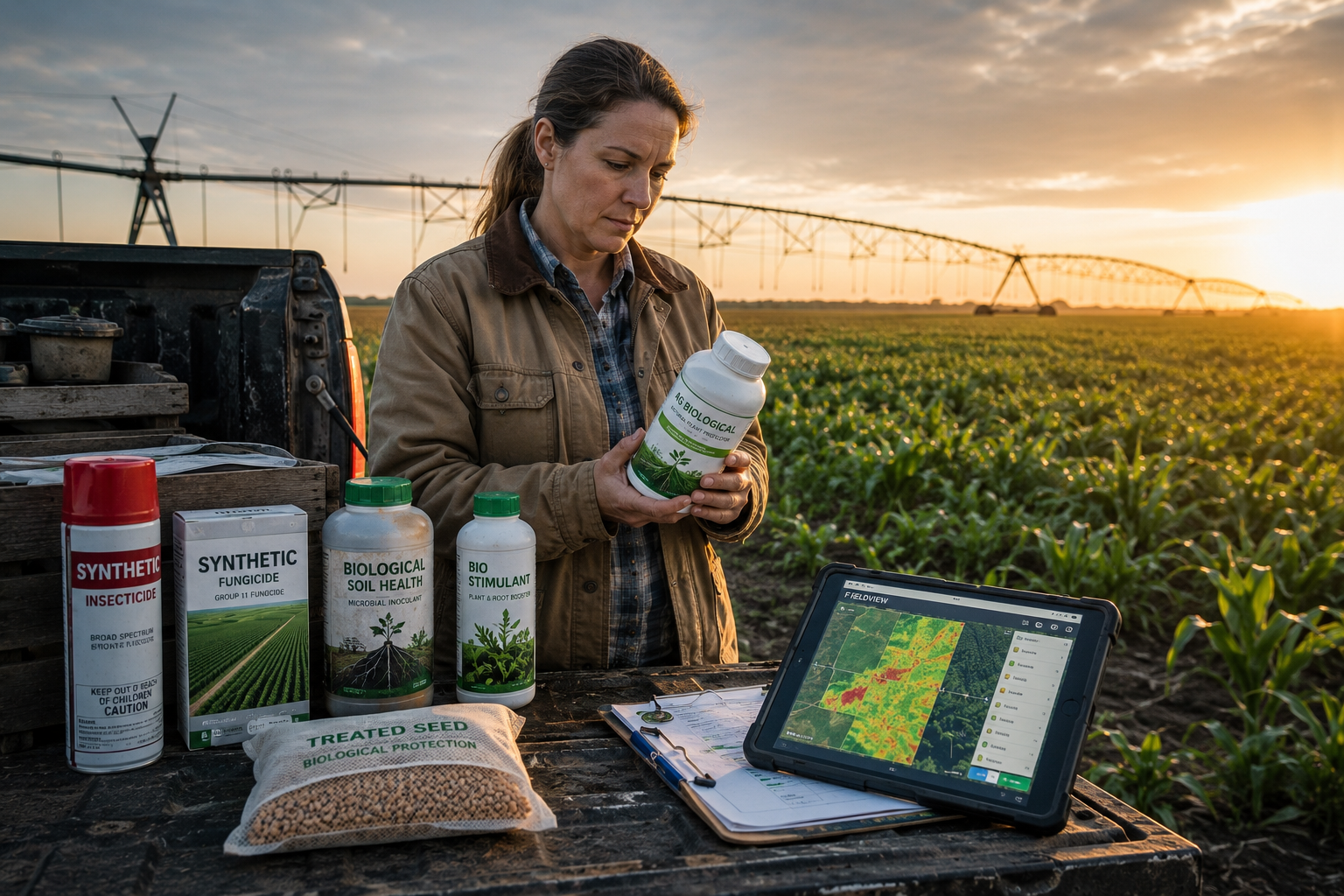
Biological products, including microbial and plant-derived alternatives, round out the portfolio, particularly in low-margin crops where robotic systems remain too expensive to deploy at scale.
None of these tools will replace glyphosate on their own, and none will do it tomorrow. But together they form a credible portfolio that could, over time, make it largely unnecessary.
What Policy Can Actually Do
If the goal is to move beyond glyphosate without making farming worse, policy has a clearer role than litigation does.
Regulators need the funding and staffing to review new pesticide products and genetically modified crops quickly and rigorously. Long approval timelines, often stretching well past official deadlines, slow down exactly the innovations that could displace older, less precise chemistries. Public research budgets, extension services, and incentives for on-farm adoption of precision equipment all matter, especially for smaller and mid-sized growers who cannot afford to be early adopters on their own.
These are unglamorous interventions. They are also the ones most likely to actually change what gets sprayed in the world's fields.
Outperform, Don't Outlaw
It is easy, and increasingly common, to treat glyphosate as a villain. The reality is more complicated. It is a tool with real costs and real benefits, used at an enormous scale because it works. Banning it through patchwork litigation, before something better is ready, would not deliver a cleaner agriculture. It would deliver a different version of the same one, often a worse one.
The future of weed control should be measured by whether it actually improves on what we have today. Fewer toxic inputs. Less soil disturbance. Lower costs for farmers. Stable yields. And less harm to the ecosystems agriculture shares space with.
The way beyond glyphosate is not to wish it away. It is to outperform it.