Ten years ago, ordering a flat white with oat milk in London or New York said something about you. It meant you cared about the planet, watched what you ate and kept up with the times. Supermarkets cleared whole shelves for almond, soy, rice and coconut drinks, and investors treated the category as a sure bet.
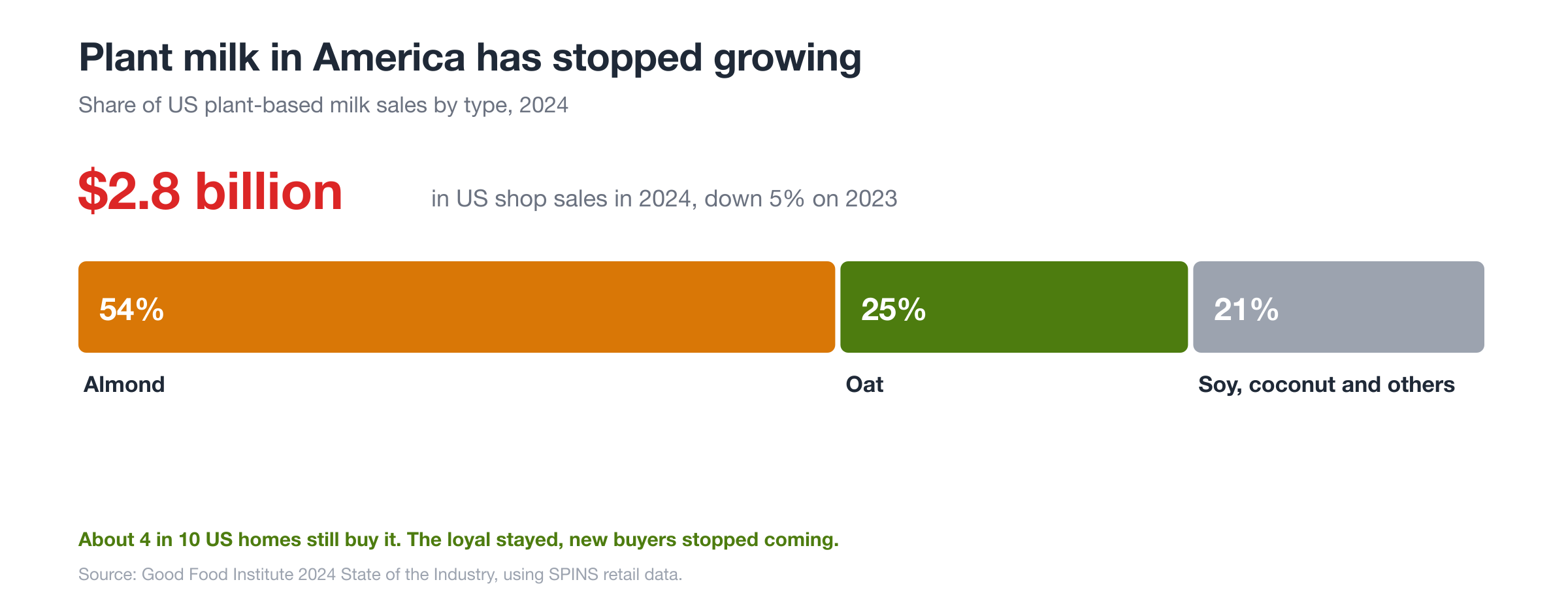
That story has lost its shine. In the United States, shop sales of plant-based milk fell 5% in 2024 to about $2.8 billion, according to the Good Food Institute, which tracks the industry. Almond, still the biggest seller, has been shrinking fastest. Around four in ten American homes still buy plant milk, but that share has stopped rising. The people who loved it kept buying. Very few new people joined them.
At the same time, dairy is quietly winning back trust. The comeback is less about a glass of milk and more about everything milk becomes.
People did not quit dairy. They changed how they eat it
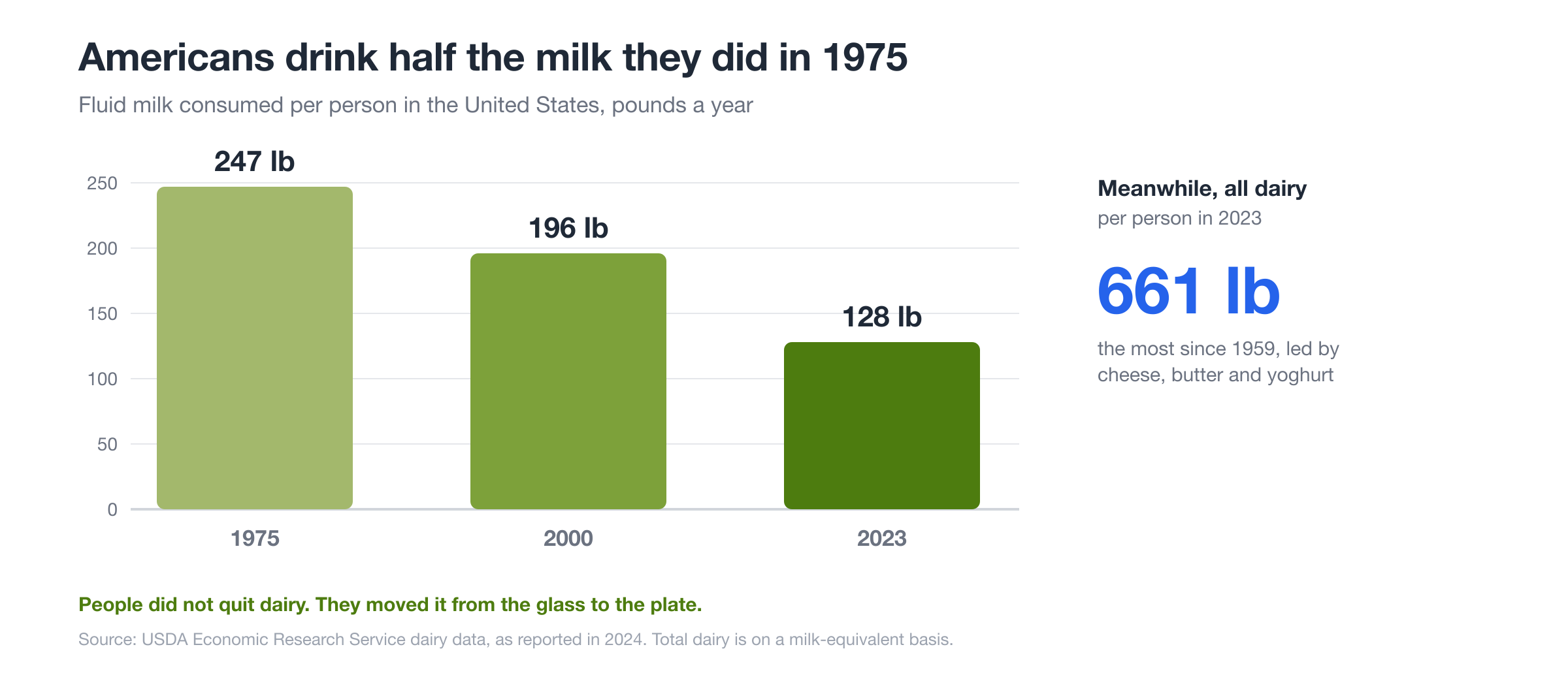
Americans really do drink far less milk than they used to. Per person, fluid milk has fallen from about 247 pounds a year in 1975 to around 128 pounds in 2023, based on USDA Economic Research Service data. But total dairy eaten per person reached about 661 pounds that year, the highest since 1959. Cheese, butter and yoghurt filled the gap.
So when people say "dairy is back," what they mostly mean is that shoppers are choosing protein-rich, less processed foods, and dairy fits that wish neatly.
Price and protein did the heavy lifting
Two things turned the tide.
The first is money. In most supermarkets, a carton of oat or almond drink costs more than the same amount of cow's milk. When food prices jumped after the pandemic, many households looked hard at their baskets and dropped the premium option.
The second is a growing habit of reading labels. Shoppers who now worry about heavily processed food have noticed that many plant drinks are mostly water, with added oils, thickeners and sugars to make them creamy. A cup of cow's milk also carries about 8 grams of protein. An oat drink usually has around 3, and almond about 1, according to typical values in USDA FoodData Central. Soy comes closest, at about 7.
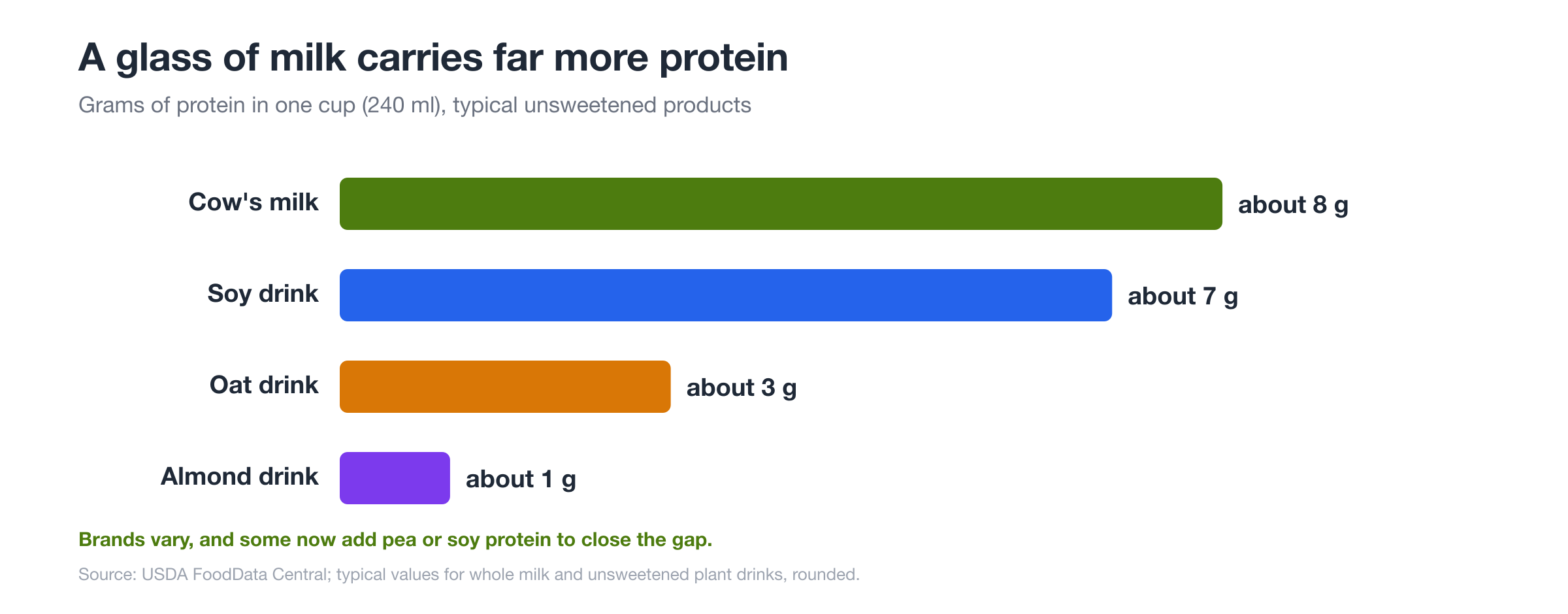
This matters because protein is the nutrition word of the moment. Gym-goers, older adults trying to keep muscle and parents packing school lunches are all chasing it. Strained yoghurts, high-protein milks and cottage cheese are among the fastest-moving lines in Western dairy aisles.
Plant milk makers are fighting back by adding pea or soy protein, vitamins and calcium, and by leaning into fun flavours rather than pretending to be milk. That may keep their loyal fans. It is unlikely to bring back the mass market they once expected.
The world is still making more milk
Globally, the cow never really left. World milk output grew 2.1% in 2025 to about 1,005 million tonnes, according to the OECD-FAO Agricultural Outlook 2026 to 2035. India is the largest producer by far and is expected to supply more than half of all new milk over the next decade. Most of that growth will come from small farms with a handful of animals, which is exactly the kind of dairy Kenya knows best.
What this means for Kenya
Kenya is one of Africa's biggest milk producers. The country made about 5.3 billion litres in 2024, and the KNBS Economic Survey recorded a near 30% rise in the farm-gate price, to about KSh 66 a litre. Output climbed again to around 5.5 billion litres in 2025, and milk bought by formal processors crossed one billion litres for the first time.
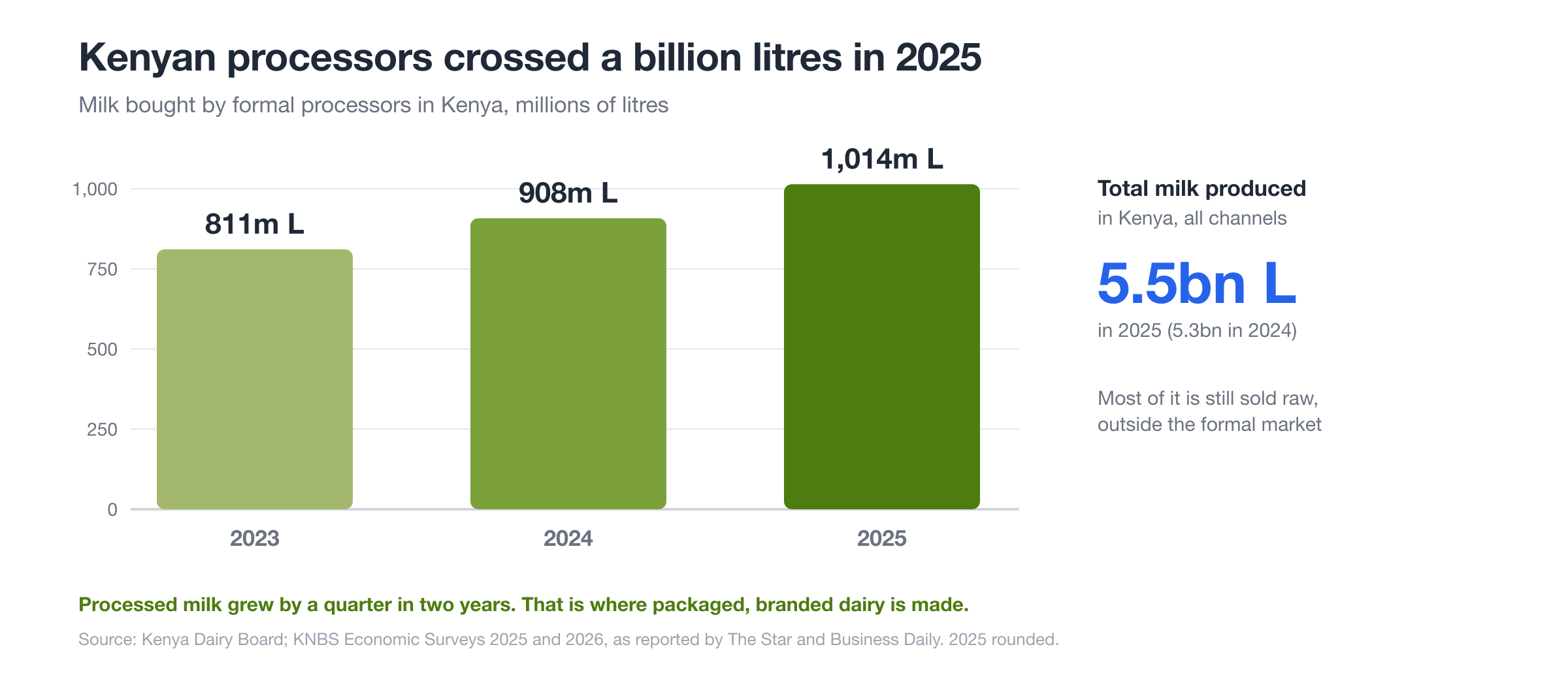
Plant milk here is still a niche product for affluent urban shoppers. A litre of almond, oat or soy drink in a Nairobi supermarket can sell for more than KSh 650, roughly ten times what a farmer is paid for a litre of milk. Even Brookside, the region's largest dairy processor, has added almond and soy drinks to its range, but for most Kenyan families cow's milk remains the everyday choice.
The global shift offers three lessons for farmers and dairy groups.
Protein sells. Yoghurt, mala and strained, high-protein products earn more per litre than raw milk, and demand for them is rising in towns. Co-operatives that invest in small-scale processing can capture that value instead of passing it on.
Quality builds trust. Shoppers abroad came back to dairy partly because it felt simple and natural. That trust holds only if milk is clean, cooled quickly and free of drug residues. Good hygiene, proper withdrawal periods after treatment and cooling within hours of milking protect both health and price.
The formal market is growing. Most Kenyan milk is still sold raw through informal traders. As processors take in more each year, farmers who can deliver steady volumes of good-quality milk are best placed to win contracts and better prices.
The bottom line
Plant milks will not disappear. They have a loyal following and serve people who cannot or choose not to drink dairy. But the idea that they would replace the cow has faded. Around the world, people want food that is affordable, filling and easy to understand, and milk ticks all three boxes.
For Kenya's dairy farmers, that is good news worth acting on. The next win lies in what happens to milk after it leaves the cow. If you want to learn practical skills in feeding, milk hygiene and value addition, explore the farmer courses on Eagmark Training.