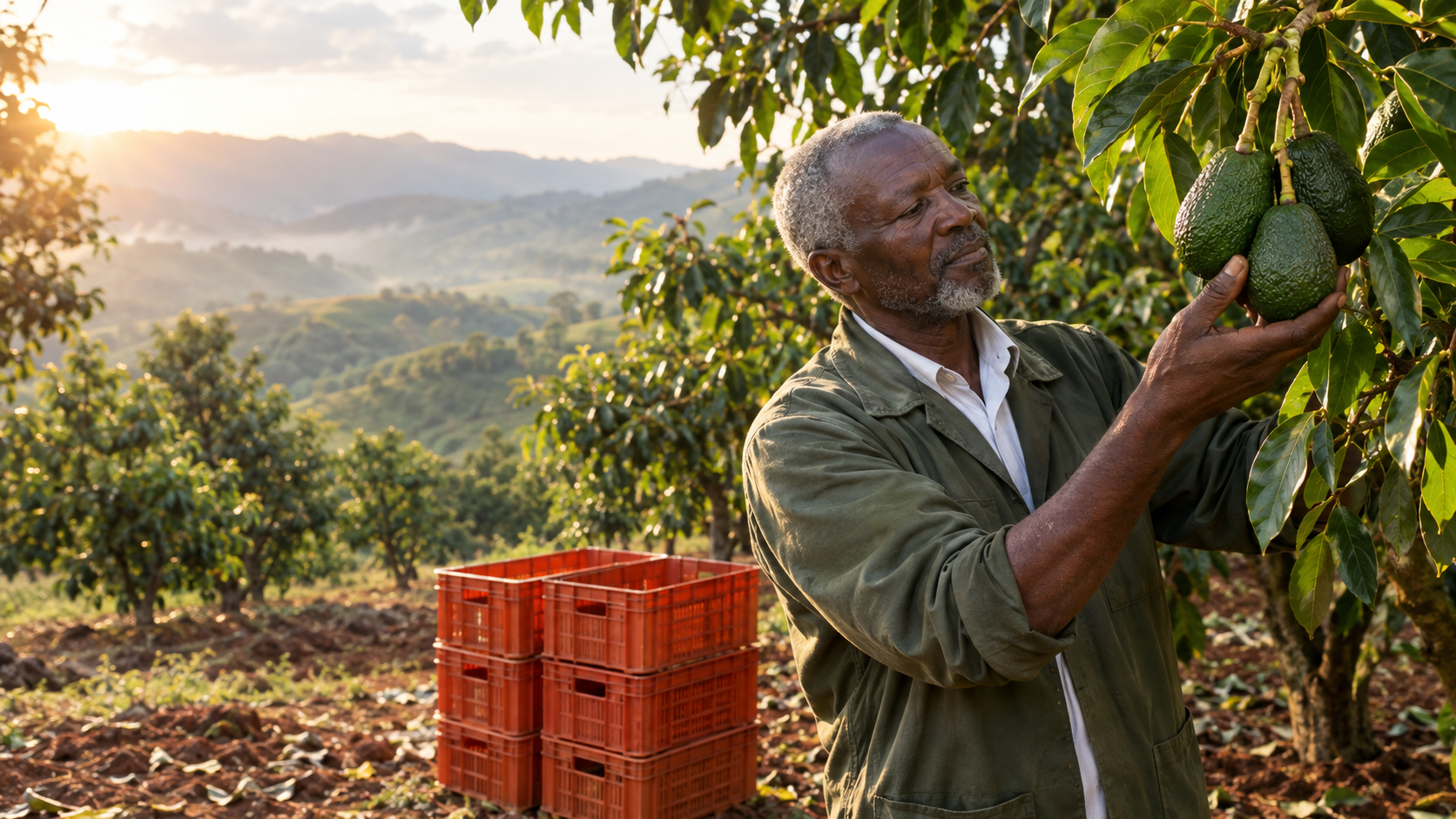
From tomorrow, 30 October, the refrigerated containers leaving Mombasa will carry no Kenyan avocados. The Agriculture and Food Authority has closed the sea export season for Hass, Fuerte, Pinkerton and Jumbo after a survey of the main growing areas found too little mature fruit on the trees to fill ships. Exporters can still fly fruit out, but every consignment must be inspected and traced back to the farm it came from.
If this feels familiar, it is. Almost exactly a year ago the same authority suspended sea shipments from 20 October 2025, and ships did not carry avocados again until 2 April 2026. An autumn pause is fast becoming part of the Kenyan avocado calendar.
A tree full of fruit that is not ready
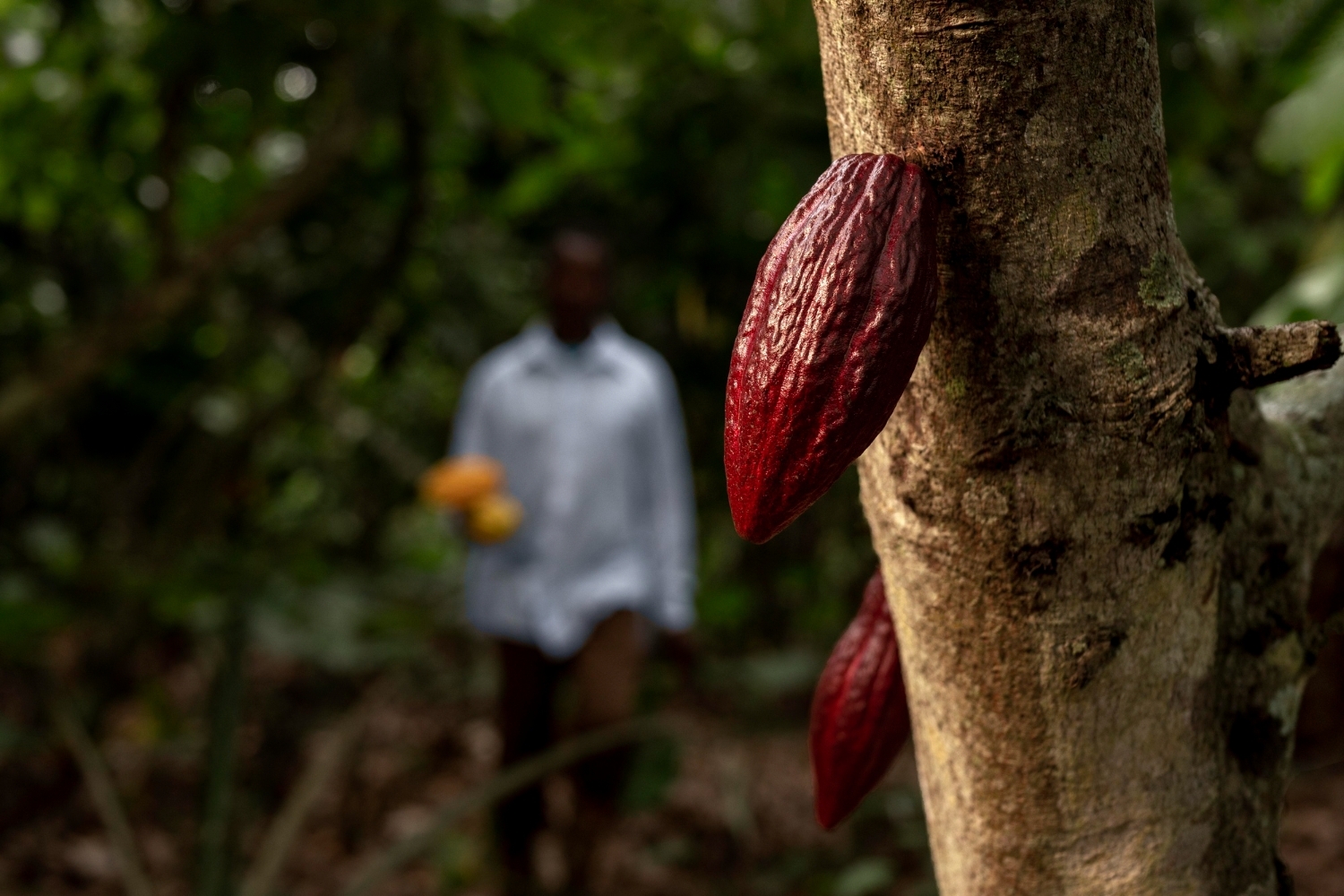
Avocados are unusual. They never ripen on the tree. They hang there for months building up oil, and only soften once they are picked. A fruit can look big, green and perfect long before it has enough oil inside to ripen properly.
Pick it too early and the problems show up weeks later, far from the farm. The flesh turns rubbery or watery, ripens unevenly or simply rots. When an importer in Europe opens a carton like that, they rarely blame one packhouse. They remember the country on the label.
That is why the new notice goes further than ships. Avocado oil factories cannot import fruit while the closure lasts, because traders had been passing off young local fruit as imports. Processors holding oil meant for export must have it verified by 2 November. And mango exporters have been told to stop tucking avocados into mango containers to slip past the rules. Anyone caught risks losing their export licence.
Record harvests, stubborn exports
The strange part is that Kenya has never grown more avocados. According to the US Department of Agriculture's Nairobi office, the country harvested a record 694,000 tonnes in 2025 and is on course for about 727,000 tonnes this year as farmers plant more trees in more than 30 counties.
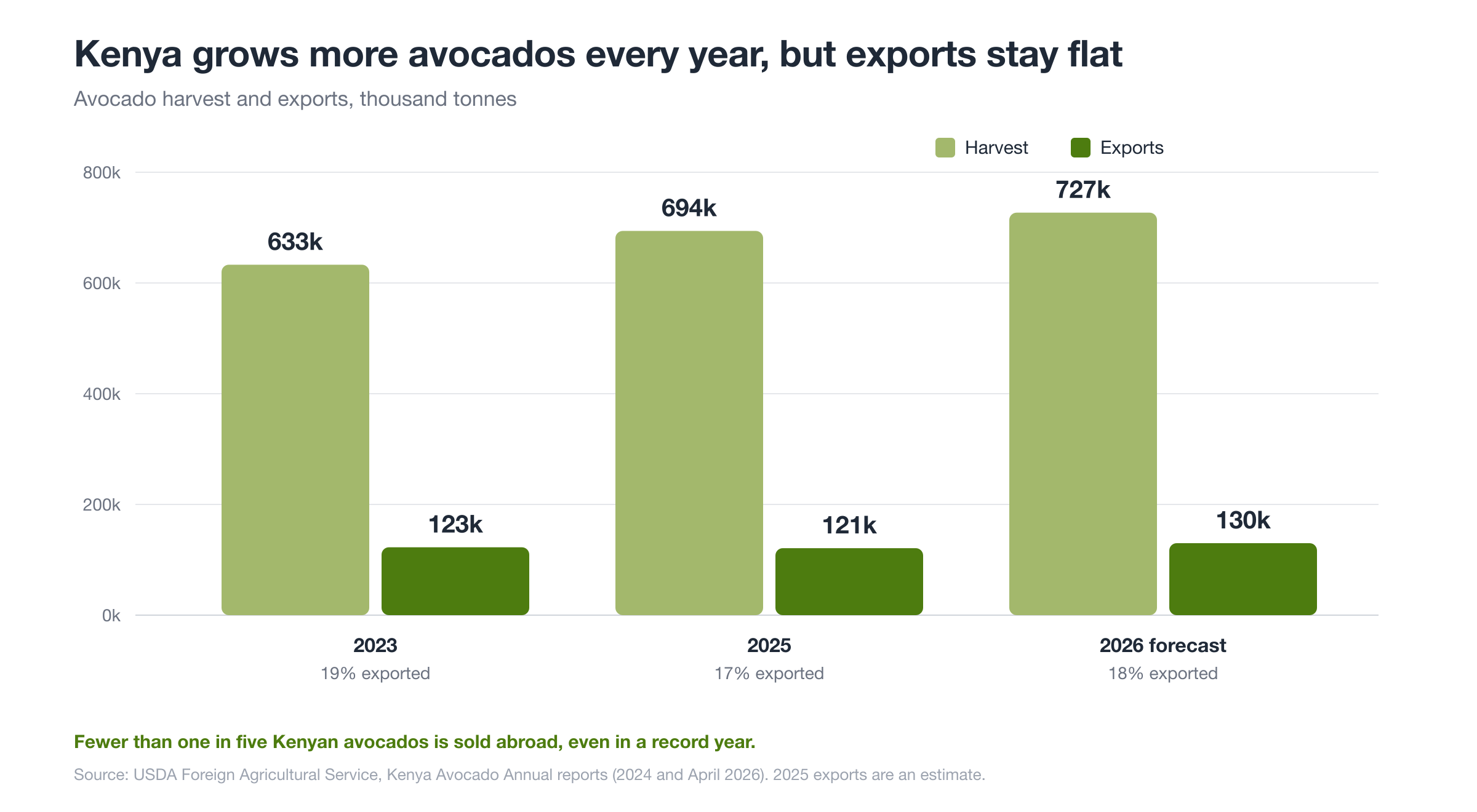
Exports have not kept up. Kenya shipped around 121,000 tonnes in 2025, fewer than one in five of the avocados it grew. Much of the rest is eaten at home or sold in local markets, and a growing share is pressed into oil. Kenya processed 10,188 tonnes of avocados for oil in 2025, three times the 3,326 tonnes of the year before. That boom is exactly why oil processors were named in this week's notice.
A longer road to market
Geography has not helped. Since attacks on shipping in the Red Sea began, most vessels heading from East Africa to Europe have had to sail around the southern tip of Africa instead.
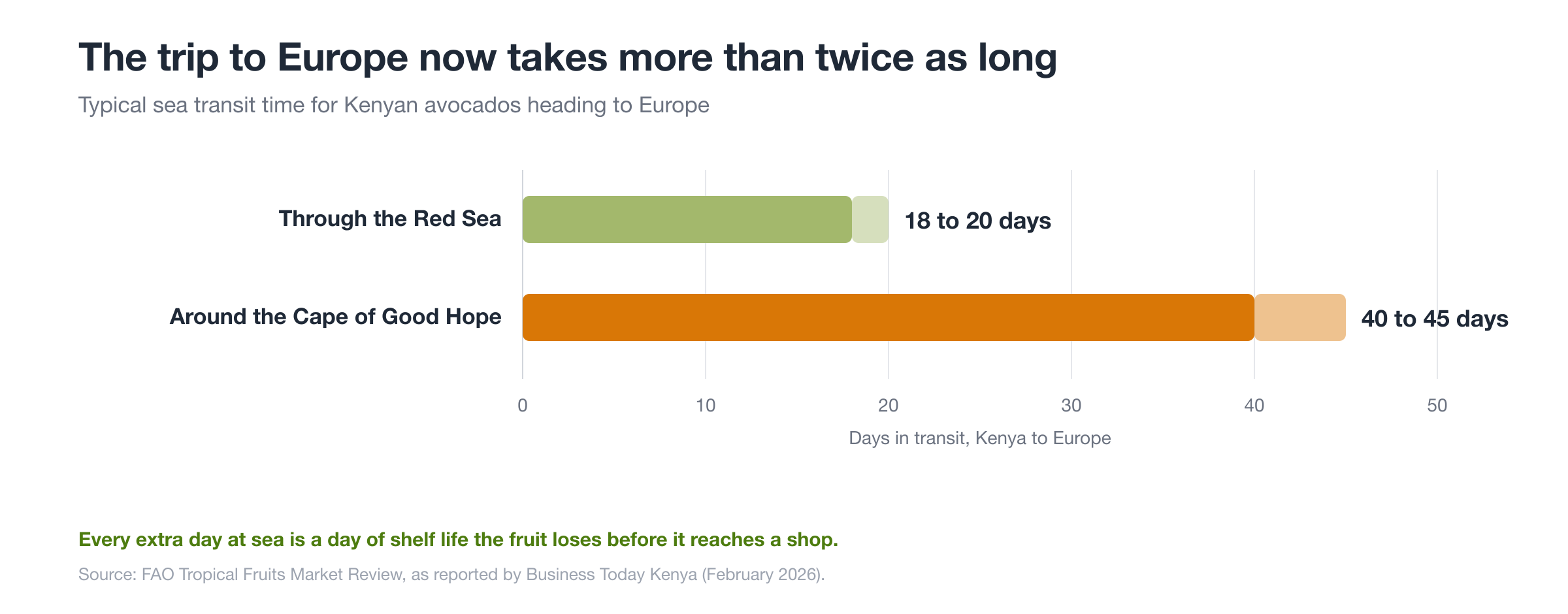
For a fruit with a limited shelf life, a voyage of 40 days or more leaves no room for error. Only properly mature fruit, packed and cooled well, can survive that trip and still look good on arrival. Immature fruit has no chance.
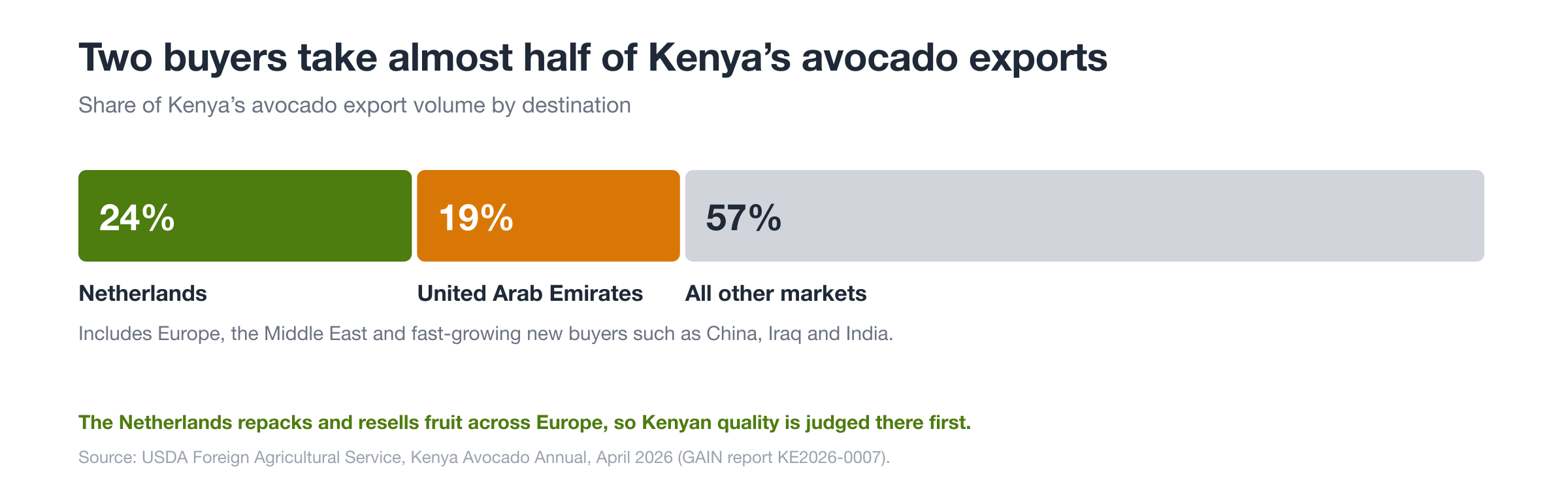
The stakes are concentrated in a few places. The Netherlands, which repacks and resells fruit across Europe, and the United Arab Emirates together take close to half of Kenya's avocado exports.
Kenya in the global race
Worldwide, people have never bought more avocados. Global exports rose about 13 percent in 2025 to roughly 3.3 million tonnes, with Mexico alone shipping about 1.2 million tonnes, according to FAO figures reported by Business Today. Kenya supplies only around 3 percent of that trade, and last year it lost its title as Africa's biggest exporter.
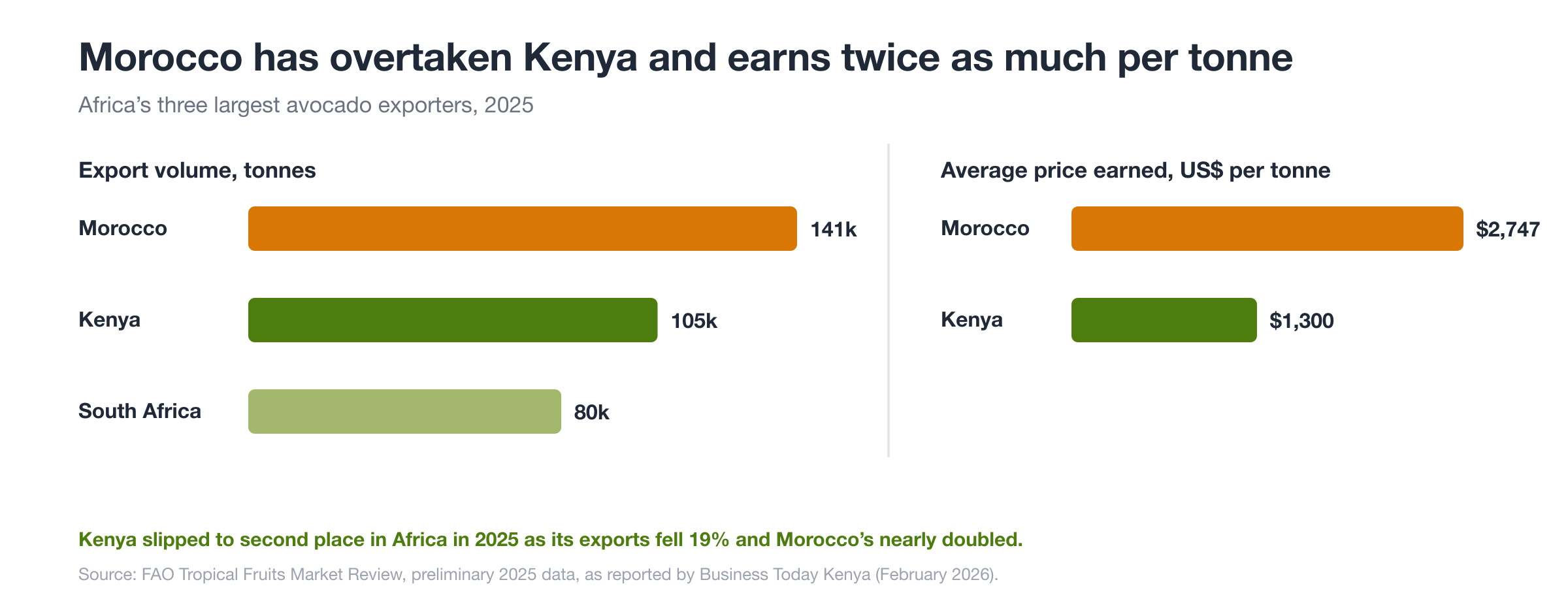
Morocco shipped about 141,000 tonnes in 2025, close to double its previous year, while Kenya's exports fell 19 percent. The bigger gap is in price. Moroccan avocados earned an average of about US$2,747 a tonne. Kenyan fruit earned around US$1,300. Some of that comes down to Morocco's short hop to European shops, but much of it is about reputation and consistency. Buyers pay more for fruit they trust.
New doors are opening. India has approved fresh Kenyan avocados, and a preliminary trade deal reached with China in January 2026 opens duty-free access for most Kenyan goods. Both are long sea journeys away, which makes fruit quality even more important.
Will the rules hold this time
A closure only works if it is respected. During the last one, Food Business Middle East and Africa reported that export certificates worth US$38.8 million, covering 33,205 tonnes, were issued over twelve weeks. Exemptions were meant only for late fruit from Western Kenya and the North Rift, roughly 3 percent of the national crop. Fruit was also traced to several sites that had skipped farm inspections. This year's tighter rules on oil, imports and mixed cargo are aimed squarely at those gaps.
What farmers can do now
Leave the fruit on the tree. It is gaining oil and weight every week, and that is what buyers pay for when the season reopens.
Be careful with cash offers. A broker buying in bulk during a closure is most likely buying immature fruit, and it can end up spoiling Kenya's name abroad.
Get your farm traceable. Exporters now need to show where every carton came from. Farms registered with the Horticultural Crops Directorate and selling through a known exporter or cooperative will be first in line.
Use the pause. Pruning, feeding and pest control now set up a cleaner, heavier main-season crop.
Patience that pays
In the short run, a closed season feels like money lost. But Kenya's challenge was never growing avocados. It is getting the right fruit to the right buyer at a price that rewards the farmer. A few weeks of waiting costs far less than losing a buyer for good, and the country that ships the best fruit, not the most, is the one that gets paid.