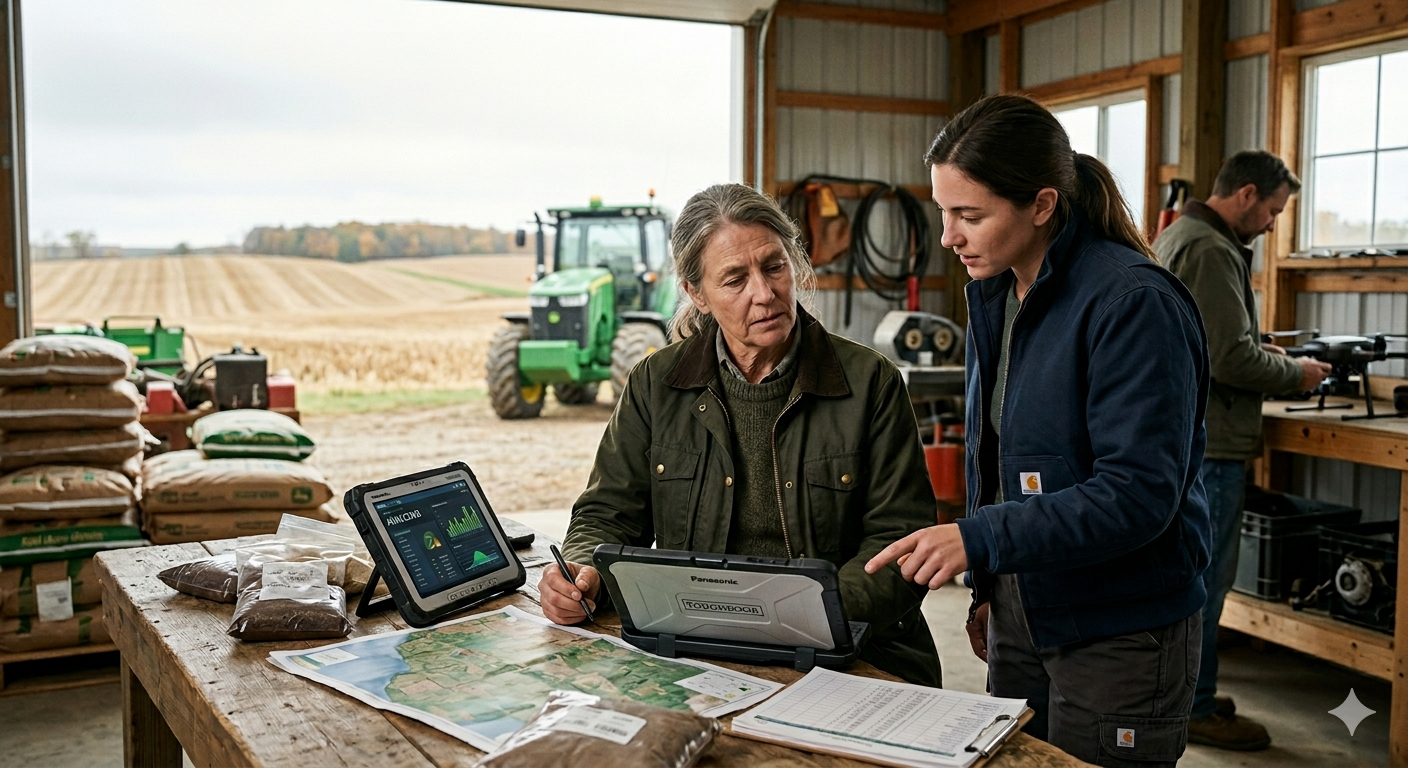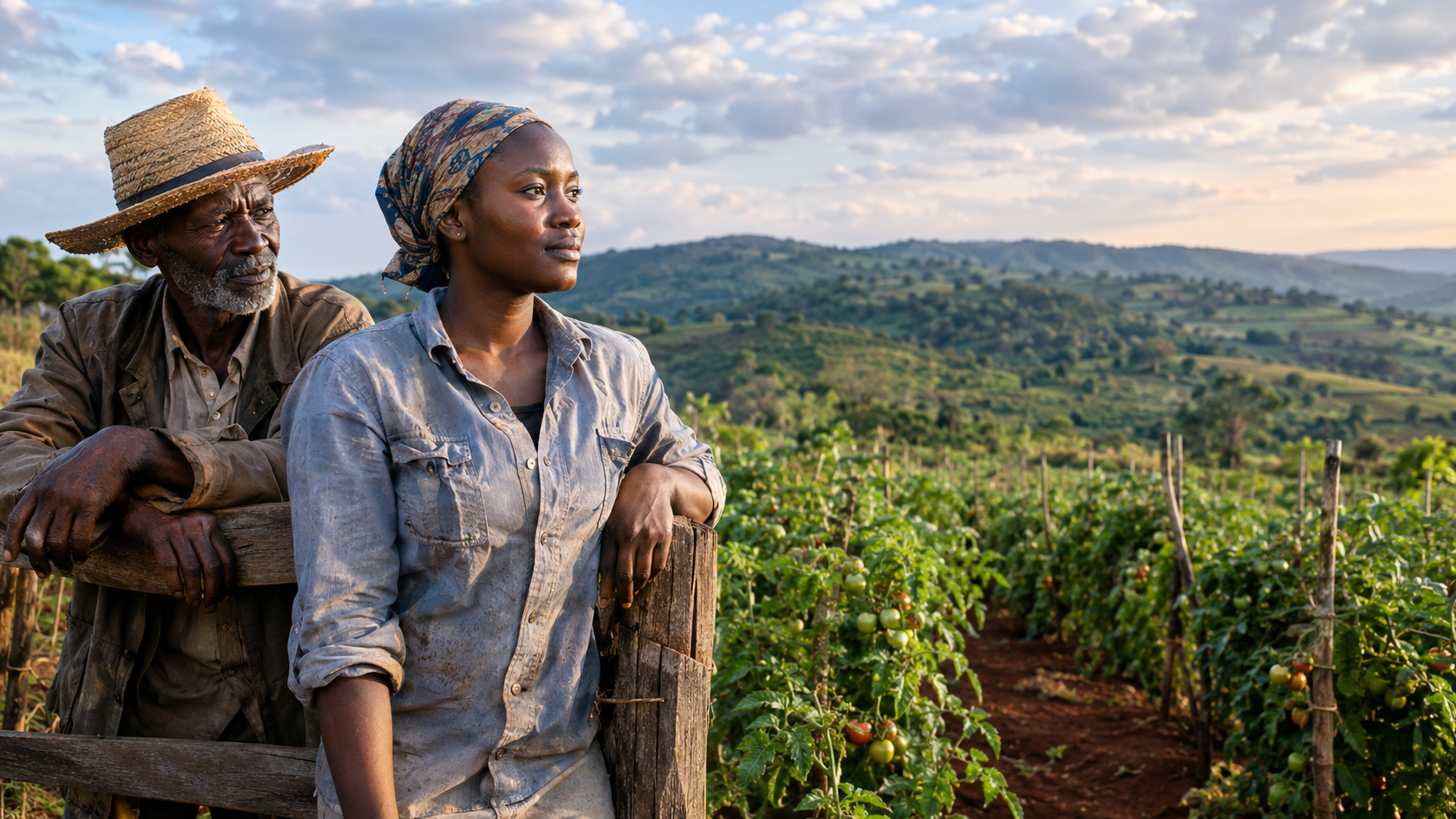
Picture two farmers. One is 68, growing rice in Niigata (Japan), with no one in the family willing to take the paddies. The other is 24, growing tomatoes on a rented quarter acre in Kakamega (Kenya), with no way to get a bigger plot or a loan. They have never met. The future of the world's food supply depends on both of them, and both are stuck at the same gate.
The story most people know is the first one. In much of the rich world, farming has become an older person's job, and the numbers are getting worse rather than better.
The rich world's farmers are retiring faster than they are replaced
The United States counts its farmers every five years. The 2022 count found an average age of 58.1, and the shape of the workforce matters more than the average.
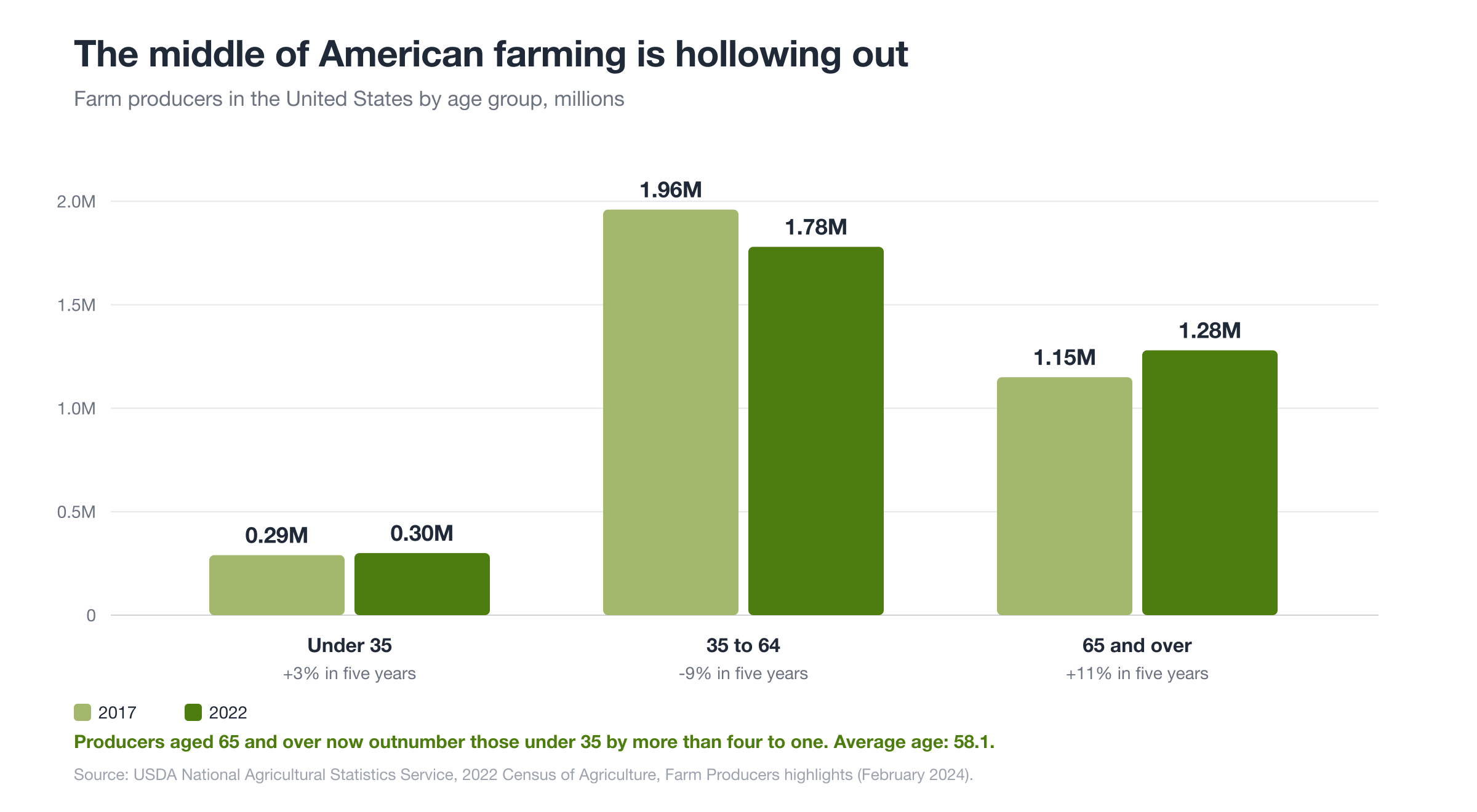
Producers over 65 grew by 11 percent in five years. The 35 to 64 group, the people who would normally be taking over, shrank by 9 percent. Young producers held steady at about 9 percent of the total. The old are staying on and the middle is thinning out.
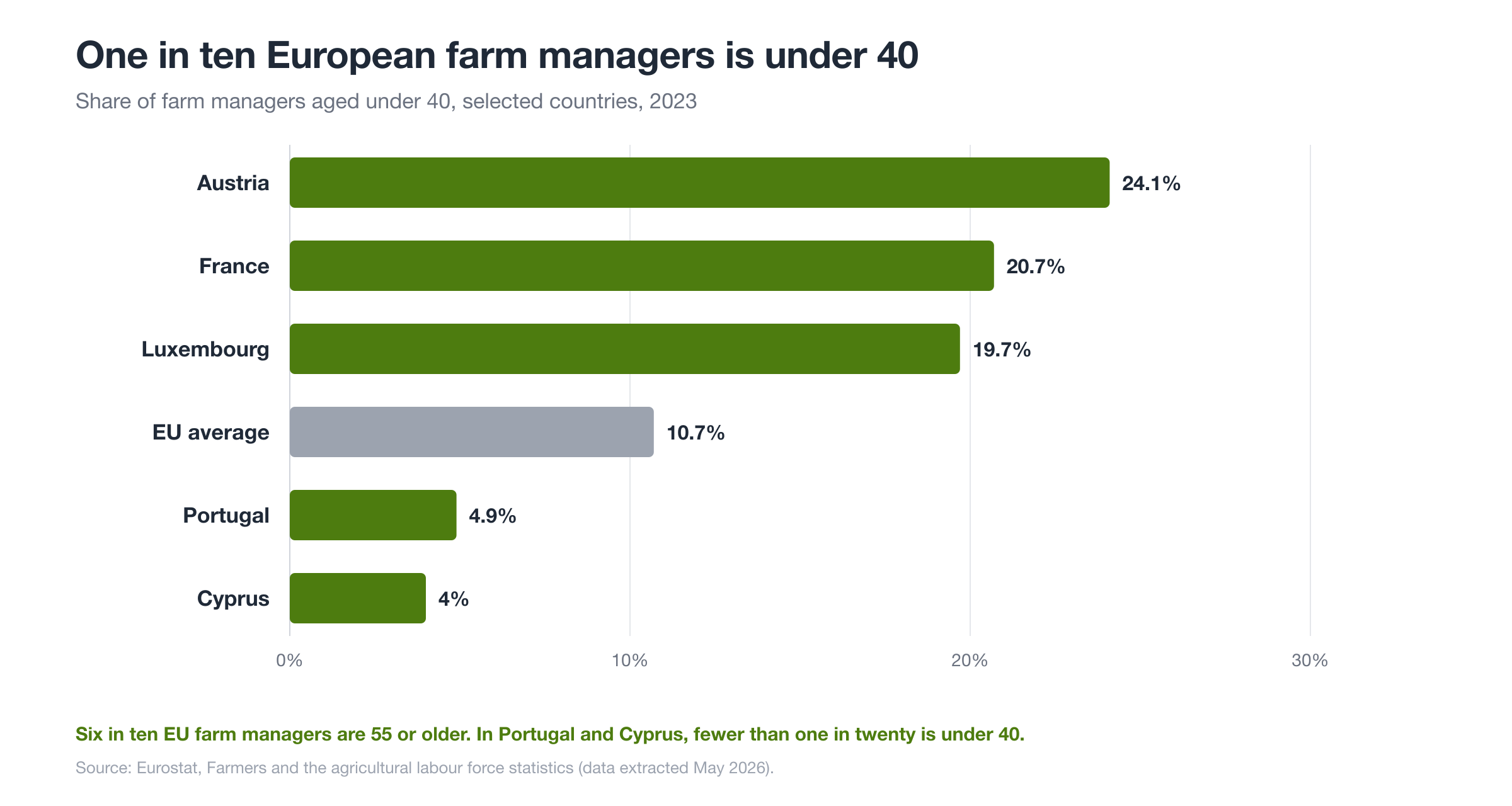
Europe has the same profile. Just 10.7 percent of farm managers in the European Union were under 40 in 2023, and six in ten were 55 or older, according to Eurostat. The share under 35 has fallen from 7.5 percent in 2010 to 5.6 percent.
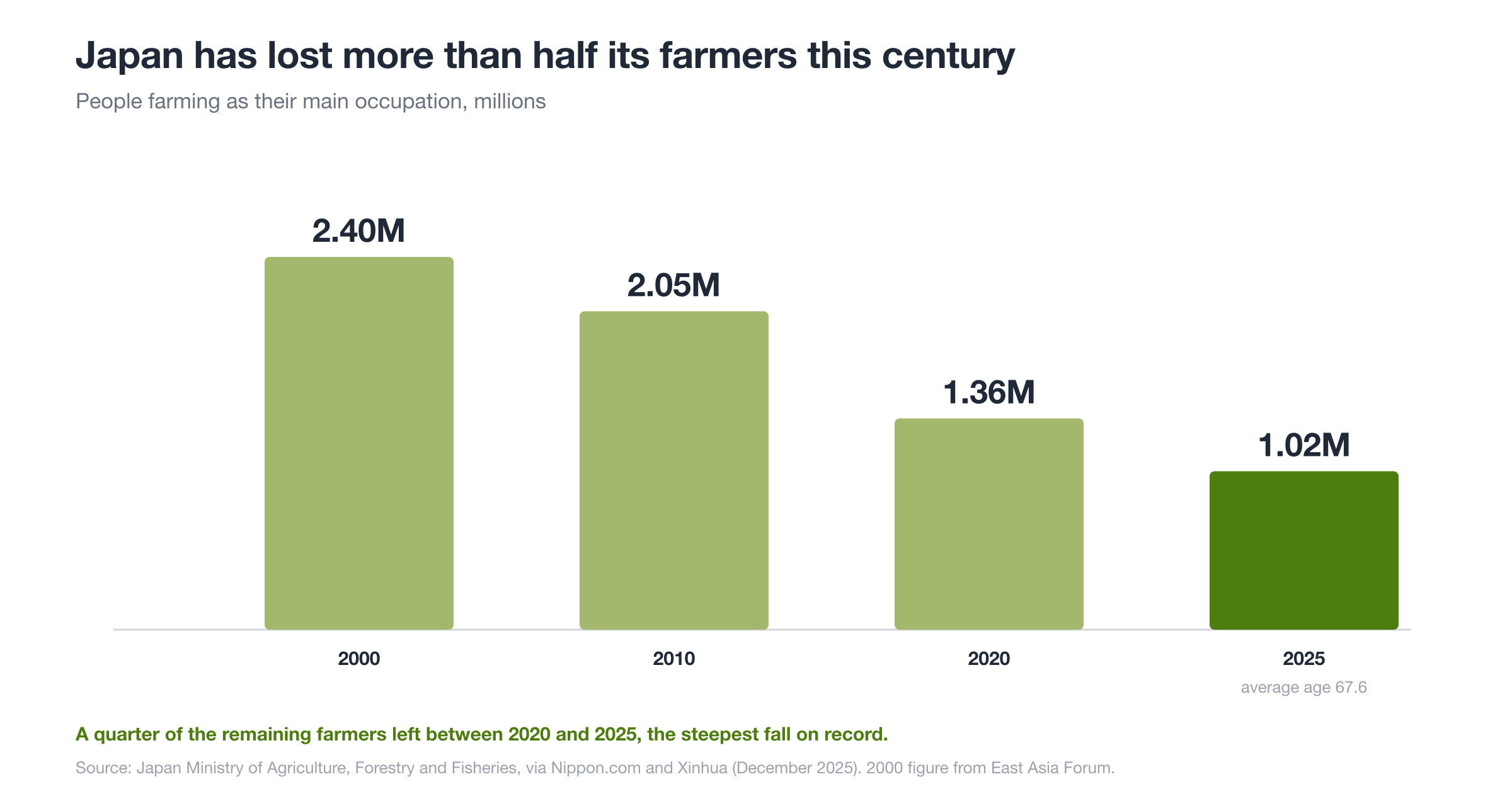
Japan shows where the road ends if nothing changes. The number of people who farm as their main occupation has fallen from 2.4 million in 2000 to 1.02 million in 2025, with a quarter leaving in the last five years alone, Japan's agriculture ministry reported in December. Their average age is 67.6. More than half are over 70.
Africa has the opposite problem
Here the picture flips. The median age in Africa is 19.5, against 44.9 in the European Union and nearly 50 in Japan, according to the UN's population estimates. Africa is not short of young people, and as Eagmark showed earlier this month, it is not short of young farmers either. Labour surveys across six African countries put the average age of the farm workforce between 32 and 39.
The drift away from the land is still real, only slower. The FAO's 2025 report on youth in agrifood systems found that 44 percent of working young people worldwide depend on food and farming for a living, down from 54 percent in 2005. Most of those 1.3 billion young people live in lower-income countries where farming is still the main employer. The question for Africa is not how to attract the young into farming. It is how to keep the ones already there from leaving the moment something better appears.
One gate, every continent
Ask young farmers on any continent what stands in their way and the answer is startlingly similar.
In the United States, the National Young Farmers Coalition surveyed more than 10,000 farmers in 2022. Fifty-nine percent of those under 40 said finding affordable land to buy was very or extremely hard, up from 39 percent five years earlier. In Kenya, the share of young farmers who name land access as their main obstacle is also 59 percent. Two countries, two different economies, the same number.
Behind land come the other pieces of the gate. Money to start, because banks lend against land a young farmer does not own. Skills, because farming now needs someone who can read a soil test and a balance sheet. And a buyer, because growing something is pointless if nobody dependable will pay for it. A training course on its own moves none of these.
What a food company is trying
Companies that buy from farmers have started to notice that their suppliers are ageing. PepsiCo, which sources more than 50 crops from over 60 countries, now runs a set of next-generation programmes, each shaped differently by region, as its social impact lead Monica Bauer described to AgFunderNews.
- Europe. Future Harvest, run with EIT Food, will take 900 young farmers in Spain, the Netherlands, France, Türkiye and Poland through farm business training, peer exchange and mentoring in 2026.
- United States. Field to Future gives college students scholarships, mentors and the chance of a paid two-year placement inside the company's farm supply chain, backed by a $1.7 million commitment and partners including Farm Foundation.
- South Africa. The Kgodiso Development Fund commits R600 million over five years, half of it to help black-owned emerging farms scale up and sell into the supply chain.
- Mexico. The Agrovita programme has worked with more than 4,000 smallholders. Its first cooperative, Los PAPIs, now sells plantain directly into a national snack brand.
The Mexican example is the one worth studying. The farmers did not just get trained. They got organized, and then they got a customer. That is the difference between a course certificate and a livelihood.
There is a fair objection here. A company that depends on a steady supply of potatoes and oats has every reason to keep farmers in business, and 900 young Europeans is a small number against 8.8 million EU farms. But the design lesson holds regardless of who pays: land, money, skills, and a buyer have to arrive together, and the mix has to fit the place. What opens the gate for a farm in Poland is not what opens it in Limpopo.
What this means closer to home
For East Africa the lesson is almost the reverse of Europe's. The young farmers already exist. What they lack is the same gate the Iowa farmer is stuck behind: land they can build on, credit that does not require it, and a buyer who shows up every season.
That is where the practical work lies. Farmer groups that can lease land collectively. Contracts with off-takers that a bank will lend against. Skills that raise the value of a small plot rather than waiting for a large one. Eagmark's marketplace and courses are built for exactly those three gaps.
The 68-year-old in Niigata and the 24-year-old in Kakamega are not two problems. They are one problem seen from opposite ends of a lifetime. Farming stays alive wherever a young person can see a way in and a reason to stay. Everything else is detail.