
Eagmark Online Learning Campus
CourseSelf-paced
Good Agricultural Practices
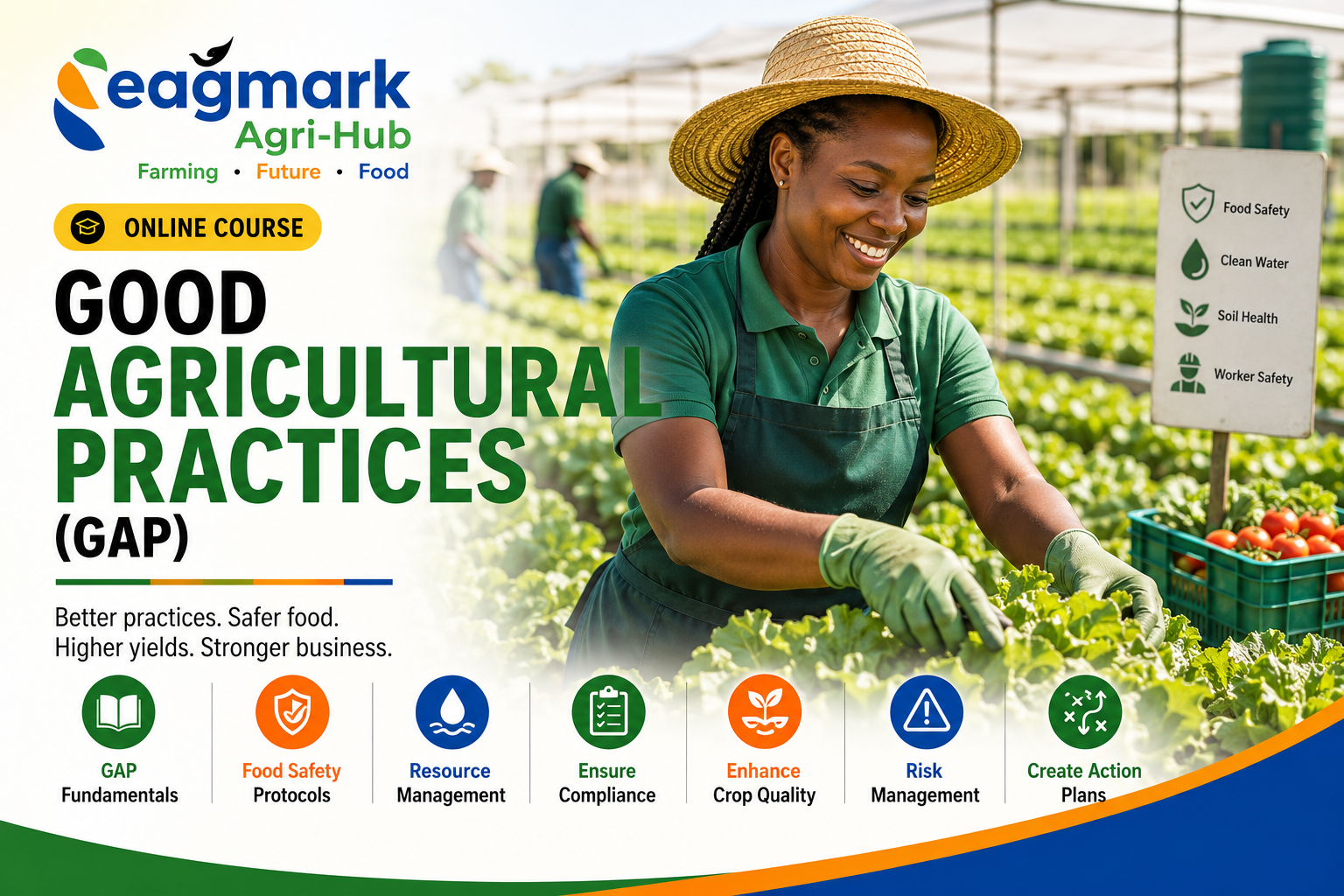
In today's competitive agricultural landscape, implementing GAP isn't just an option – it's essential for thriving, sustainable farming operations that meet global standards and consumer demands. The principles of Good Agricultural Practices course is a 4-week program that provides learners with a broad understanding of good agricultural practice. During the 4-week period, students will be introduced to theories and resources that promote good farming practices. You will also learn about data collection, analysis, uses and the importance of quality data in the agricultural industry. After completion of the program, students will be better equipped and empowered to lead their enterprises or teams by making optimal use of resources sustainably to maximize production while preserving the environment. By the end of this comprehensive course, you will be able to: Master GAP Fundamentals : Understand the core principles and international standards of Good Agricultural Practices Implement Food Safety Protocols : Design and execute robust food safety management systems from farm to fork Optimize Resource Management : Apply sustainable water, soil, and nutrient management techniques that maximize efficiency Ensure Compliance : Navigate certification requirements and maintain documentation for GAP compliance Enhance Crop Quality : Implement practices that improve crop yield, quality, and market value Develop Risk Management Skills : Identify, assess, and mitigate agricultural risks to protect your investment Create Action Plans : Design customized GAP implementation strategies for your specific farming operation After completing this course, the students will have more insight on: Working with the existing ecosystem/environment. Optimal resource use to maximize agricultural production. Farm maintenance and its importance. Quality data collection and record keeping practices. Good Farming/Agricultural Practice standards and how to apply them in real world. Ethical and social auditing processes and their importance in agricultural practice.
8 Hours 7 lessons 208