Every cup of Kenyan tea in Karachi, every rose in Amsterdam and every avocado in Shanghai has crossed a border, and every border has rules. In 2026, those rules changed in all three of Africa's biggest markets at once.
The World Bank's Africa Economic Update for October 2026 counts these shifts among the main forces shaping African exports. For farmers who grow for export, or who sell to traders who do, they are worth understanding.
What Kenya sells
Farm produce is the heart of Kenya's export trade. In 2025, tea earned about KSh 187 billion, cut flowers KSh 81 billion and coffee KSh 52 billion, according to KNBS data from the Kenya Revenue Authority and the Agriculture and Food Authority. In August 2026, food and drinks made up about 41% of all goods Kenya exported.
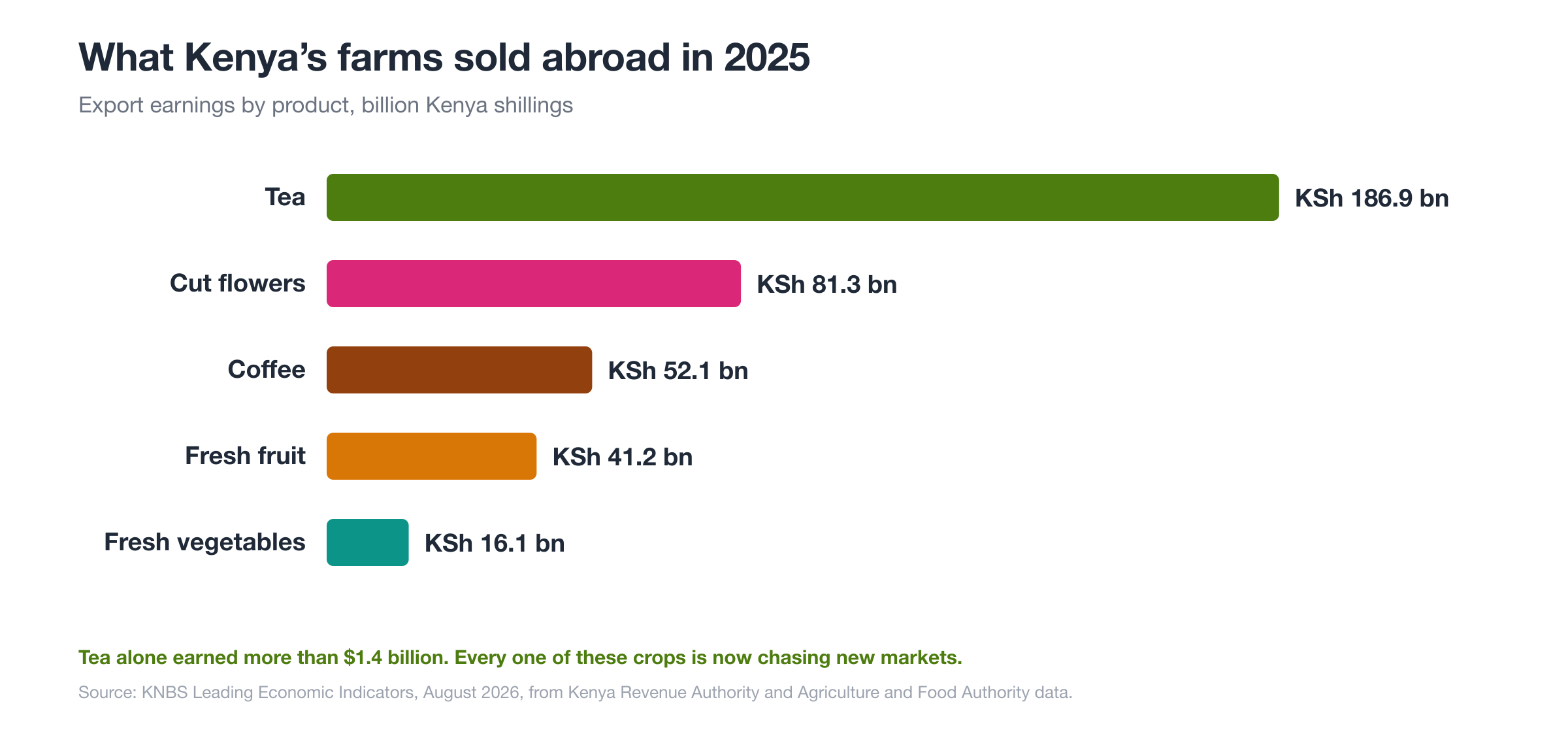
Most of these crops are sold to a handful of markets. That is a strength when demand is steady and a risk when a market closes or a rule changes. New doors matter.
China: zero tariffs, real paperwork
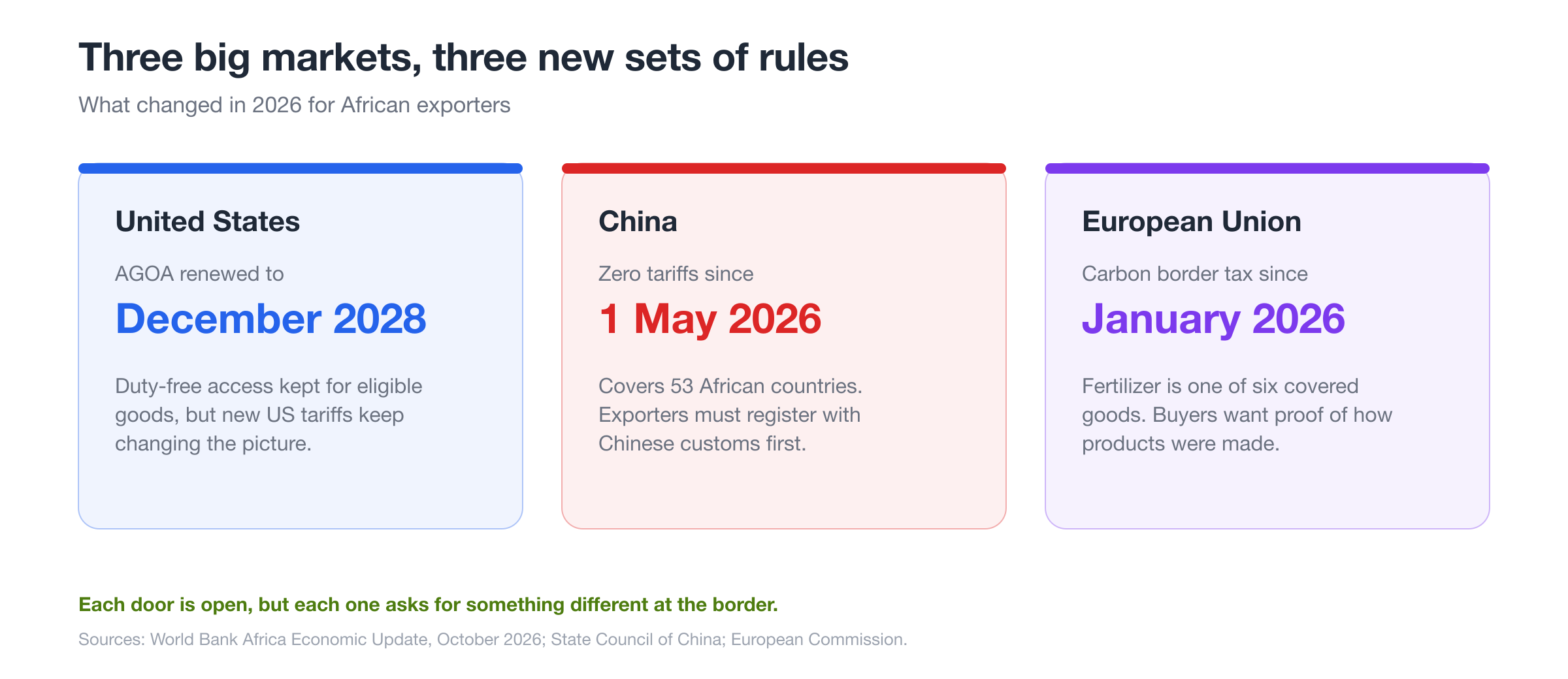
The biggest change came from China. Since 1 May 2026, China has charged no import duty on goods from the 53 African countries it has diplomatic relations with, building on a scheme that began with the poorest African countries in late 2024.
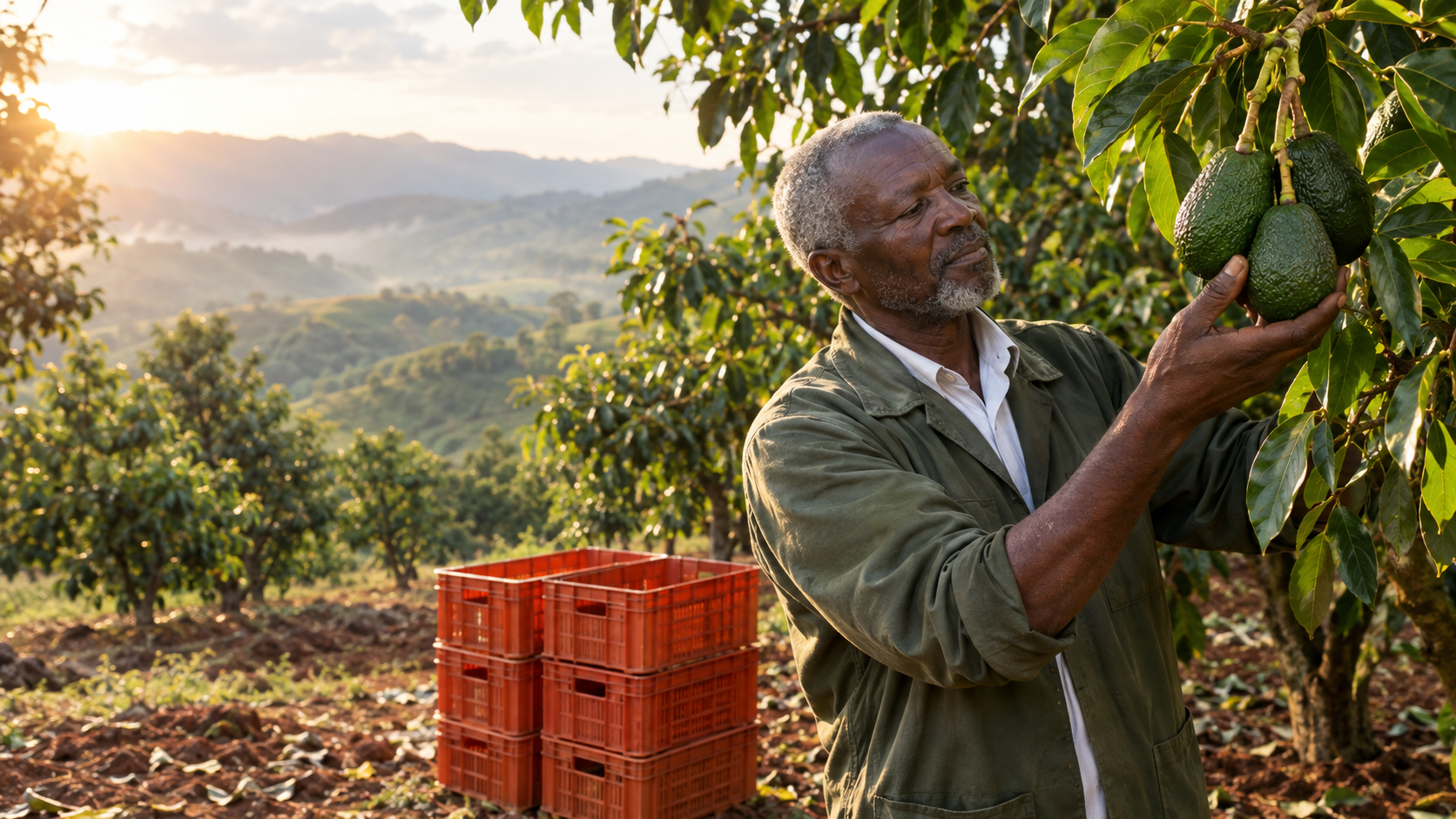
For Kenya, that covers tea, coffee, fresh and frozen avocados, macadamia nuts, flowers, vegetables and herbs. The starting point is small. In 2025, Kenya sold China about $24 million of coffee and tea and about $20 million of avocados and macadamia. Kenyan tea packers had told reporters their tea was simply too expensive in China once duty was added.
Early signs are encouraging. In September, China's ambassador said Kenya's avocado oil exports to China had risen by 700% and coffee exports had nearly doubled since the tariffs went. Those are official claims, and trade data for the full year will show whether they hold.
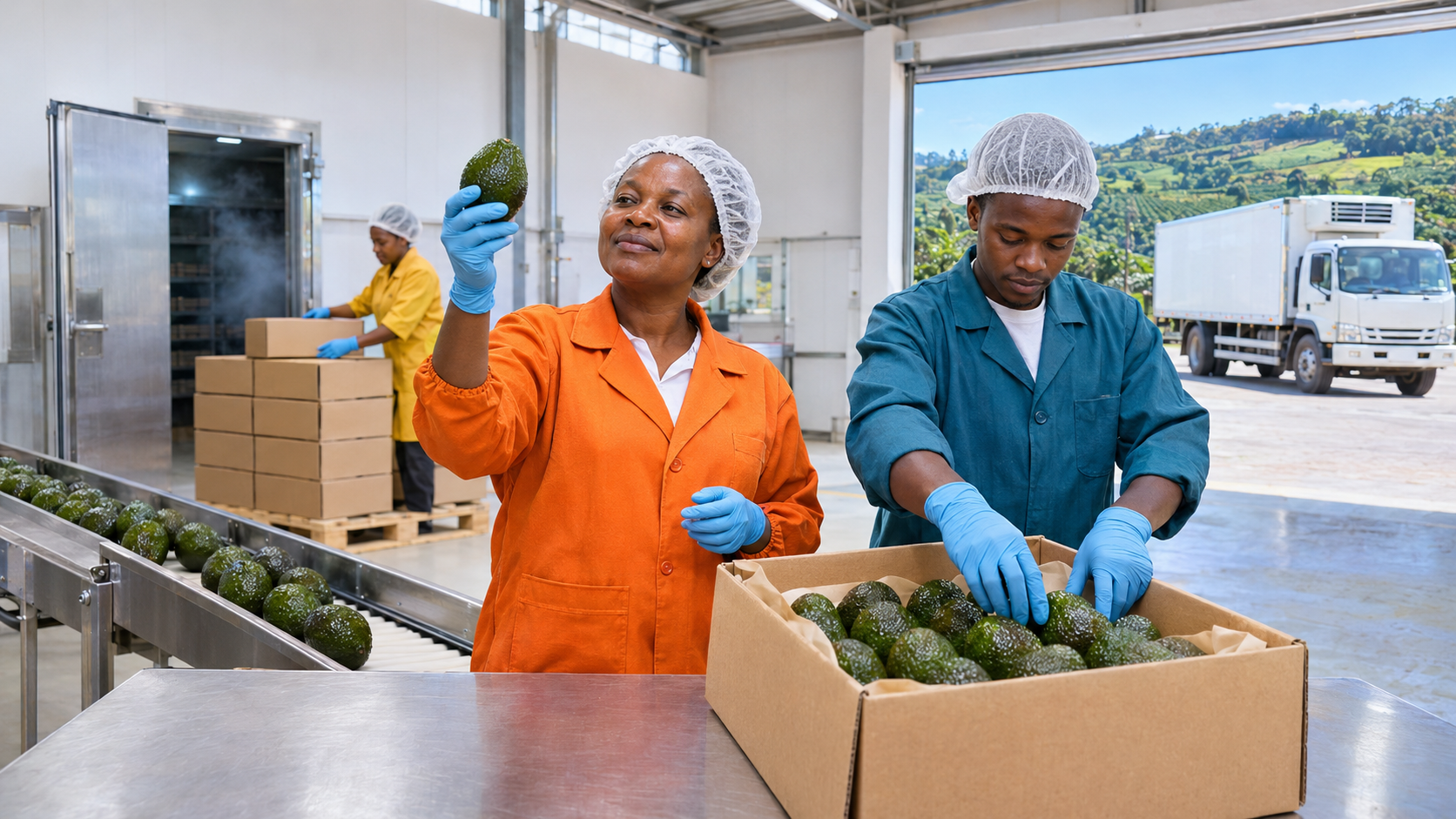
Zero tariffs do not mean zero rules. Exporters must be registered with China's customs authority, and farms and packhouses supplying fresh produce must meet Chinese plant health standards and be inspected. The duty has gone, but the quality bar has not.
The United States: AGOA lives on, for now
The US renewed the African Growth and Opportunity Act, known as AGOA, in September 2026. It now runs to December 2028, keeping duty-free access for eligible goods from countries such as Kenya.
AGOA matters most for Kenya's clothing factories, which employ tens of thousands of people, but it also covers many farm products. The US was Kenya's second-biggest export market in August 2026, behind only Uganda.
The World Bank warns that two years is a short horizon for anyone planning to invest. In July 2026, the US also imposed new tariffs of 10% to 12.5% on imports from dozens of trading partners. Access to the US market can change quickly, and exporters are wise to keep other options open.
Europe: a carbon test at the border
Europe is changing the rules in a different way. Since January 2026, its Carbon Border Adjustment Mechanism, or CBAM, has charged importers for the carbon emitted in making iron and steel, aluminium, cement, fertilizer, electricity and hydrogen.
Kenyan tea and flowers are not on that list. But the World Bank notes that the EU buys about a third of Africa's exports in the goods that are covered, and that proving how a product was made is becoming part of the price of entry. European buyers already ask growers for records on pesticide use, water and working conditions. More questions about carbon and land use are likely to follow.
Why this matters now
Not every crop is growing at the same pace. In the first half of 2026, Kenya's earnings from fresh vegetables rose by almost 39% compared with the same months of 2025, and cut flowers by about 17%. Fresh fruit, the group that includes avocados, earned about 11% less.
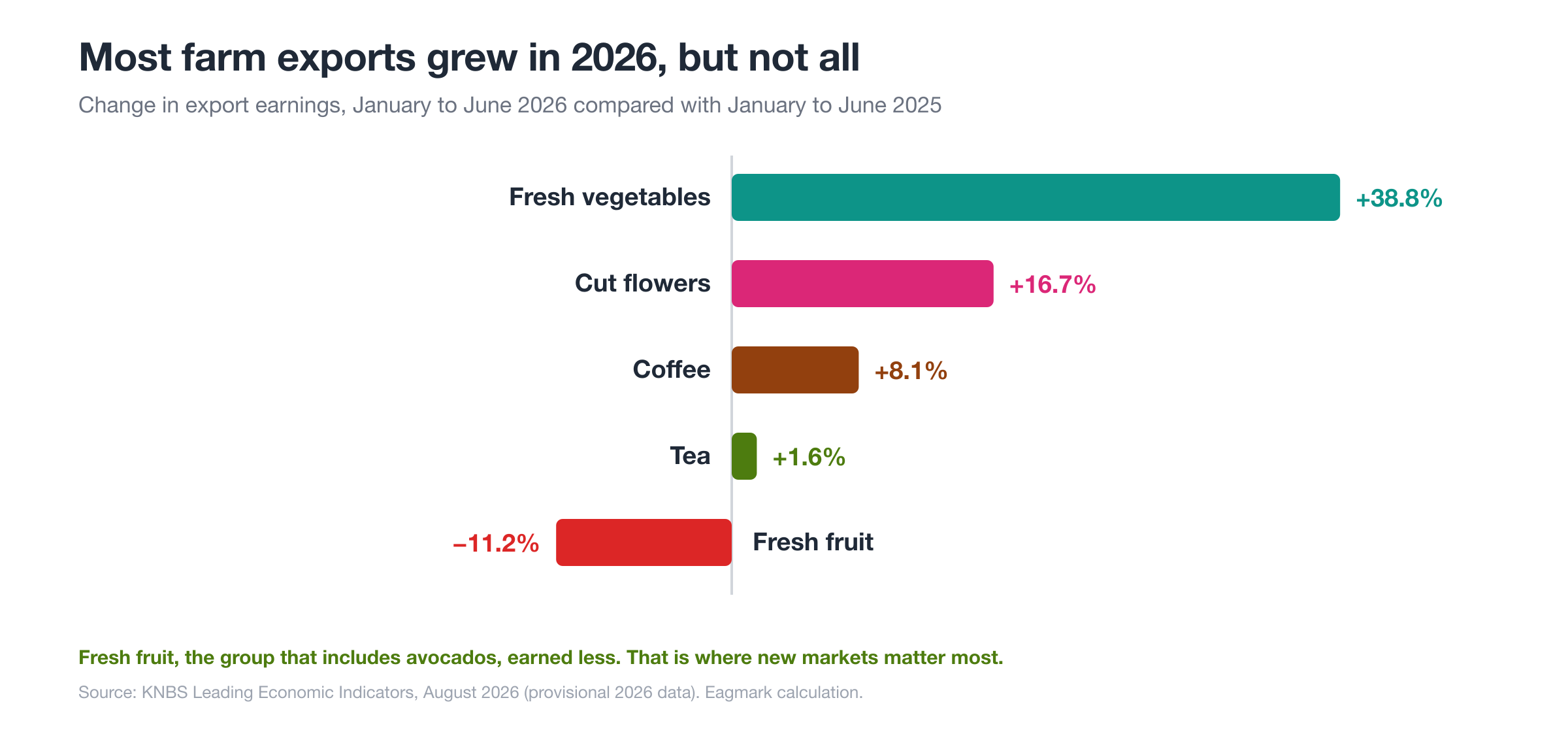
When one market slows, another can make up the difference, but only for farmers and exporters who are ready to meet its rules.
How farmers can get ready
Sell through a group. Most smallholders reach export markets through cooperatives, outgrower schemes and exporters. A strong group can meet volume and certification demands that a single farm cannot.
Keep good records. Spray dates, inputs, harvest dates and field locations are what buyers in China, Europe and the US increasingly ask for.
Get certified where it pays. Schemes such as GlobalG.A.P. open doors to premium buyers. Work out the cost and the price premium before you commit.
Protect quality after harvest. Clean handling, fast cooling and proper grading decide whether produce is accepted at the border.
Watch more than one market. Ask your buyer or cooperative where else your produce could go if one market slows.
New trade doors do not open themselves. They reward the farmers who meet the standards on the other side. For practical lessons on post-harvest handling, record keeping and selling to formal markets, explore the courses on Eagmark Online Learning Campus.
This article draws on figures from World Bank. 2026. Building AI Readiness. Africa Economic Update (October 2026). Washington, DC: World Bank. License: CC BY 3.0 IGO.