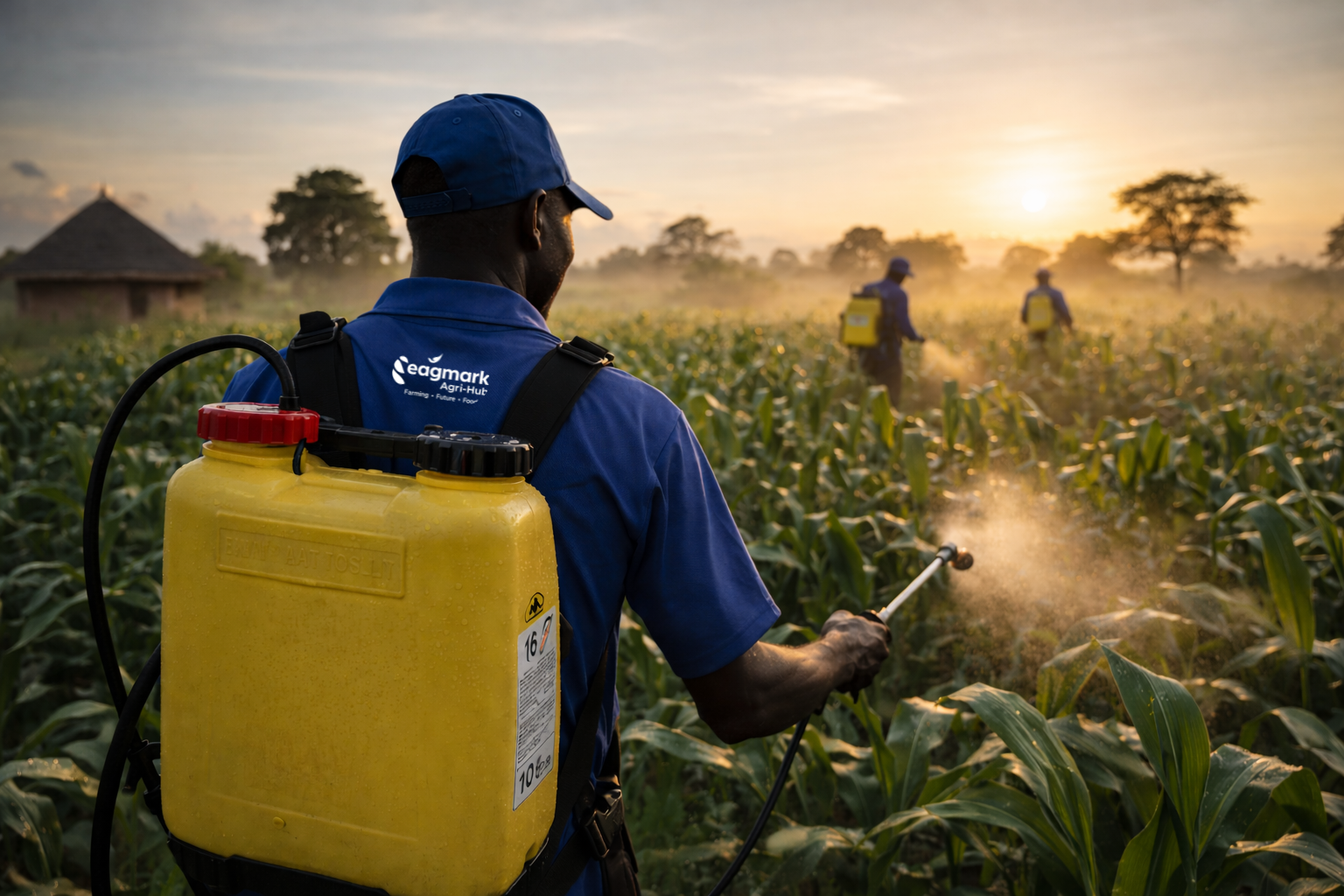
A farmer steps out of his small house before sunrise, straps a 16-litre knapsack sprayer to his back, and walks out to his maize plot. The tank is filled with the same weedkiller he has used at every planting for more than a decade. He learned about it from a neighbour, who learned from an agro-dealer, who learned from a poster pinned outside a shop in town. The weeds wither within days. The soil is not turned. He plants into clean ground, and his back, for once, is spared.
He has heard the warnings. He knows people in town who say the chemical causes cancer. He also knows that hand-weeding three acres takes his family weeks of labour, that hiring help costs money he does not have, and that if the weeds win, his children eat less. So he fills the tank and walks.
This farmer is not one person. He is millions of smallholders across the continent making the same calculation at the start of the same planting cycle, each one weighing rumour against rent, fear against the price of school fees. The warnings say one thing. The household ledger says another. And the ledger wins every cycle.
Tens of thousands of cancer cases tied to a single weedkiller are now winding through courts in wealthier parts of the world. Multibillion-dollar settlements have been proposed, rejected, and proposed again. Governments elsewhere have moved to protect the production of the chemical at the heart of those lawsuits, treating it as essential to food security. Across our continent, regulators have debated bans, lifted bans, restricted imports, and reversed restrictions. Meanwhile, the chemical keeps arriving in shipping containers, gets decanted into smaller bottles on agro-dealer counters, and ends up on the backs of farmers who sometimes cannot read the label.
What a Ban Would Actually Mean
Calls to remove this herbicide from the market grow louder with every verdict abroad. Those calls deserve to be taken seriously. But a ban announced overnight, with no support in place for what comes next, would not mean less spraying. It would mean different spraying. Smallholder farming, once it has learned to lean on a chemical, has no chemical-free mode at scale, and the chemicals waiting to fill the void carry more cumulative harm than the one being removed.
The closest substitute used to clear fields before planting is banned in dozens of countries. Its acute toxicity has poisoned more rural workers than any other agricultural chemical in modern history, and chronic exposure through skin contact and inhaled spray drift has been linked again and again to Parkinson's disease. Another common alternative drifts for kilometres after spraying, ruining neighbouring crops that were never sprayed. A third lingers in groundwater long after application, showing up in the boreholes and shallow wells whole communities depend on. Take the dominant herbicide off the table without building a way out, and farmers reach for these instead – applied more often, often without protective gear, in combinations no one has ever studied for long-term effects.
Farmers already use these chemicals in smaller amounts to handle the weeds the dominant herbicide misses. Independent analysis has found that even though it accounts for a large share of all herbicide volume on major crops, this single product contributes a small fraction of the long-term health risk to mammals from the chemicals sprayed in those fields. It does the heavy lifting at relatively low toxicity, keeping the doses of everything else small. Remove it, and farmers do not stop spraying. They spray more of the chemicals already doing the most damage.
What the Science Says
On cancer, major scientific bodies have landed on opposite sides, and each side has serious evidence behind it. One global health authority classified the chemical as a "probable human carcinogen" a decade ago. A recent long-term rodent study found elevated tumour rates across multiple organs at doses regulators consider safe. On the other side, several national regulators have concluded the chemical is unlikely to cause cancer at realistic exposure levels, and a long-running study tracking tens of thousands of applicators over two decades found no significant link to a particular type of lymphoma. Independent replication of the rodent findings would help settle this. None has been undertaken.
A complicating detail: most regulatory safety reviews tested the active ingredient in isolation. What farmers actually spray is a commercial formulation that blends the herbicide with surfactants designed to help it penetrate leaves. Research has found these commercial mixtures significantly more toxic to human cells than the active ingredient alone, and a recent pregnancy study detected one of the surfactants in nearly all participants. The reviews that cleared the chemical were testing something different from what people are actually exposed to.
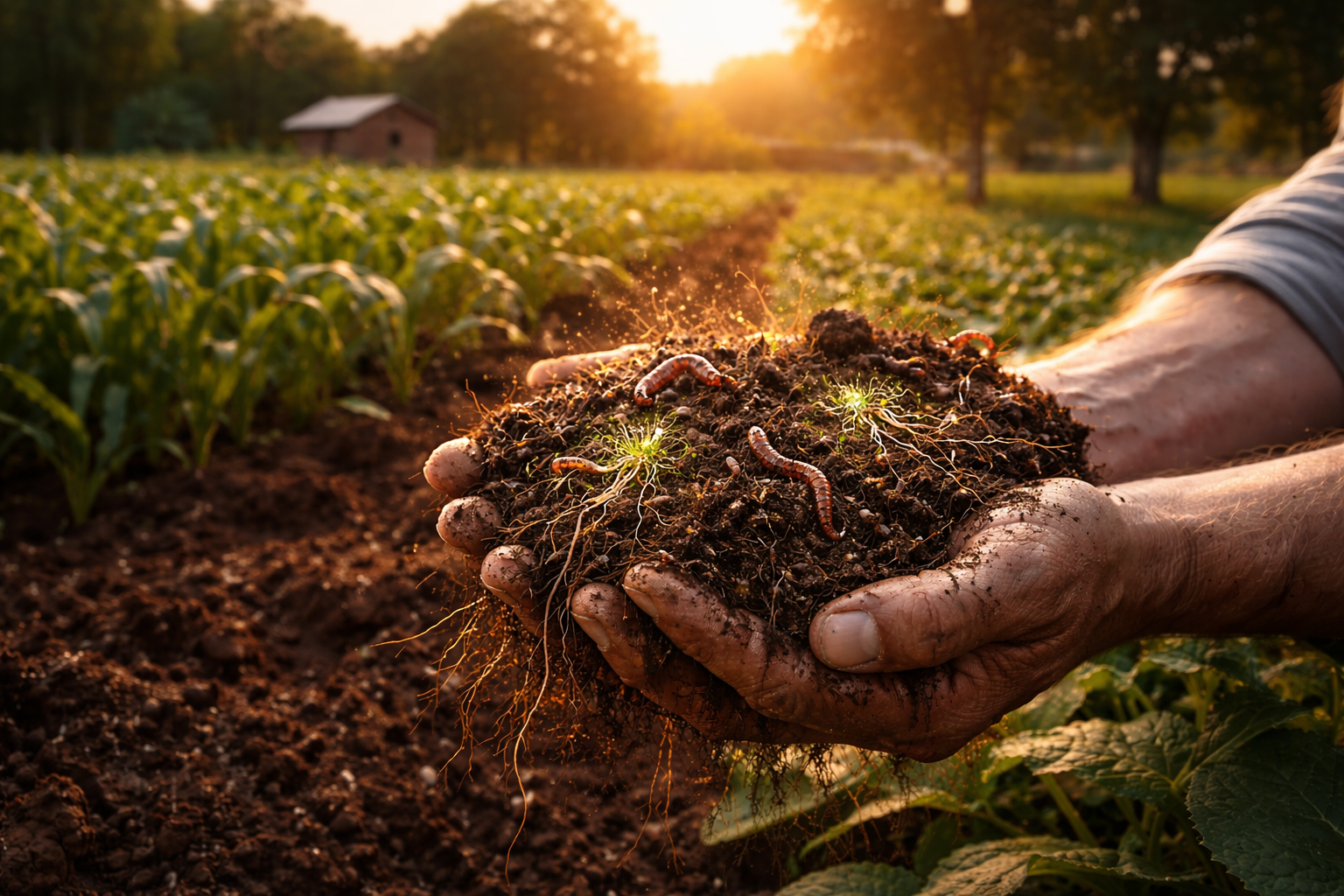
Cancer is not the only concern. The chemical works by blocking an enzyme found in plants – but the same enzyme exists in many soil microbes. Multiple studies have found that repeated applications reduce colonisation by the fungi that help plant roots take up water and nutrients. Residues have been detected in crops a full cycle after treatment. A decade of repeated spraying on the same plot does something to the biology underfoot, even if the weeds still die on schedule.
All of this plays out against a backdrop of compromised regulatory credibility. Internal documents released through litigation revealed that the manufacturer ghostwrote safety studies that regulators later cited as evidence the chemical was safe. At least one influential paper has been retracted after corporate authorship came to light. Whatever conclusion you draw about the chemical's safety profile, the global regulatory process that certified it was compromised at the source. On a continent where local regulators often lean on those overseas approvals because their own testing capacity is thin, that compromise is inherited wholesale.
Beyond Chemistry
The substitution problem only matters if a ban means swapping one chemical for another. It does not have to. Alternatives that avoid both spraying and constant tilling are further along on this continent than most of the debate acknowledges, and their progress makes the lack of policy action harder to justify.
Long-running on-farm trials show that integrated systems combining cover crops, intercropping, and organic inputs can match the yields of fertiliser-and-herbicide farms after a transition period – and outperform them in dry years, when soil that has been kept alive holds water better. Push-pull intercropping, developed by African scientists for managing maize pests, has shown that biology can replace chemistry without sacrificing productivity. Cover-crop residues laid as a mulch suppress weeds without spraying or hoeing. Agroforestry plots, where nitrogen-fixing trees grow alongside maize and beans, are restoring soils that decades of bare-soil cultivation and chemical reliance have stripped.
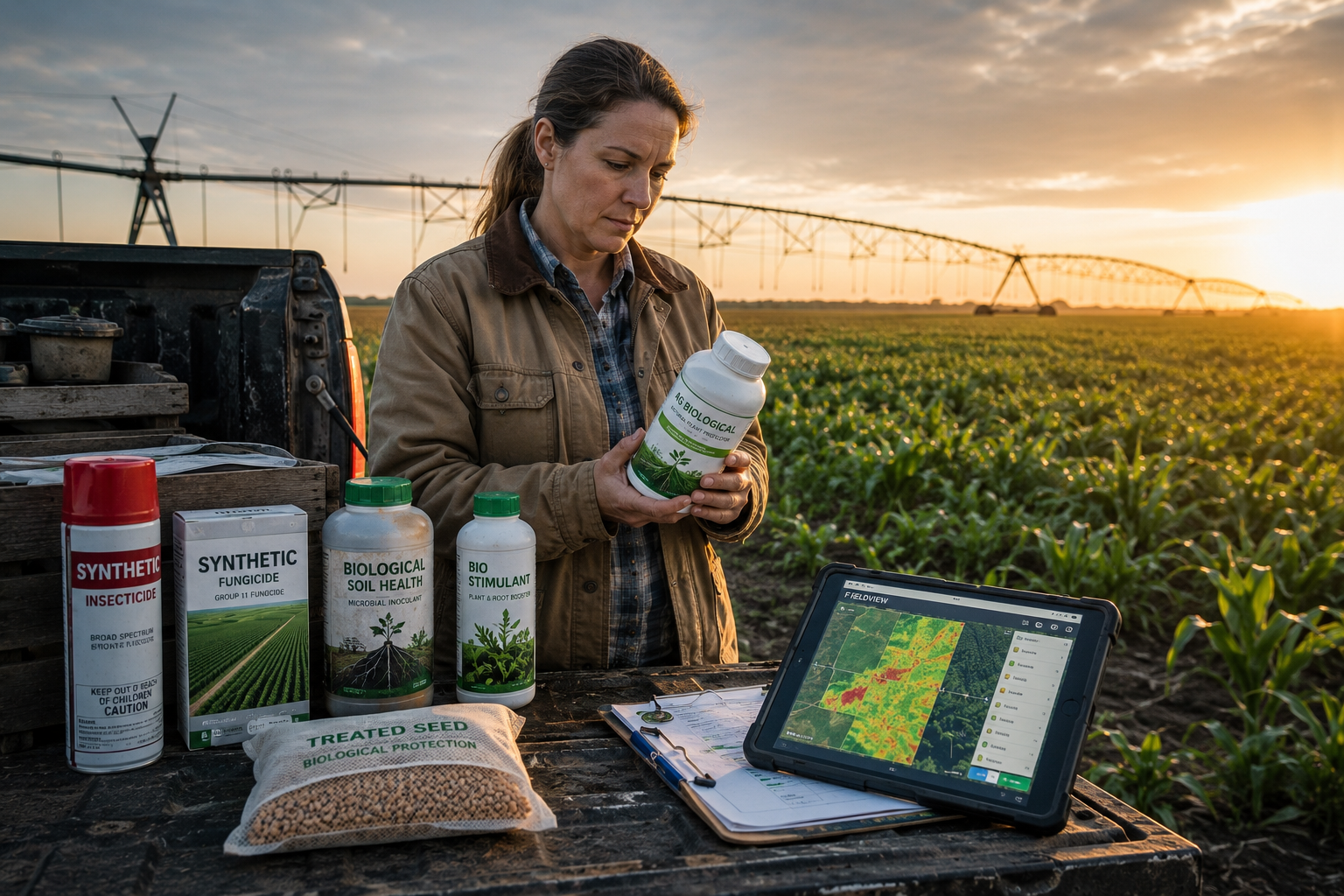
Newer tools are reaching the continent too. Solar-powered weeders, low-cost mechanical roller-crimpers, and smartphone-based weed identification apps are beginning to land on the farms that need them most. Farmer networks experimenting with these approaches are cutting herbicide use by half to three-quarters while holding or improving yields.
The distinction between these newer methods and traditional plough-based farming matters, especially for soil. Repeated tilling destroys the same fungal networks the dominant herbicide suppresses, while also stripping carbon and accelerating erosion – a particular catastrophe on the slopes and degraded lands where so much of the continent's farming happens. Cover-crop systems, intercropping, agroforestry, and precision weeding control weeds without turning the soil and without spraying it. They protect the biology above and below ground at the same time. No single method replaces the dominant herbicide on its own, but farms stacking several of them are getting close.
The bottleneck is the transition itself. A smallholder cannot absorb a single bad cycle, let alone three. Where extension services still function, they are mostly trained to recommend fertiliser and herbicide. Input subsidy programmes pour public money into the same chemicals every cycle. Microfinance products are built around buying inputs, not buying time. Agroecology pilots exist on the continent and are growing, but they remain small against the scale of the dependency. Almost nothing in the system rewards changing course at the speed the situation demands.
The Trap
Wherever you land on the safety question, the dependency itself is not in dispute. Smallholder farming on this continent is moving faster every cycle toward the same dependency that has trapped industrial agriculture elsewhere. Pulling the chemical without preparation would cause more immediate damage than continuing to use it: higher loads of more dangerous chemicals, more tilling, degraded soil, lower yields during the transition. The off-ramp exists. The tools work. But the investment required to make that transition survivable has never come close to matching the scale of the problem.
Meanwhile, the problem compounds. Resistant weeds are appearing in fields that did not have them five cycles ago, which forces farmers to spray higher doses or layer additional herbicides on top, which accelerates resistance further, which pushes costs up, which puts the transition further out of reach.
A decade of repeated spraying on the same plot is already reshaping the soil biology that the next generation of farming methods will depend on. The regulatory credibility that was supposed to settle the safety question has been damaged by the manufacturer's own conduct, and the local agencies that lean on global approvals have inherited that damage.
The farmer with the knapsack, and the millions like him, will fill the tank again at the next planting. His children will probably fill it after him. Each cycle the system grinds forward without serious transition support, the soil gets a little more depleted, the weeds get a little more resistant, and the cost of eventually changing course gets larger.
The longer the wait, the more expensive the reckoning. And right now, almost every institution with the power to act is betting that the reckoning is someone else's problem.