Every year, the input bill gets a little heavier. Fertiliser prices climb, then dip, then climb again. New pesticides replace old ones that stopped working. The soil sits there absorbing whatever is poured on it, while the yield numbers refuse to climb the way they used to. Many farmers know this pattern. Fewer know that the way out of it does not run through the agro-dealer's shop.
It runs through the soil itself.
For most of the last century, the assumption built into modern farming was simple. If a crop was missing something, add it. The thinking treated the soil as a kind of inert tray, a thing to hold roots in place while the real action happened in the bottles and sacks above. Yields rose, dramatically in some places, and the assumption became orthodoxy.
What that approach left out was almost everything that makes soil actually work.
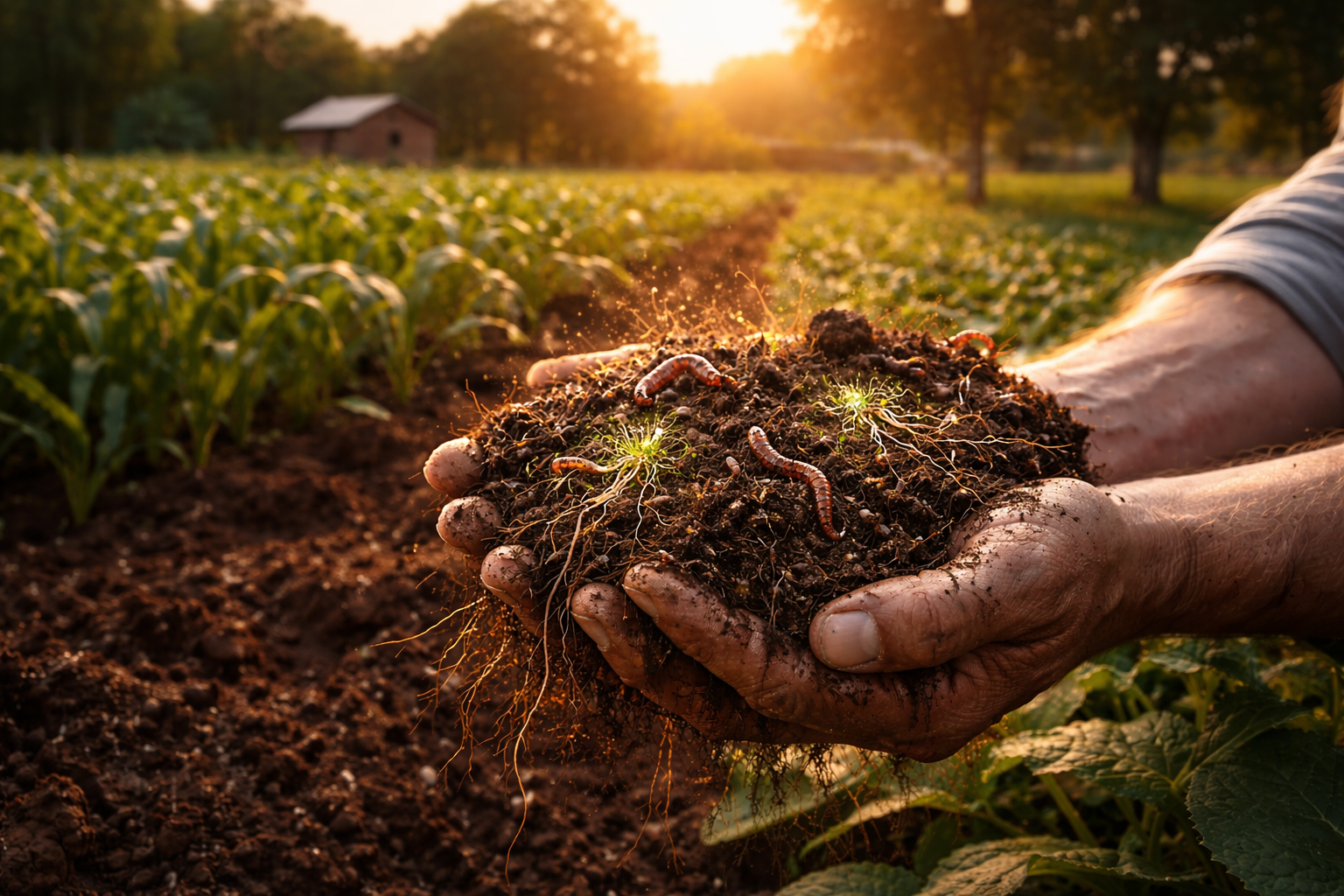
A gram of healthy farmland soil holds upwards of a billion bacteria, alongside fungi, archaea and microscopic predators that eat them. These organisms are not passive guests. They are doing labour the farmer would otherwise have to pay for. Symbiotic fungi extend the reach of plant roots far beyond what a single root system could manage on its own, drawing water and nutrients from a much larger volume of soil. Bacteria break down crop residues into the forms plants can actually use. Some species fix nitrogen straight out of the air, which is precisely the bottleneck synthetic fertiliser was invented to break. When this underground workforce is thriving, crop nutrition handles itself in ways that look almost like a free lunch.
When the workforce is thin, every gap has to be filled by hand. That is the treadmill.
The good news is the treadmill is escapable, and the way out is not exotic.
A global assessment of soil resources flagged the underlying problem clearly. Erosion, loss of organic carbon, biodiversity decline. The same assessment also pointed to the levers that move soils in the opposite direction. They are unglamorous. They are slow. They mostly involve treating the soil as a living thing instead of a substrate.
A long-running farming-systems trial tracking outcomes over four decades has found that fields managed for soil health match conventional yields in normal years and outperform them in dry ones. The yield gap is not the obstacle most farmers assume it is.
So what does managing for soil health actually look like, in practice, on a working farm?
It looks like materials most farms already have, applied with thought. The toolkit divides into three rough categories.
Things that build the soil's body. Compost, in any of its forms, is the workhorse here. Traditional compost piles, vermicompost from worm bins, the slow accumulation of mulched cover-crop residues. The unit of measurement is years, not weeks, but each application thickens the topsoil and increases the volume of water and nutrients the soil can hold. Biochar, made by burning crop residues with limited oxygen, is the longer-lasting cousin. Properly prepared, it can persist in the soil for hundreds of years, holding nutrients and offering microbes refuge in its porous structure. A meta-analysis of global trials found biochar particularly effective on degraded tropical soils.
Things that feed the soil's workforce. Compost teas, brewed by steeping finished compost in aerated water, are essentially microbial inoculants. Fermented plant juices, made from chopped greens and a small amount of sugar, do something similar with a different microbial profile. Both deliver fast, short-lived bursts of biology that complement the slow build of compost.
Things that fill specific gaps. If a soil test shows nitrogen drawdown is severe, fish hydrolysate, produced by breaking down fish trimmings with enzymes or mild acid, offers a fast, gentle source. If potassium is short, banana stems and peels, fermented or simply chopped into the soil, return what the fruit took out. These are targeted, not universal. They earn their place when something specific is missing.
The single most common mistake in this kind of work is applying inputs without knowing what the soil needs. A basic soil test, run once at the start of the planning year, is cheaper than a single misapplied bag of fertiliser. It tells you which gaps are real and which are imagined. Without it, even the best homemade input is a guess.
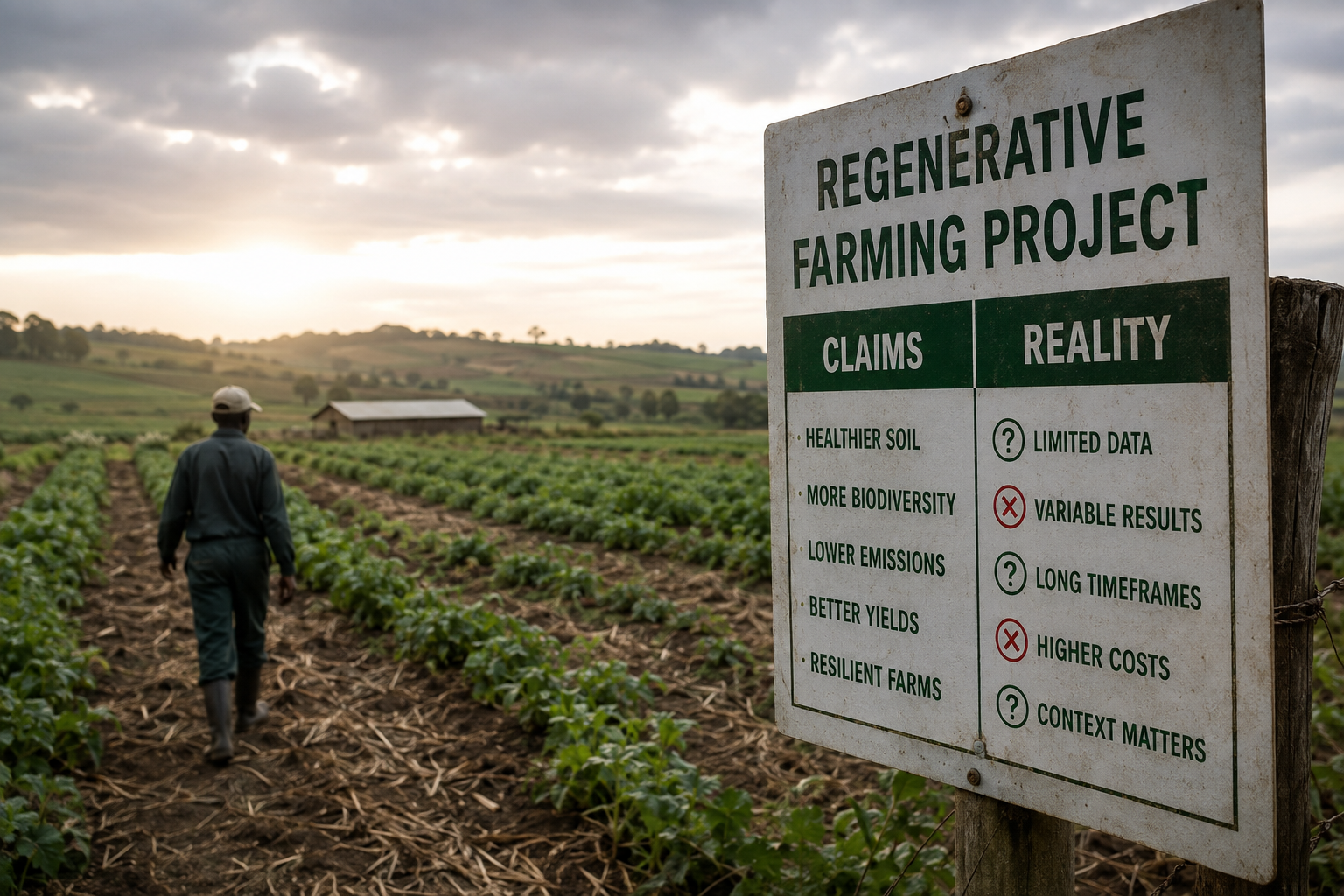
The other common mistake is treating context as optional. A coastal farm has access to fish waste. An inland farm does not, and trucking it in defeats the purpose. A maize-belt farm has access to crop residue at scale. A small vegetable plot does not. The toolkit works when the tools fit the place. Borrowing a system wholesale from a different climate or a different scale rarely ends well.
This kind of farming asks a different thing of the farmer. Less time at the agro-dealer, more time in the field with a soil probe and a notebook. Less faith in a single product, more attention to how the field responds across a season, and then the season after that. The improvements that matter most are the ones you can only see by looking patiently and at the right scale.
The reward, when it shows up, is quiet but real. Input bills come down. Yields in bad years come up. The soil starts feeling different in the hand. The farm becomes more its own ecosystem and less a recipient of inputs from elsewhere.
What leaves the farm at harvest is the crop. What stays, growing richer or thinner depending on how the year was managed, is the soil. The first determines this season's revenue. The second decides whether next season will be any easier than this one.