Somewhere this week, a farmer will walk into an agro-dealer's shop, count out a season's savings and carry home a bag of phosphate fertilizer. It is one of the most familiar moments in farming, repeated millions of times a year. What makes it remarkable is how rarely anyone asks the obvious question, whether the field actually need it?
For phosphorus, the answer is often no. And at today's prices, knowing that can be worth more than the fertilizer itself.
A nutrient with no substitute
Phosphorus is what a young plant uses to build roots, move energy around and fill its seeds. A maize plant short of it stays small, turns purple at the leaf edges and gives a thin harvest. Nothing else can stand in for it. As the US Geological Survey puts it bluntly in its annual review of the mineral, "there are no substitutes for phosphorus in agriculture."
Almost all of it comes from phosphate rock, and that rock is spread very unevenly across the planet.
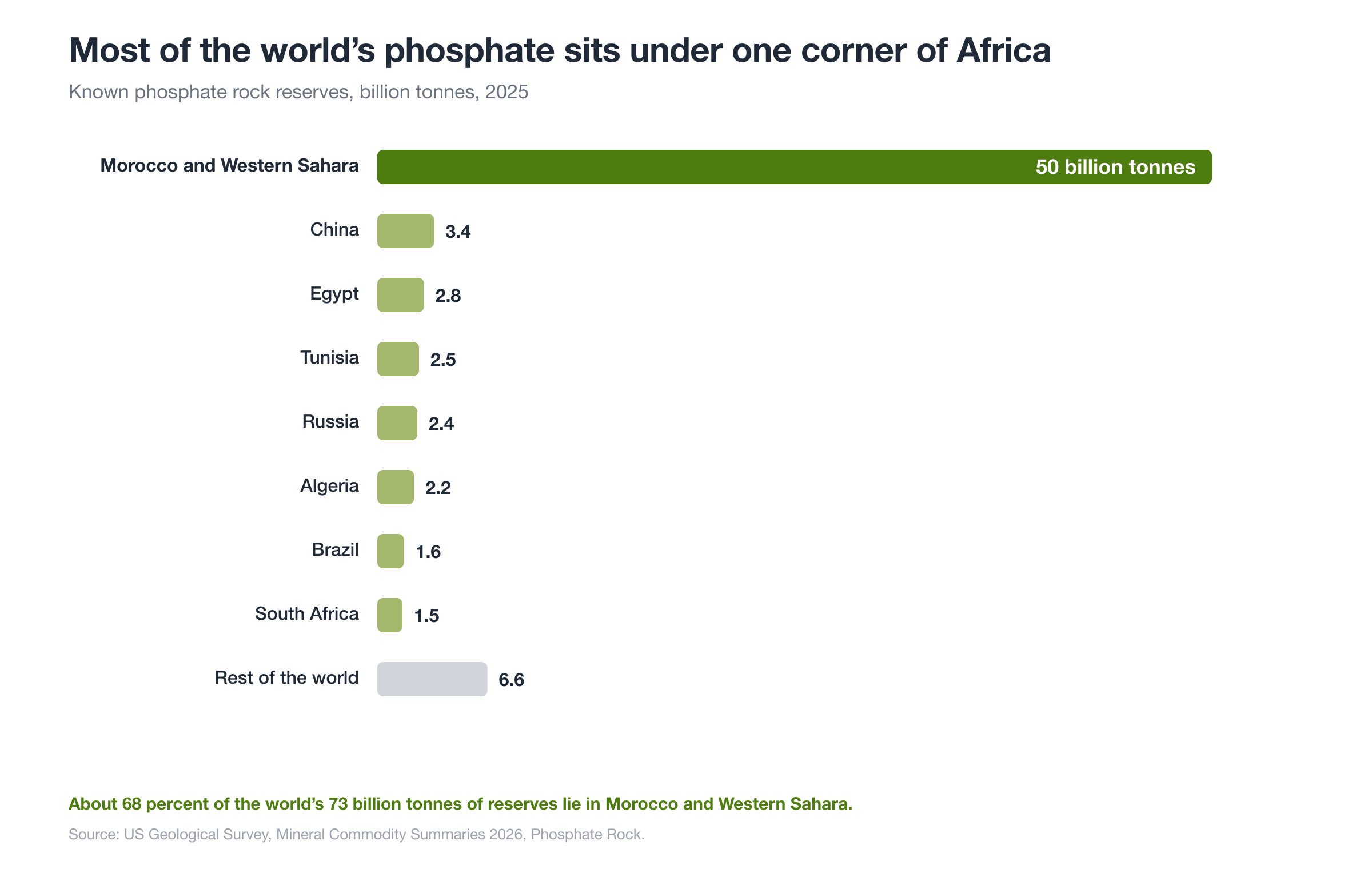
Morocco and Western Sahara hold around 50 of the world's 73 billion tonnes of known reserves. China mines the most today, but its reserves are a fraction of Morocco's. The world is not about to run out, and USGS is clear that no shortage is coming. What the map does mean is that the price a farmer pays depends on mines, factories and trade decisions thousands of kilometres away.
The price shock that never fully left
Farmers felt that dependence sharply after 2020. Diammonium phosphate, better known as DAP and the most widely traded phosphate fertilizer, averaged $312 a tonne in 2020. Two years later, with gas prices soaring, export limits in place and war in Ukraine, it averaged $772.
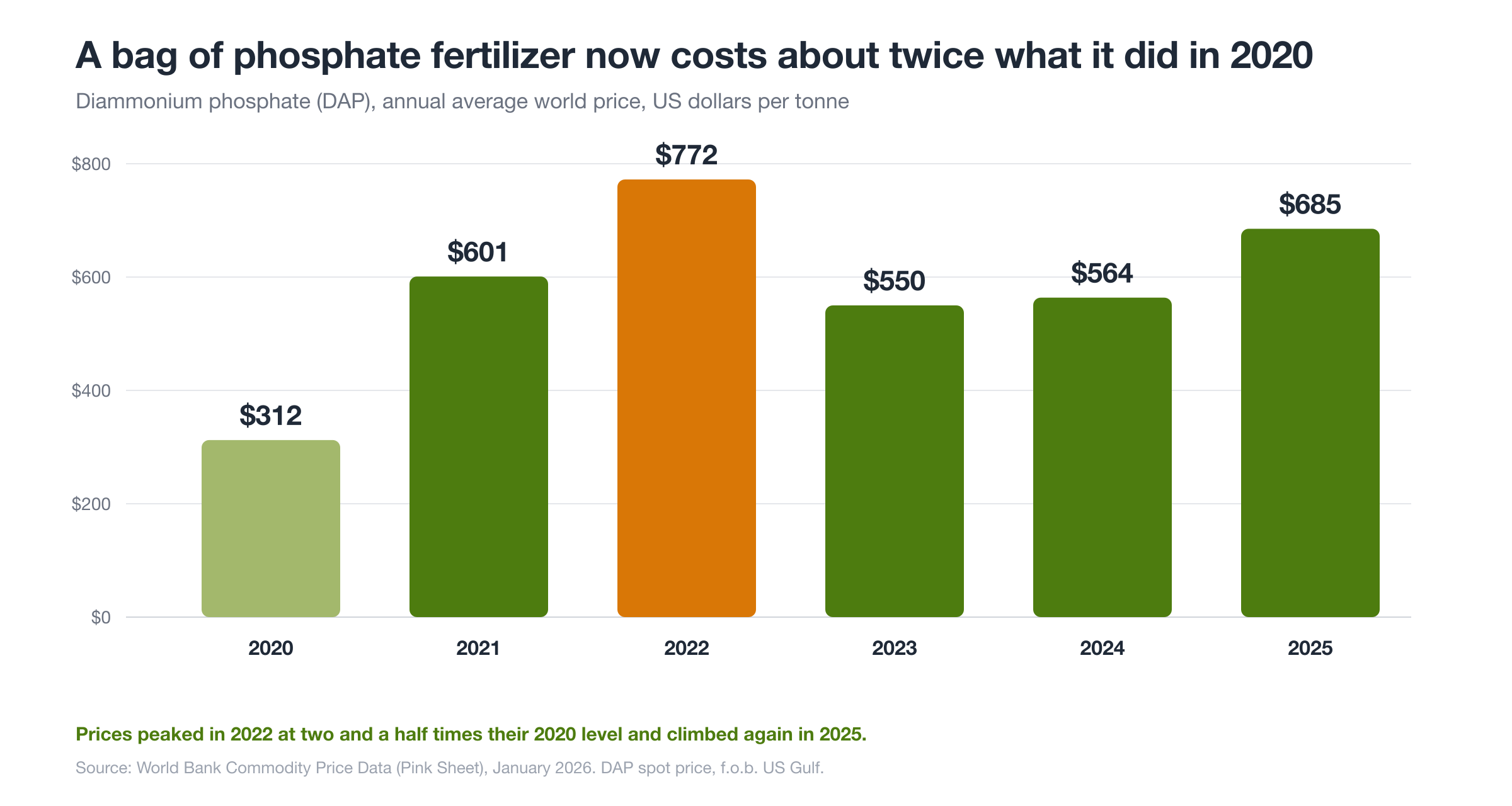
Prices eased in 2023 but never returned to where they started, and in 2025 they rose again to an average of $685, according to the World Bank's commodity price data. For a smallholder, that is the difference between fertilizing a whole plot and fertilizing half of it. For a large grain farm, it can be the difference between profit and loss for the year. Either way, every bag now needs to earn its place.
Phosphorus does not wash away
Here is the part that changes the arithmetic. Nitrogen is restless. It leaches out with rain and escapes into the air, so most of what a crop does not use in one season is gone. Phosphorus behaves very differently. It clings to soil particles and stays put.
That has a frustrating side. A crop takes up only a small share of the phosphorus applied in the season it goes on. Studies gathered by the FAO found first-year recovery as low as 5 to 25 percent. But the rest is not wasted. A review published by the FAO concluded that when you follow it over enough years, crops can eventually recover up to 90 percent of the phosphorus a farmer puts down.
Think of the soil as a savings account. Every season of heavy fertilizing adds to the balance, and the crops draw on it for years afterwards. A field that has been well fed for a decade may be carrying enough to grow several good harvests without another bag. A field that has been mined for generations with nothing put back may be close to empty. From the surface, the two look identical.
Two different worlds of soil
Globally, this has created a strange imbalance. A study of the world's farmland in the Proceedings of the National Academy of Sciences found that, worldwide, farmers apply more phosphorus than their crops remove. Yet almost 30 percent of the world's cropland was still running a deficit. Some fields are overflowing while others go hungry.
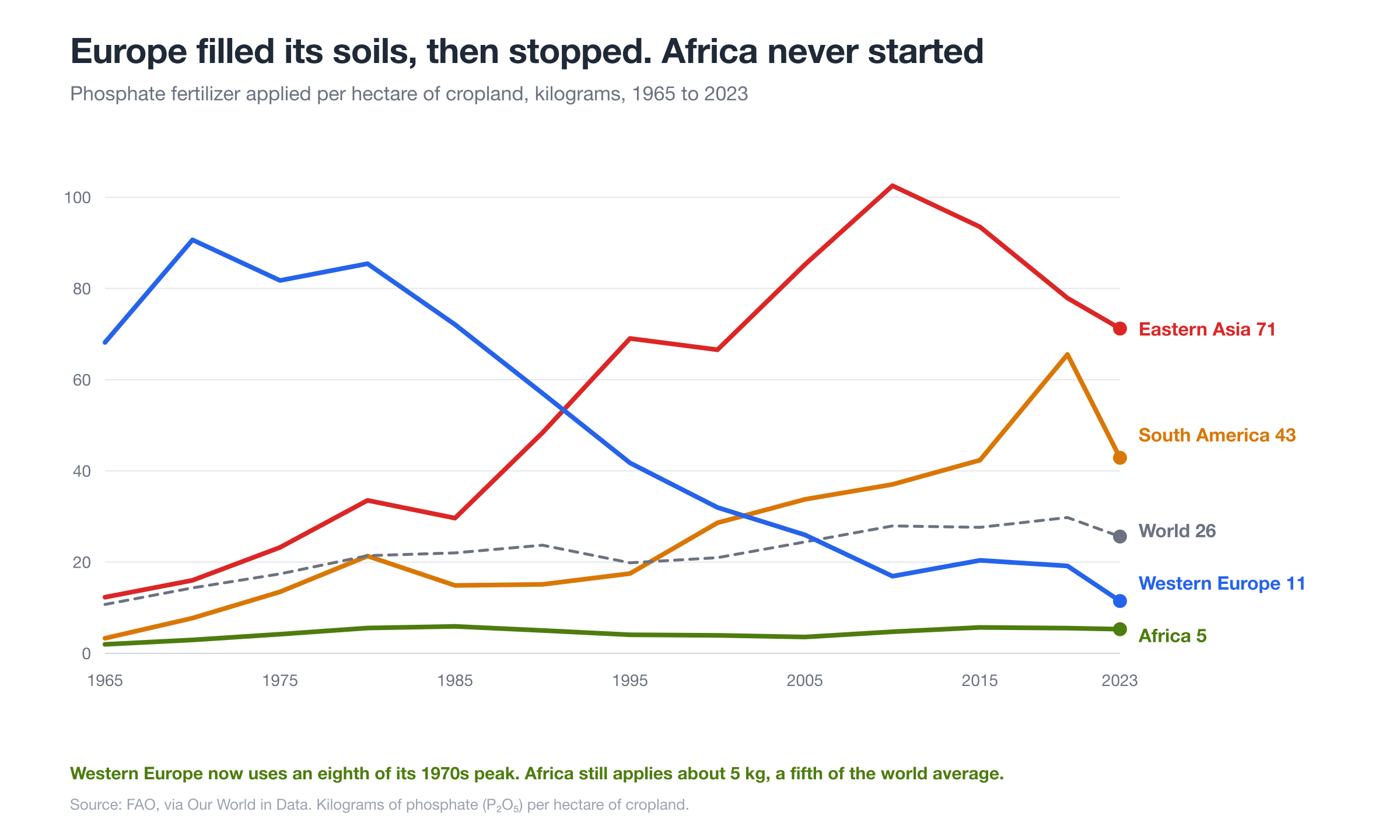
Western Europe tells the story of a full account. Its farmers poured on phosphate through the 1960s and 1970s, close to 90 kilograms a hectare at the peak. Then soil tests began showing that the ground held more than enough, and use fell steadily to about 11 kilograms today. European harvests did not collapse. Farms simply started living off the balance they had built.
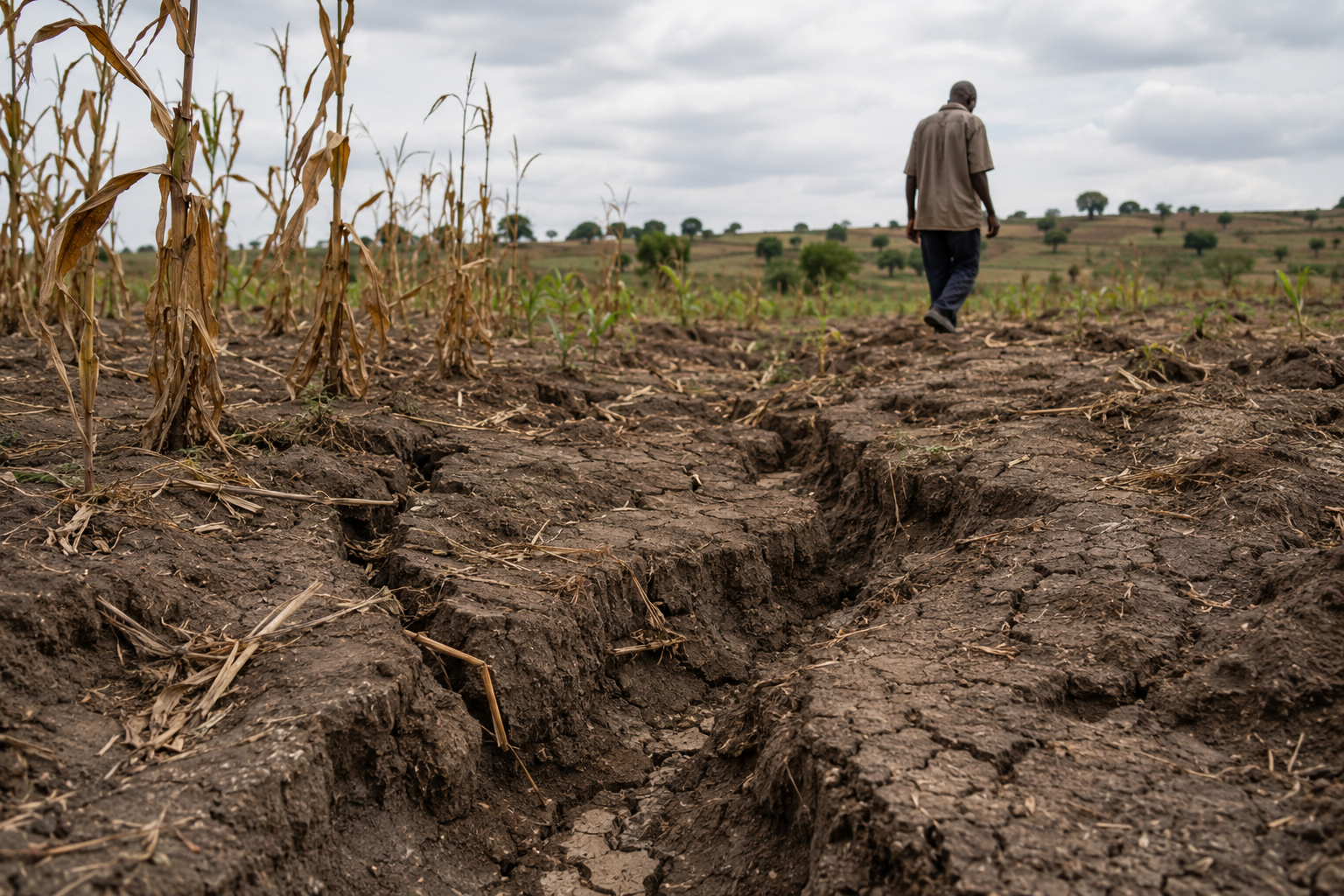
Eastern Asia followed a similar climb a generation later and has now begun to cut back too. Africa sits at the other end. Its farmers apply about 5 kilograms a hectare on average, a fifth of the world figure, and that number has barely moved in half a century. In much of sub-Saharan Africa the account has been drawn down for decades, and adding phosphorus there tends to bring a strong, visible return.
The lesson cuts both ways. Some farmers are paying for phosphorus their soil already has. Others badly need more and cannot afford to guess.
What a soil test actually tells you
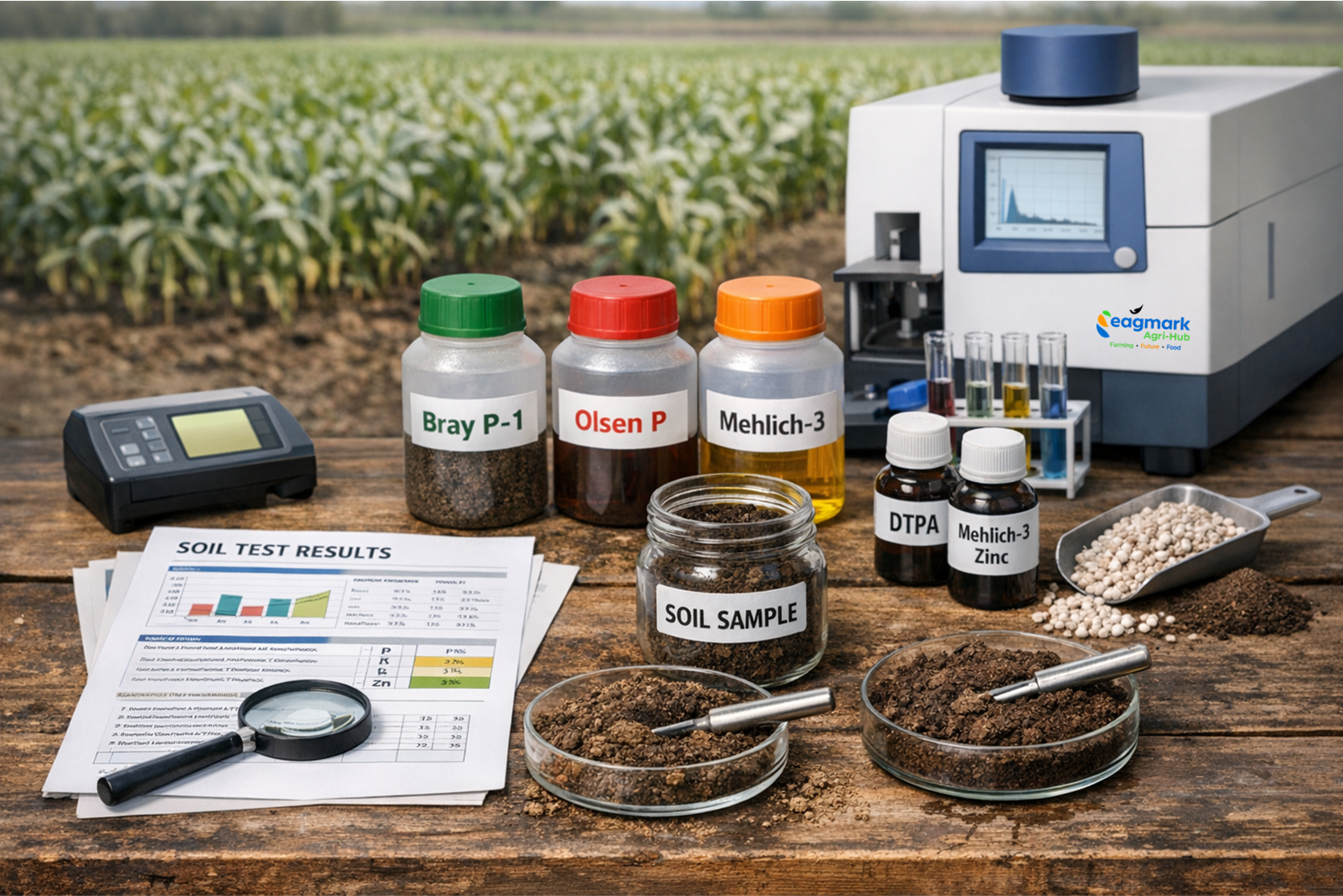
A soil test is how you read the balance before you spend. A sample of earth goes to a laboratory, and a few days later you get a number for the phosphorus your crop can reach, along with a reading on soil acidity and other nutrients.
That number matters because crops respond to phosphorus in a predictable pattern. On a field that tests very low, adding phosphate almost always raises the harvest, often dramatically. As the soil level climbs, each extra kilogram buys less and less. Past a certain point the crop simply stops responding, and further fertilizer is money spread on the ground. Agricultural researchers in many countries have worked out where those thresholds fall for their own soils and crops, and they publish them as fertilizer guides.
A test will not answer everything. Dry spells, cold soils, acidity and poor root growth can all stop a crop from reaching phosphorus that is there, so a field above the threshold can still occasionally respond to a small dose near the seed. But the test shifts the odds firmly in the farmer's favour. In many countries a lab test costs less than a single bag of fertilizer, and it holds good for three or four years.
Making it work on your farm
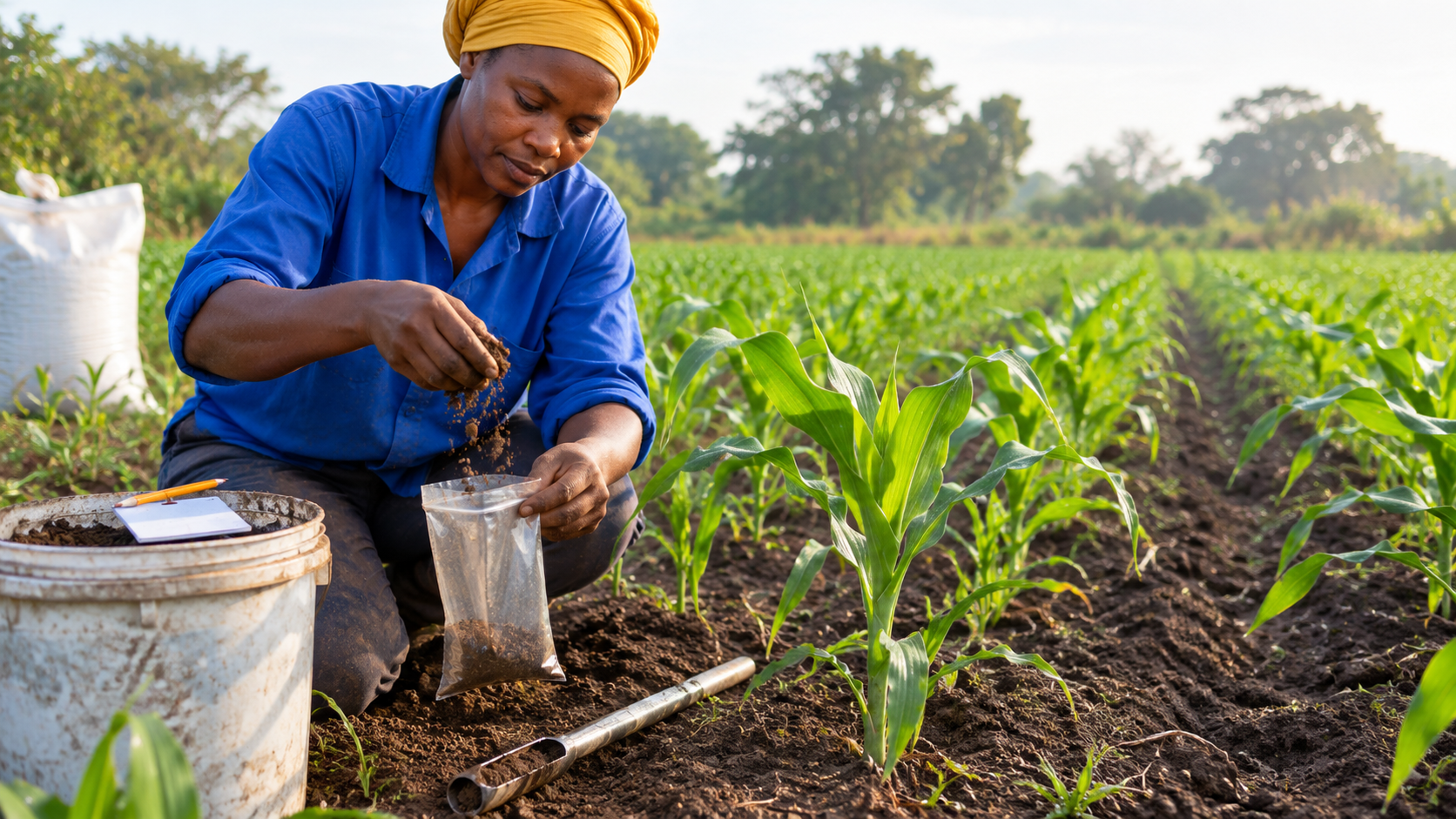
Sample properly. Walk the field in a zigzag, take 15 to 20 small scoops from the top 15 to 20 centimetres, mix them in a clean bucket and send a portion of the mix. Keep fields with different histories separate.
Use local guidance. Your national agricultural research institute or extension service will know what a "low" or "high" result means for your soils and crops.
Look at free soil maps. In Africa, iSDAsoil offers free, field-scale estimates of soil phosphorus and other properties across the continent. They are a starting point, not a replacement for a lab result.
Spend where it counts. If a field tests high, a maintenance dose or none at all may be enough for a season or two. Move that money to the fields that test low, or to nitrogen, which the soil cannot store.
Feed the account in other ways. Manure, compost and crop residues all return phosphorus to the soil, and placing fertilizer close to the seed rather than broadcasting it gets more out of every kilogram.
Test again. Repeat every few years so you can see the balance rising or falling and adjust before yields slip.
Buy the right amount, not the most
For a long time, the safest advice in farming was to put on plenty and hope for the best. With phosphate prices where they are, that habit has become expensive. The farmers coming out ahead now are not always the ones spending the most on fertilizer. They are the ones who know what is already in the ground, top it up where it is low, leave it alone where it is high, and keep the difference in their pocket.