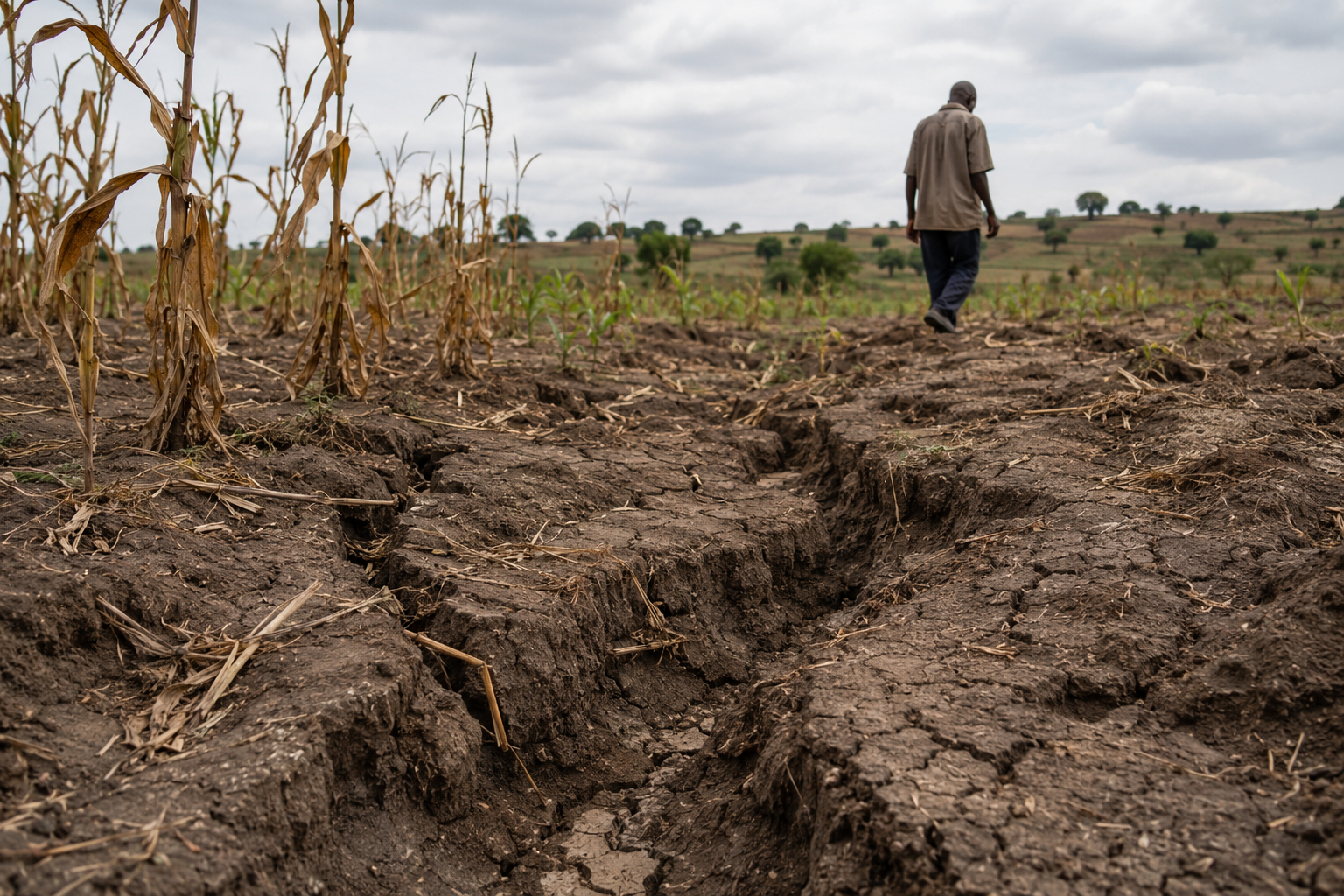
Ask a farmer in Kitui or Kakamega why yields have slipped over the past decade and few will blame the weather alone. They will talk about soil that no longer holds water the way it used to, or fields that need more fertiliser every season just to produce what they once did for free. For a long time, that was treated as local bad luck. New research says it is a global pattern, and it is measurable.
A team of agricultural economists from the University of Bonn, working with researchers at the University of Minnesota, the University of Basel and Hamburg University of Technology, has produced the first attempt to size up how much of the world's lost food output can be traced directly to worn-out soil. Their study, published this year in the journal Nature Food, compared crop yields across land parcels with similar climates and farming inputs, then isolated what soil condition alone was doing to output.
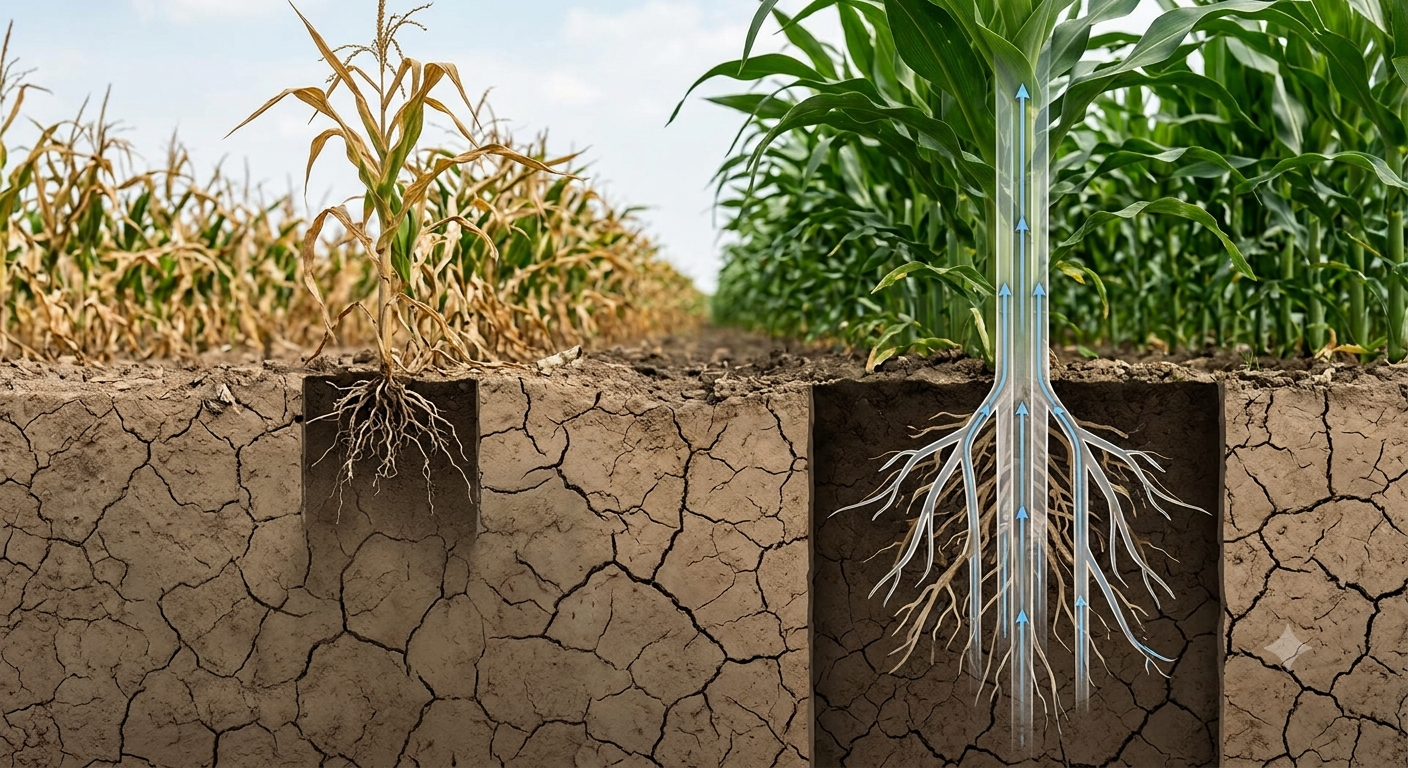
The pattern held up across continents. For every 10 percent increase in soil degradation, yields dropped by roughly 2 percent on average. Run the equation in the other direction and the upside is hard to ignore: clawing back just a tenth of the degradation caused by human activity worldwide would free up enough food to feed more than 70 million additional people, without opening a single new hectare of farmland.
The researchers measured degradation along five lines: erosion, moisture loss, compaction from heavy machinery, decline in soil carbon, and thinning plant cover. None of these show up overnight. They build slowly, season after season, until a field that used to carry a farmer through a dry spell starts failing at the first missed rain.
Where the losses are landing hardest
The global average hides a sharper story on the ground. Between 2015 and 2019, the world lost at least 100 million hectares of healthy, productive land every year, an area roughly twice the size of Greenland, according to tracking by the UN Convention to Combat Desertification. Sub-Saharan Africa and Latin America carried a disproportionate share of that loss.
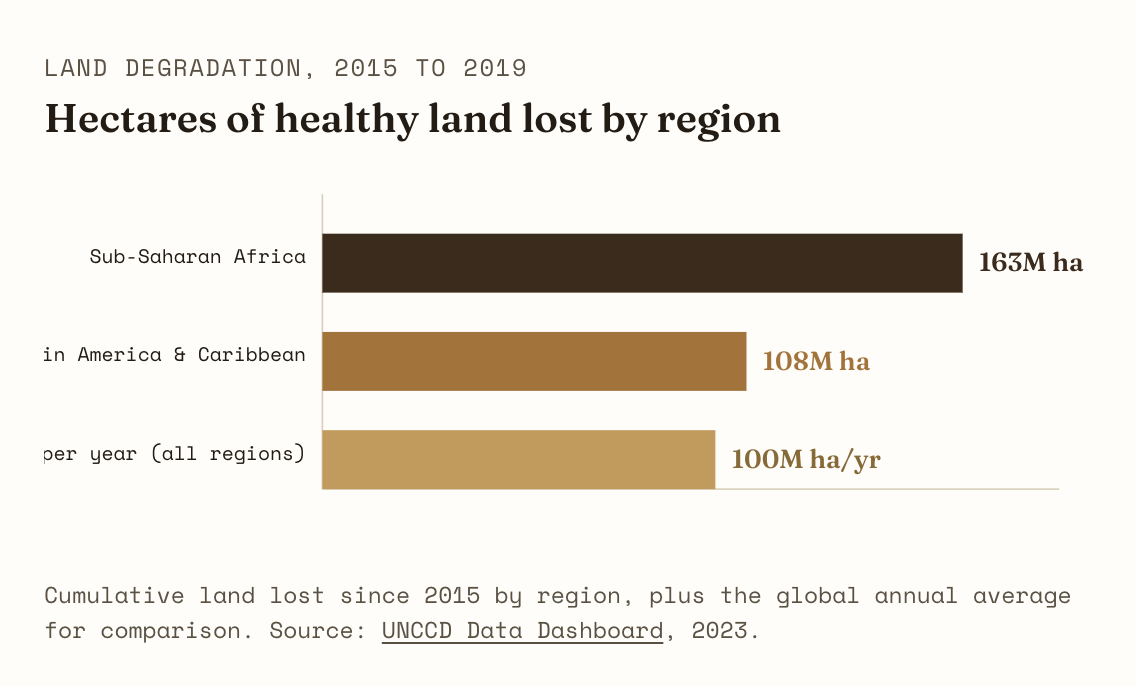
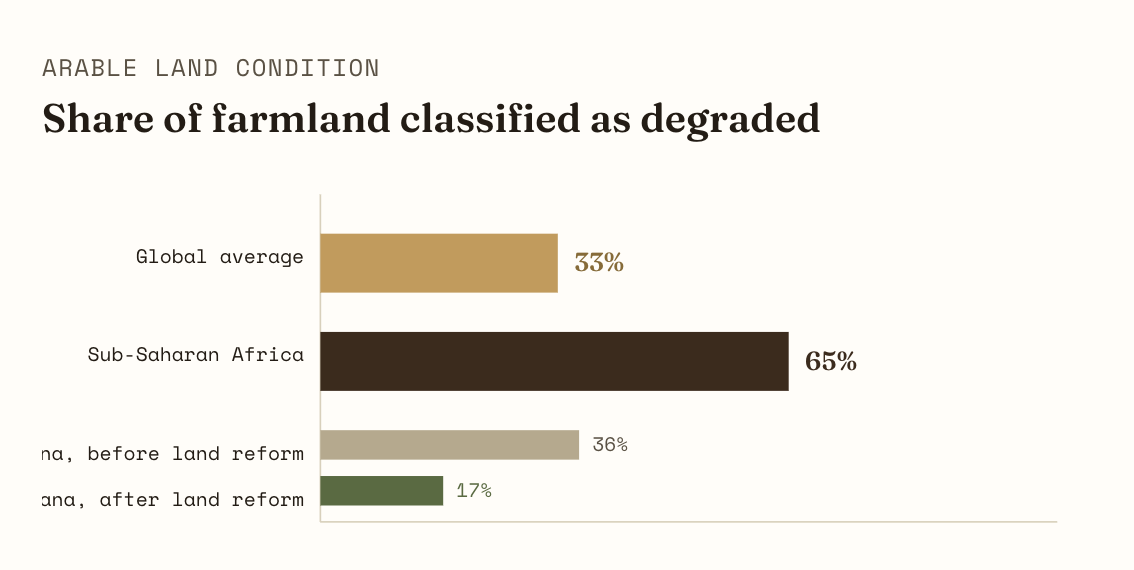
The regional breakdown explains why this story reads differently depending on where you farm. Across Sub-Saharan Africa, an estimated 65 percent of arable land is now degraded to some degree, well above the roughly one-third of soils that the UN Food and Agriculture Organization counts as degraded worldwide. Nutrient loss from that degraded land is estimated to cost the region close to 4 billion US dollars a year, money that never shows up as a line item but drains out of every harvest.
The one country that turned it around
Botswana is the case worth studying. Government tracking shows the country cut the share of its territory affected by land degradation from 36 percent down to 17 percent, through a mix of grazing controls, land-use zoning and restoration funding rather than any single breakthrough technology. It is proof that degradation is not a one-way slide. Soil that has been pushed hard can be brought back, if the incentives are aligned with the people working the land.
Soil degradation behaves like debt. Small amounts accumulate quietly for years, then arrive all at once as a yield collapse nobody saw coming.
— Framing echoed across recent soil economics research from the University of Bonn's Land Economics Group
What is actually wearing the soil down
Four forces show up again and again in the research: fields ploughed the same way every season without rest, grazing pressure that strips vegetation faster than it can regrow, deforestation that leaves topsoil with nothing to hold it in place, and heavier rainfall events tied to a changing climate that wash away in an afternoon what took years to build. None of these are exotic problems. They are the ordinary decisions of ordinary farming seasons, compounding over time.
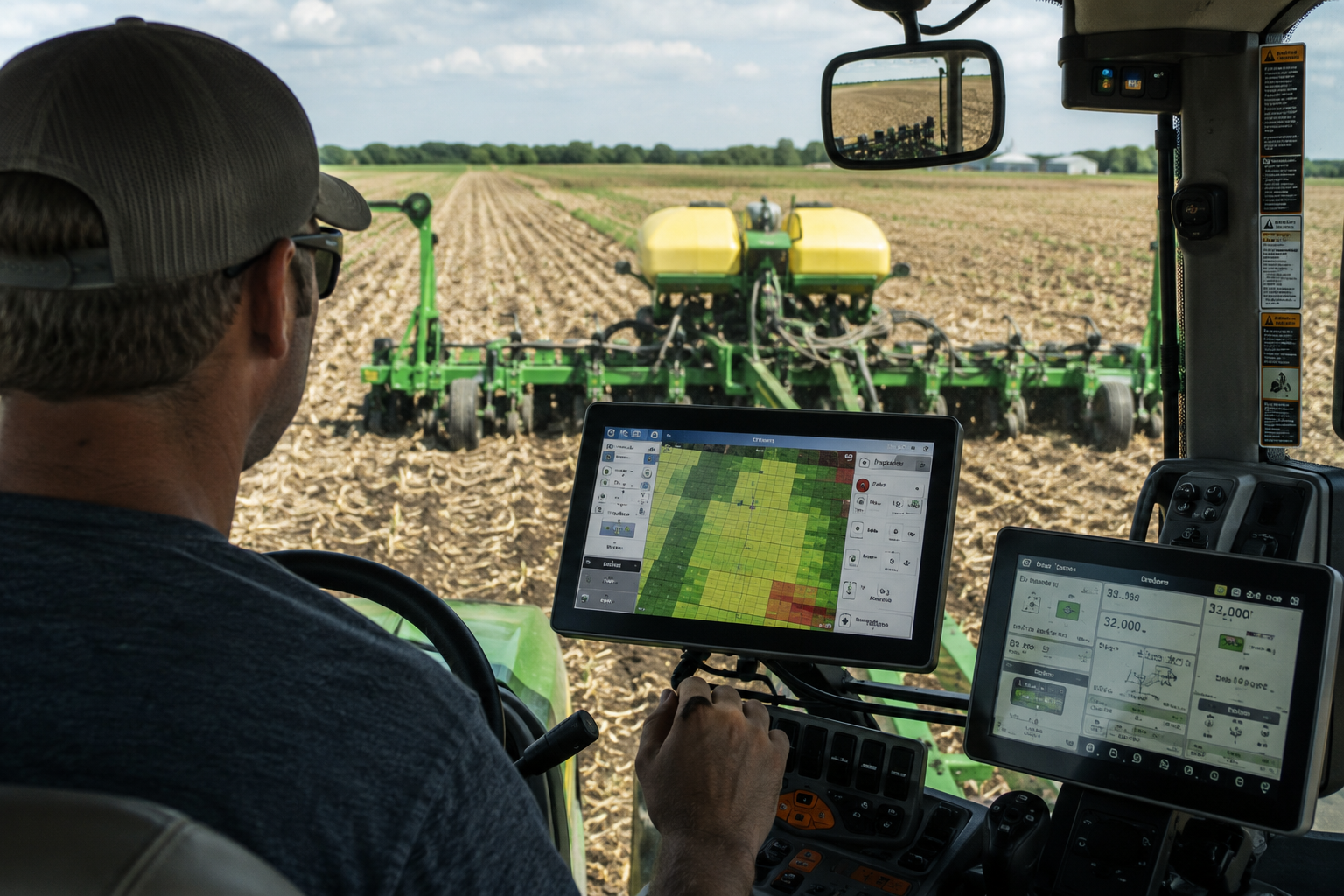
What gives researchers confidence is that better satellite monitoring is starting to make the invisible visible. A 2026 analysis in Environmental Research Letters points out that high-resolution earth observation can now track soil condition on individual farms rather than relying on farmers to self-report or wait for an inspector. That matters because it lets governments and lenders reward the specific plots that are actually improving, instead of spreading support thinly across an entire district.
What you can do this season, without waiting for policy
Not every fix requires a government programme. Farm-level habits move the needle too, and several cost little beyond a change in routine.
01 Keep the ground covered. Bare soil between plantings is what erosion and moisture loss feed on. Cover crops, mulch, or simply leaving crop residue in place after harvest all slow that loss.
02 Cut back on tillage where you can. Turning soil over repeatedly breaks down its structure and releases stored carbon. Reduced or zero tillage keeps that structure intact season over season.
03 Feed the soil, not just the crop. Compost and manure rebuild organic matter that synthetic fertiliser alone cannot replace, and they improve how much water your soil can hold during dry spells.
04 Rotate grazing and cropping. Letting land rest, or alternating what grows on it, gives soil biology time to recover between demands.
05 Test before you guess. A soil test tells you what is actually missing, so you are not adding inputs your land does not need, or missing the ones it does.
The bigger point behind the new research is that soil health has stopped being a purely environmental talking point. It is now priced in tons of grain, dollars of lost nutrients, and the number of people a harvest can feed. For a continent where farming still employs the majority of the workforce, that reframing matters. The ground under your feet is not a fixed asset. It is either being spent or being rebuilt, and the data now shows which one is happening, field by field.