Every farmer does the same sum before planting, whether they write it down or not. What will this bag cost, and how much of my harvest will it take to pay for it?
For most of the last decade the answer was comfortable. Lately it has not been.
Fertilizer now costs more of your harvest
The simplest way to see the squeeze is to price fertilizer in grain rather than dollars. In 2020, a tonne of urea, the world's most widely used nitrogen fertilizer, cost about 1.4 tonnes of maize at world prices. So far in 2026 it costs about 2.5 tonnes.
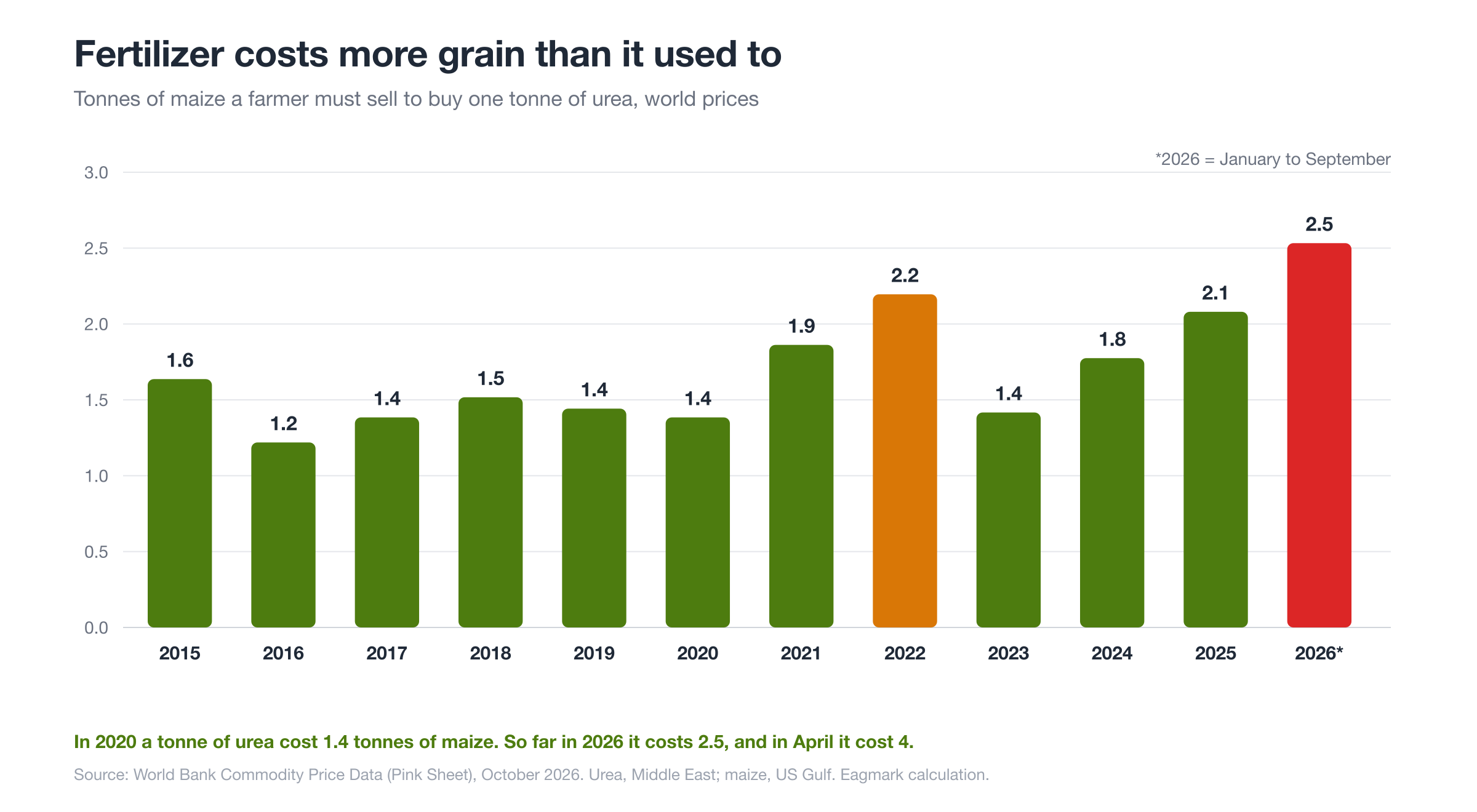
The spring season in the US showed how quickly that can change. When shipping through the Strait of Hormuz was disrupted, urea prices nearly doubled in a few weeks and reached $857 a tonne on the World Bank's monthly average in April. Farm surveys by the University of Arkansas recorded quotes close to $900.
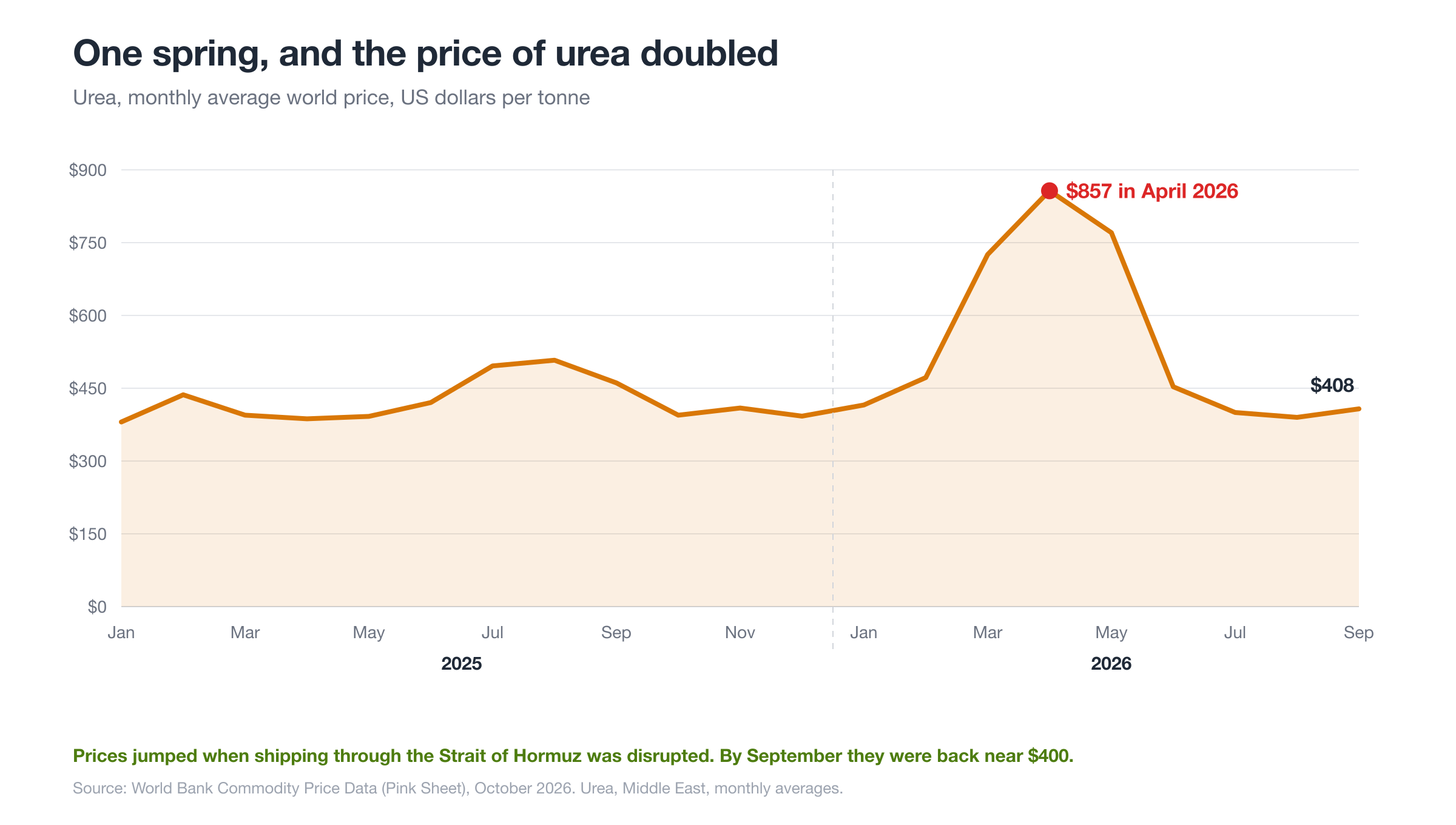
Urea has since settled back near $400. Phosphate has not. Diammonium phosphate, the most common phosphate fertilizer, averaged $801 a tonne in September, higher than at any point in 2025. Farmers cannot control any of this. What they can control is how much of each bag actually turns into harvest.
A lot of what we buy never reaches the crop
Nitrogen is the clearest example. Once it is in the soil, it does not wait politely for the plant. Some escapes into the air as gas, and some washes down below the roots or into streams. Researchers measure how much ends up in the harvest, and the gap between countries is wide.
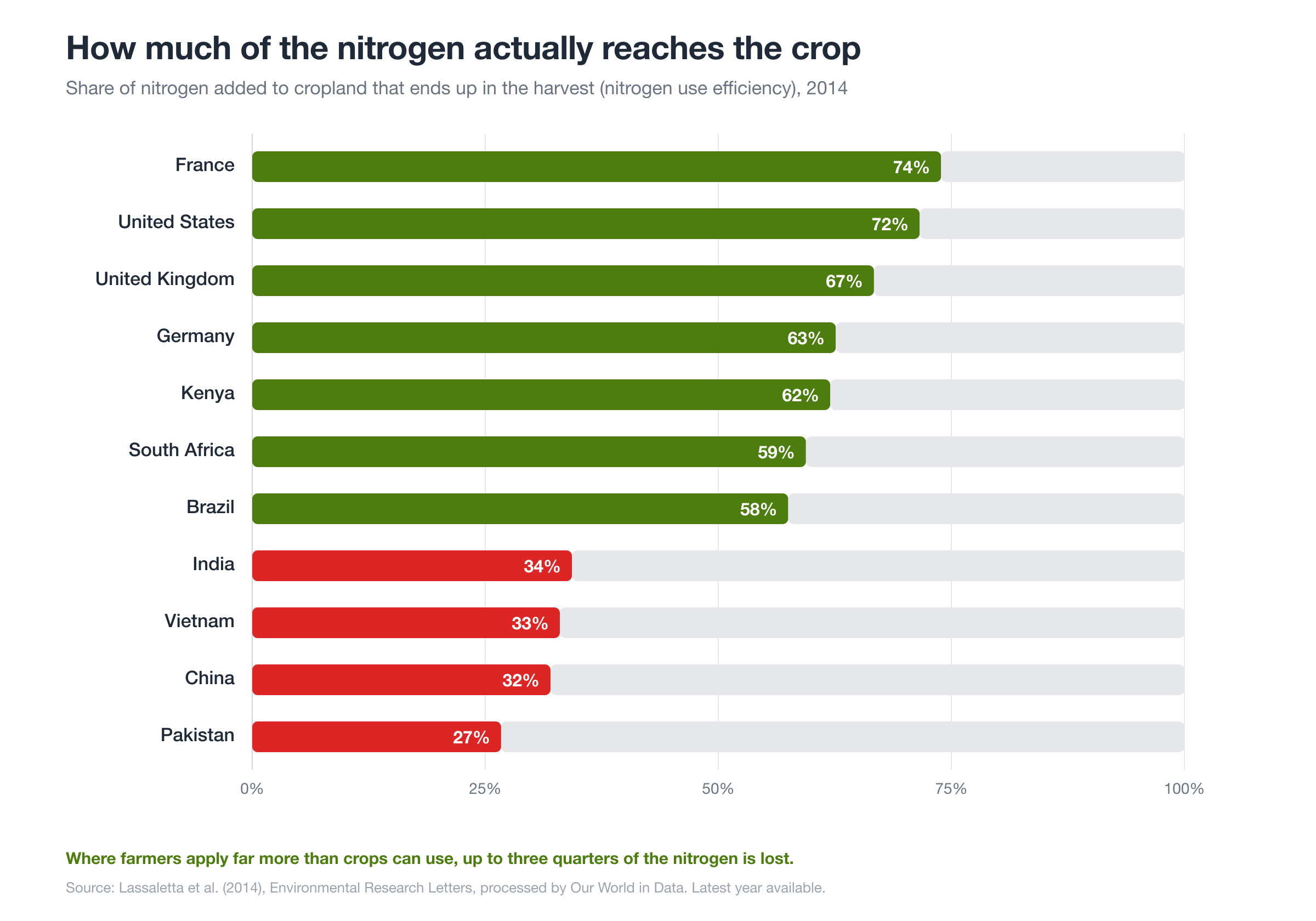
In France and the United States, roughly seven of every ten units of nitrogen end up in the crop. In China, India and Pakistan, it is closer to three. The usual reason is simple. When fertilizer is cheap or subsidised, farmers apply more than the crop can take up, and the extra is lost. At today's prices, that extra is money left in the field.
The good news is that farms with the biggest losses also have the most room to save. Here are five habits that help, whether you farm two hectares or two thousand.
1. Let last season tell you where to spend
Before buying for the next crop, walk back through the last one. Which parts of the farm did well and which struggled? The answer is not always fertilizer. A patch that dried out early, flooded in April or was hit by pests may not need more nutrients at all. Pouring fertilizer onto a problem that is really about water or weeds adds cost without adding grain.
Write it down by field, or even by part of a field. Next season's plan should start from that record, not from what you bought last year.
2. Test the soil, including the bad patches
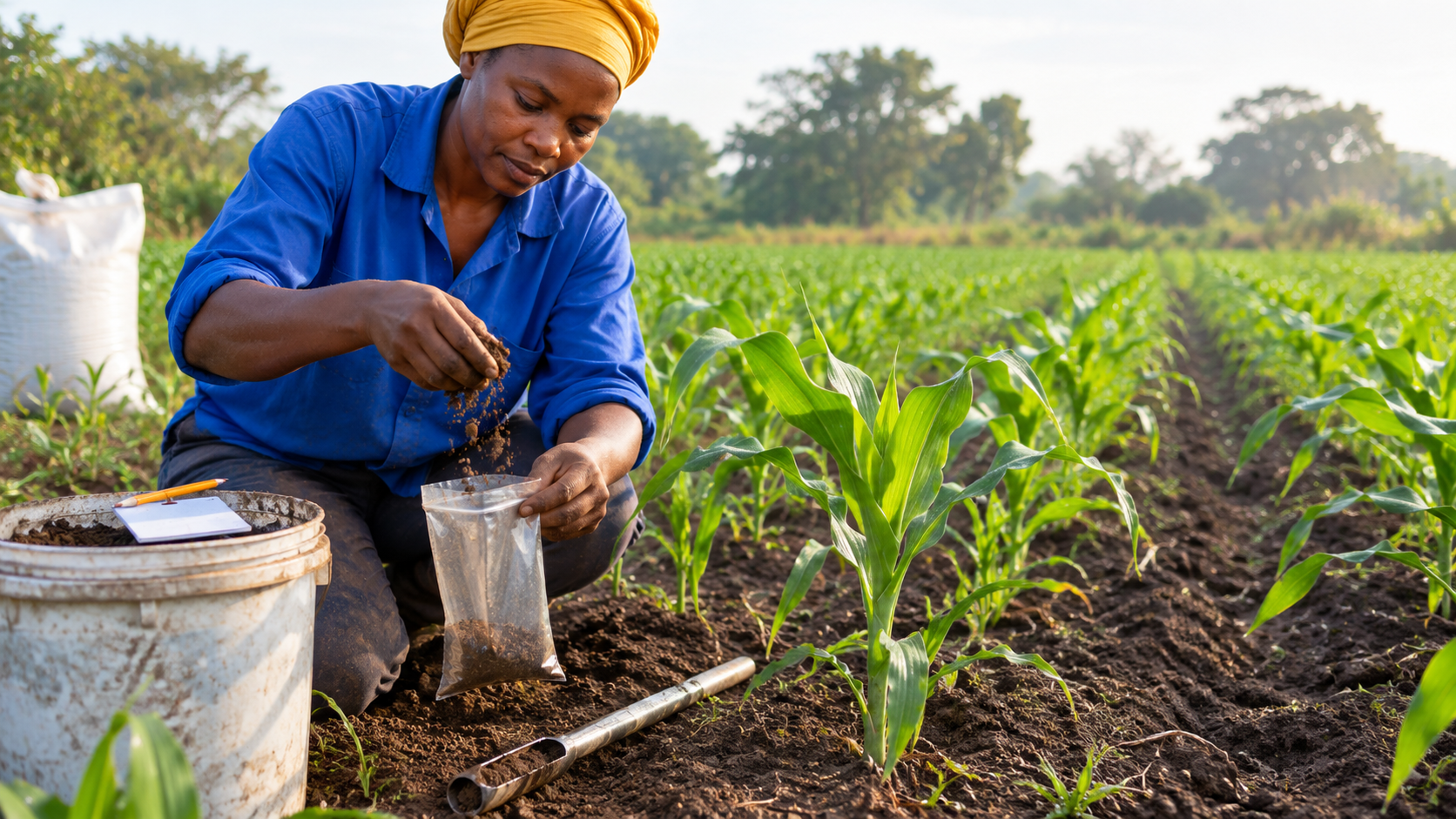
A soil test tells you what is already there, so you only pay for what is missing. Many farmers sample only their best ground, which hides the problem areas. Take samples from strong, average and weak parts of the farm and keep them separate. Your local agricultural office or extension service can tell you where to send them, and the FAO Global Soil Partnership lists soil labs and guidance in many countries.
A test that costs the price of a bag or two can easily save several.
3. Check acidity before adding more
Sometimes the nutrients are in the soil but the crop cannot reach them. Very acidic soil is a common reason, especially in parts of East and Southern Africa, South America and South Asia. In that case, adding more fertilizer helps little, while lime to correct the acidity can make the fertilizer already there work again.
The same test that measures nutrients will usually report acidity. It is worth reading that line first.
4. Feed for the harvest you can realistically get
It is tempting to fertilize for a record crop. But if rainfall, seed or soil will only carry the field to an average harvest, the nutrients meant for the extra yield are wasted. Base your amounts on what the field has actually produced in normal years.
With nitrogen, many farmers now split the dose. A smaller amount goes on at planting, and the rest goes on a few weeks later once the rains have settled and the crop looks promising. If the season turns bad, you have not spent the full budget on a crop that cannot use it.
5. Ask what a product fixes before you pay for it
Agro-dealer shelves are full of products promising bigger harvests. Some work well. Others solve problems your field does not have. Before buying, ask a simple question. What shortage does this correct, and does my soil test show that shortage?
The cheapest product is not always the best value, and the most expensive is not always the most effective. When you are unsure, try it on one strip of the field and leave a strip beside it untreated. At harvest, the difference between the two strips is the answer, and it is yours.
Spend less, waste less
High fertilizer prices are not going away soon, and nobody can say when the next shock will come. The farms that come through these years in good shape will not be the ones that spent the most on inputs. They will be the ones that knew their fields well enough to put each bag where it does the most good.