Agriculture sits at the heart of every economy, every supply chain, and every meal. It is essential, political, and deeply emotional. It is also one of the trickiest places to put money to work, and the distance between an industry that matters and a business that pays is far wider than most investors initially admit.
After more than a decade of watching capital flow into farms, food systems, and the many layers in between, one lesson keeps surfacing: agriculture is one of the easiest sectors to admire and one of the hardest to underwrite well.
That is not because the opportunity isn't real. The system is enormous, inefficient, and quietly central to long-term resilience. The pressure on it keeps rising. Climate stress, shifting diets, geopolitical fragility, and a growing population all push agriculture further into the spotlight.
But importance is not investability. The two are often confused, and the cost of confusing them is high.
The narrative that does too much of the work
Few sectors come with a stronger built-in story. Agriculture feeds people. It touches every continent. It sits beside themes that sound durable and morally serious – food security, resilience, productivity, sustainability. It is easy to respect, and even easier to overrate.
One of the most common mistakes in thematic investing is to start with a true macro statement and let it quietly stand in for a company thesis. The world needs food. Farms need to be more productive. Supply chains are wasteful. All true. None of it tells you where margins land, who actually pays, how adoption happens, or whether a single business can build an edge that compounds with scale.
Recent funding data makes the point sharper, not softer. Global agrifoodtech investment showed signs of recovery through the most recent cycle, but the rebound was uneven and concentrated in a small number of large downstream rounds. That isn't proof the category became easier to back. It's proof that capital became more selective.
Six lessons that keep coming back
1. Importance and investability are not the same thing. This sounds obvious until you watch it play out. Essential sectors do not automatically produce attractive returns. Some are simply hard places to capture value – complexity, fragmentation, regulation, weak pricing power, and diffuse incentives all get in the way.
2. Where value sits in the chain is often less obvious than it looks. Agriculture is full of businesses that are useful, admired, even strategically relevant, and still poorly positioned to capture durable economics. Solving a real problem isn't enough if most of the value accrues somewhere else.
3. Operational friction is not a side issue. It is often the whole game. Agriculture is embedded in physical systems, local relationships, biological constraints, and uneven infrastructure. Adoption is rarely clean. Behavior change is expensive. Execution matters far more than novelty. Software-style pattern matching tends to break here.
4. False aggregation is dangerous. Treating agriculture as one category or treating any geography as one market almost always misleads. The reality is a patchwork of local systems with different crop mixes, regulatory environments, distribution structures, and customer behavior. Local market structure is not a detail. It is often the investment case itself.
5. Volatility and cyclicality demand conservative planning. Agriculture is more cyclical than most forecasts admit. A base case that looks reasonable in a benign year can look aggressive once the cycle turns or the macro backdrop shifts. Long-running agricultural output data shows just how much variability sits inside the system. Conservative planning here isn't weak ambition, it's usually a sign that management understands the category.
6. Exit planning has to begin at entry. The strategic buyer universe in this sector is often narrower than expected. Many buyers are price-sensitive or absorbed by their own operating issues. Public-market appetite for agriculture-linked listings has historically been uneven. That isn't a reason to avoid the sector, it's a reason to design the exit deliberately from the start, with a realistic view of who buys, under what conditions, and why.
Where the more interesting opportunities sit
After years of pattern-matching, the businesses that hold up under scrutiny tend to share a quiet feature: they sit close to a painful, recurring bottleneck rather than a fashionable theme.
A few areas keep standing out.
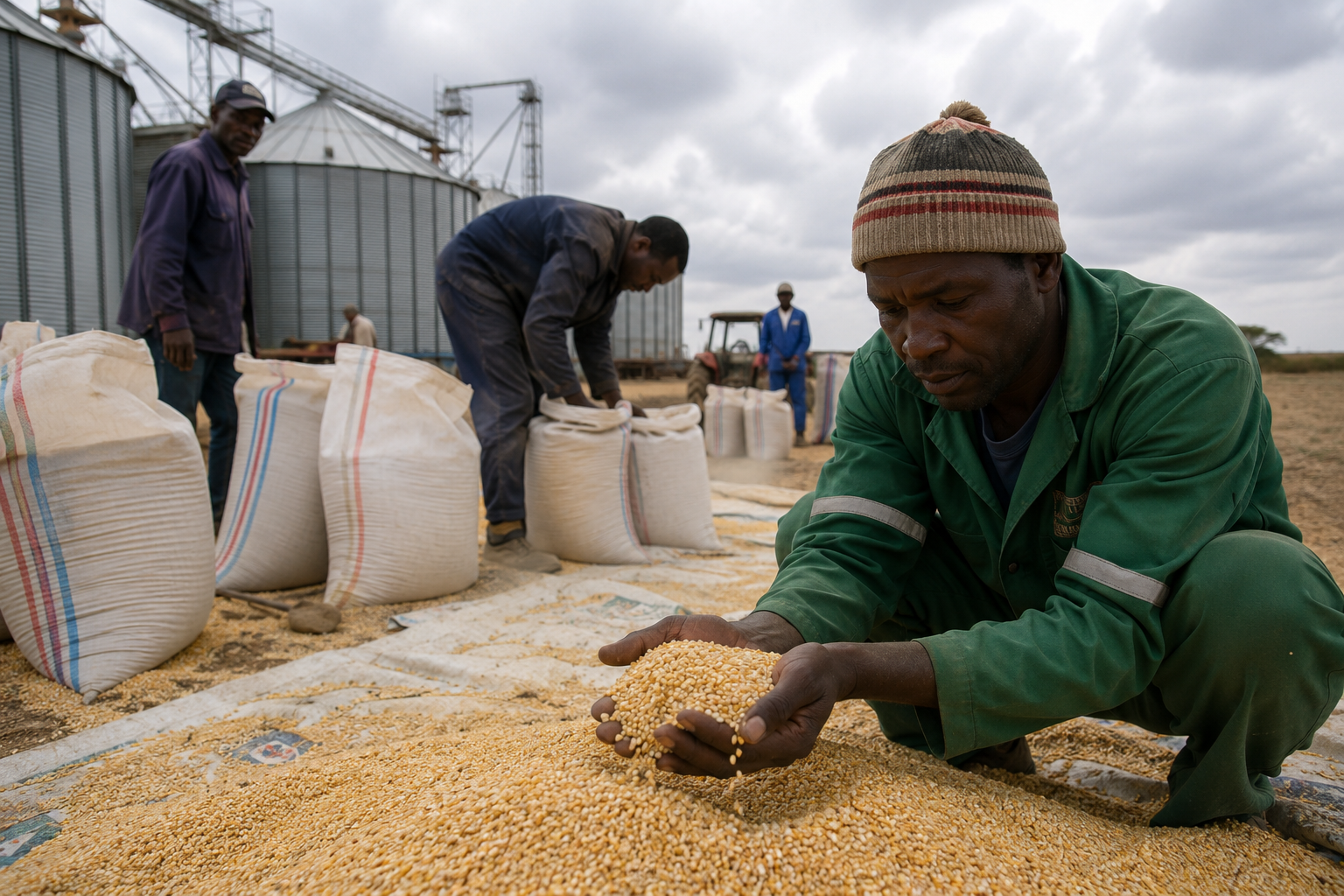
Midstream and post-harvest infrastructure. Storage, aggregation, quality control, cold chain, processing. None of it is glamorous. All of it sits close to measurable economic pain. When a business reduces waste, improves realization, or speeds throughput in a way the customer can feel immediately, the underwriting gets cleaner.
Compliance and traceability infrastructure. As food-safety standards tighten and cross-border rules harden, some companies are no longer selling optional software. They are helping processors, exporters, and supply-chain operators stay commercially viable. Rising compliance costs across global food trade have been climbing for years, and the trend is accelerating.
Embedded finance tied to real transaction rails. Agriculture has always had a financing gap. Standalone credit stories are easy to romanticize. The better setups are the ones where finance is embedded inside procurement, storage, distribution, or merchant workflows with real operating data and repayment discipline built into the system.
Selected biological, genetic, and industrial platforms. Not every deep-tech agriculture story holds up. Some do. Input, yield, resilience, and manufacturing bottlenecks can be real enough to support strong businesses, provided the commercialization path is credible. The technical promise has to connect to adoption, economics, and execution, not just headlines.
The thread that ties it together
The pattern, after years of both wins and missteps, is simple. Businesses solving an expensive, recurring problem in the chain almost always underwrite better than businesses that merely sound aligned with a compelling agricultural theme.
Agriculture deserves the respect it gets. The world cannot function without it. But respect is not the same as a return, and a category narrative is not a company thesis. The investors who keep that distinction front of mind tend to do better, not because they're less hopeful about the sector, but because they're more honest about what it actually takes for a single business inside it to work.
Importance is the easy part. Investability is the work.