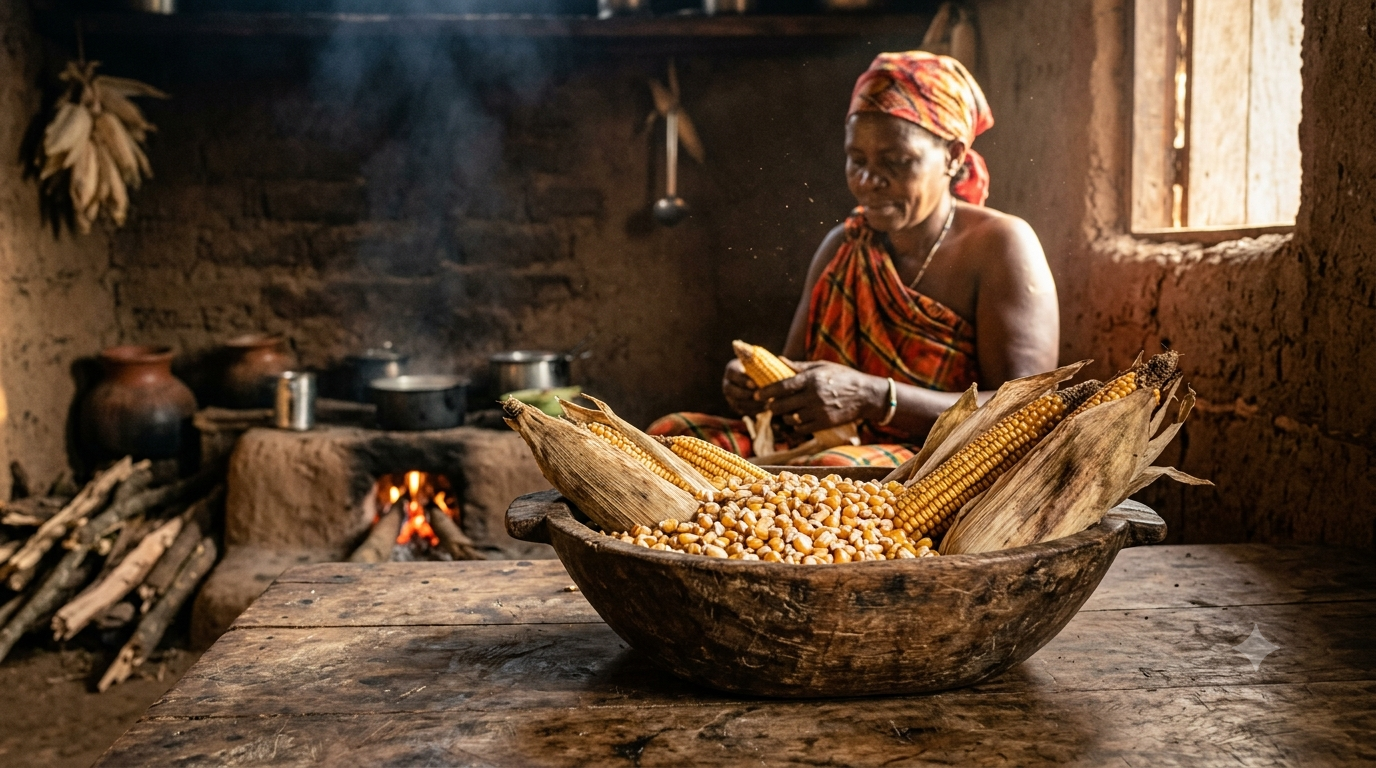
Maize is the heart of the Kenyan kitchen. It becomes ugali at dinner, porridge at breakfast, and the first solid food many children ever taste. But a major new study suggests that a serious danger may be hiding in plain sight inside this everyday staple and that most families have no idea it is there.
The threat is aflatoxin, a poison produced by molds that grow on maize and other crops when they are dried or stored poorly. You cannot see it, smell it reliably, or taste it. And unlike a pest you can spot on a leaf, it does its damage quietly, over years, long after the meal is eaten.
What the research found
Researchers surveyed nearly 18,000 households in a rural farming community, one of the largest studies of its kind ever done in the region. They wanted to know a simple thing: do the people who grow and eat maize every day understand the risk that comes with it?
The answer was sobering. Only about half of those asked had ever even heard of aflatoxin. Among those who had, very few could correctly name the foods most at risk, the signs of contamination, or what it does to the body. Not a single person could identify the full list of health effects. Meanwhile, more than three quarters of households were eating maize meal three or more times a week, most of it grown and stored at home.
In other words, the exposure is constant and the awareness is thin. That is a dangerous combination.
Why this matters more than it seems
Aflatoxin is not a minor nuisance. Long-term exposure is strongly linked to liver cancer, one of the harder cancers to treat. It weakens the immune system, leaving people more open to other illnesses. And it is associated with stunted growth in children, which means a toxin in the food bowl today can shape a child's health and future for life.
The risk often begins early. Maize porridge is a common first food for babies, so exposure can start in the very first months and continue across a lifetime. For communities where maize is eaten daily and money is tight, there is rarely the option to simply buy something else.
A knowledge gap, not just a farming gap
Perhaps the most striking finding was who knew the least. Awareness was lowest among rural residents, poorer households, women, and those with little formal schooling. That matters because women are often the ones who dry the grain, store it, and prepare the family meals. The people closest to the food were frequently the least equipped with information to keep it safe.
This points to something important. The aflatoxin problem is not only about better dryers or stronger storage, though those help enormously. It is also about information. When people do not know that wet maize, drying on bare ground, or a poorly sealed store can breed an invisible poison, even simple protective steps go unused.
The hopeful part
There is real opportunity in these findings. The same study showed that people are hungry for guidance. Many already check for quality marks when buying flour, and a large share said they would welcome more awareness through radio, television, and trusted local voices. The appetite to learn is there. What is missing is a steady, practical stream of the right information reaching the right people.
That is where the path forward becomes clear. Aflatoxin control does not depend on a single fix. It grows from many small, well-understood habits practiced together: drying maize properly and off the ground, storing it dry and sealed, sorting out moldy or discolored grain, and treating clean handling as part of the harvest, not an afterthought. None of this is complicated. But it only happens when people know why it matters.
What this means for the sector
For everyone working in agriculture, from extension officers to aggregators to digital platforms, the message is direct. Food safety has to travel alongside food production. It is not enough to help farmers grow more maize if the same maize carries a hidden health cost into the home.
Embedding simple aflatoxin awareness into the training, tools, and conversations farmers already trust could protect countless families at very low cost. The science is settled and the danger is real. The missing ingredient has always been awareness, and that is something we can change.
The maize bowl sits at the center of daily life. Making sure what fills it is safe may be one of the most quietly powerful things the sector can do.