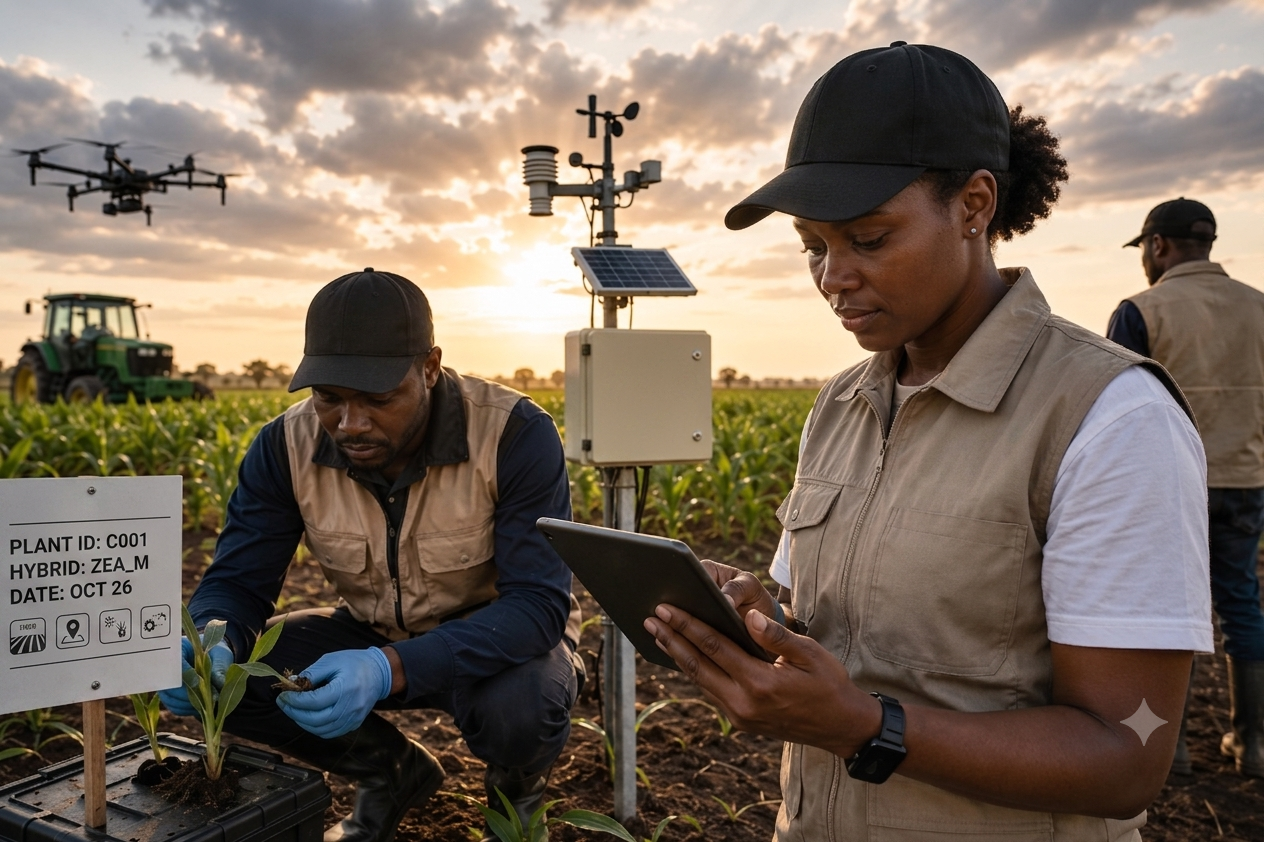
We can see trouble coming now in ways we never could before. Tools that watch the planet from above can spot a drought taking shape weeks before the soil cracks. Models can trace how a storm in one place might empty shelves in another. For anyone worried about how the world will keep feeding itself, this should feel like a turning point.
And yet a warning keeps surfacing among the people who study this closely. All of this watching, predicting, and measuring will not save us if we only use it to prop up a system that is already failing. You cannot patch your way out of a problem that runs deeper than the patch.
Bouncing back is not enough
There is a comforting word that gets used a lot these days: resilience. The ability to take a hit and recover. It sounds like exactly what a shaky food system needs.
But recovery only makes sense if the thing you return to was working in the first place. The way most food is grown and moved today was built for one job, to produce as much as possible and keep it on shelves as long as possible. It does that job well. The trouble is that the world has changed, and that goal is no longer enough. Bouncing back to a broken normal just means breaking again, a little later.
Almost everyone agrees the system needs to change. Almost no one agrees on how. That gap, more than any missing piece of equipment, is what holds us in place.
The part no machine can fix
Here is the quiet truth behind the excitement. Building a tool that sees a crisis coming is the easy part. The hard part is getting people to act on what it shows them.
A warning is only as useful as the response it triggers. A forecast that lands on a desk and goes nowhere saves no harvest. Sensors and satellites can hand decision-makers a clear picture months in advance, but turning that picture into roads, storage, fair prices, and coordinated action takes something no software ships with. It takes agreement. It takes the willingness of people with different priorities, different histories, and different interests to pull in the same direction. That is slow, frustrating, deeply human work, and it cannot be automated away.
Who pays for the future
Technology can do remarkable things when it is pointed at the right problem. It can find a useful idea sitting unused in one field and carry it to another that desperately needs it. As growing conditions shift, it can match a crop that thrives in heat or drought to a place that is only now starting to need it. These are real gains.
But someone has to fund the search, and the businesses closest to the food we eat tend to think in short horizons. Planning a few seasons ahead is hard enough when you answer to this year's numbers. The longer, riskier bets, the ones whose payoff is uncertain or far away, rarely get made by anyone whose job is to protect the next quarter.
That is where vision has to come from somewhere bigger than the market. History offers a pattern worth remembering. Some of the boldest steps a society ever took came during its most fragile moments, when leaders chose to invest in knowledge and capacity that would not pay off for a generation. Those choices looked expensive at the time. They look like foresight now.
Beyond surviving the next shock
The goal should not just be to absorb the next disruption and stagger on. It should be to build something that actually grows stronger under pressure instead of weaker.
That is a higher bar than resilience, and it asks more of us. It means designing for surprise rather than hoping to avoid it. It means learning from institutions that have always had to plan for the worst and prepare for chaos as a matter of routine. And it means accepting an uncomfortable fact. The conditions ahead will be tangled, unpredictable, and resistant to simple answers.
Complexity is not a phase that will pass. It is the landscape we live in now. The choice is whether we keep reaching for quick fixes that make us feel safe, or whether we do the harder work of rethinking the system itself.
The tools are finally ready. The real test is whether we are.