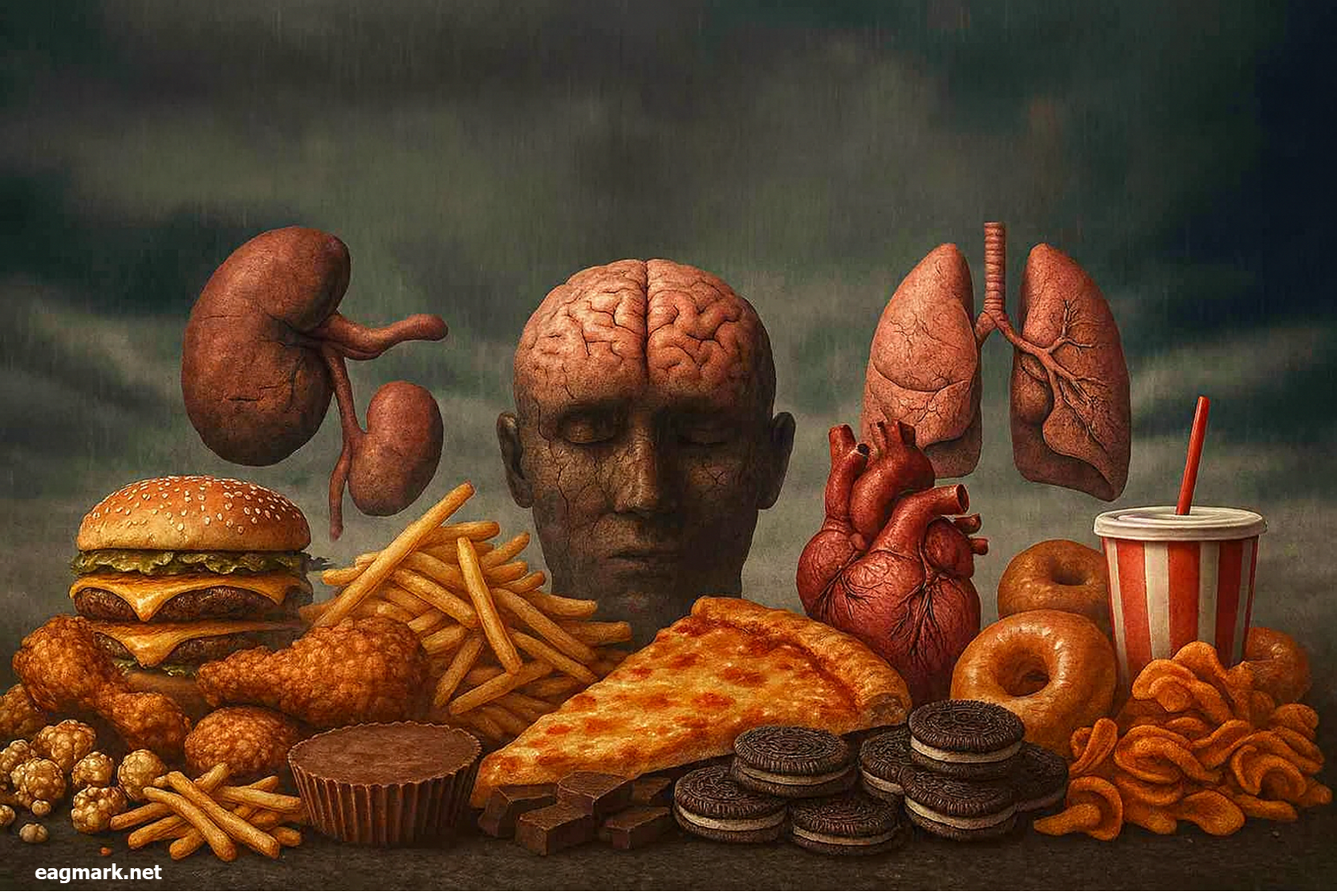
A comprehensive scientific review published in The Lancet on November 18, 2025, confirms that ultra-processed foods damage every major organ system in the human body and represent an urgent threat to global health.
The three-paper series analyzed 104 long-term studies and found that 92 reported increased risks of chronic diseases including obesity, type 2 diabetes, cardiovascular disease, chronic kidney disease, and depression. The evidence shows these foods are rapidly displacing fresh meals in diets worldwide.
In the United States and United Kingdom, ultra-processed foods now account for over 50% of average daily calories. Recent CDC data shows 61.9% of youth calories and 53% of adult calories come from these products. Consumption has tripled in Spain (11% to 32%) and more than doubled in China (4% to 10%) over the past three decades.
Ultra-processed foods are industrial formulations made from cheap commodities—corn, wheat, soy, palm oil—combined with additives like emulsifiers, artificial flavors, and colorants. Examples include soft drinks, packaged snacks, instant noodles, breakfast cereals, and frozen pizzas. These products are engineered to be hyper-palatable, driving overconsumption. Clinical trials demonstrate people eating ultra-processed diets consume 500-800 extra calories daily compared to those eating whole foods, even when both diets contain identical nutrients.
Enroll in the Agricultural Health and Medicine course
The harm extends beyond poor nutrition. These foods increase exposure to harmful chemicals from packaging and processing, disrupt gut bacteria, and bypass the body's natural satiety signals through their soft textures and disrupted food matrices.
The review identifies corporate profit-seeking, not individual choice, as the primary driver behind rising consumption. The industry employs tactics similar to those used by tobacco companies: aggressive marketing, political lobbying, funding favorable research, and blocking regulation.
Some governments are responding. Brazil's national school feeding program has reduced ultra-processed foods to 15% of meals, with plans to reach 10% by 2026, serving 40 million students daily across 150,000 schools. Countries including Chile, Mexico, and Canada have implemented warning labels, marketing restrictions, and taxes on sugary drinks.
Enroll in the Sustainable Food Systems course
The Lancet series calls for policies including front-of-package warning labels identifying ultra-processed ingredients, marketing bans targeting children, removal of these products from schools and hospitals, and taxes to fund subsidies for whole foods. The World Health Organization announced in May 2025 it is developing global guidance on ultra-processed food consumption.
While critics note most evidence comes from observational studies rather than randomized trials, researchers argue the consistency and scale of findings across populations justify immediate action. The U.S. government announced in July 2025 it would develop a federal definition of ultra-processed foods, though significant policy measures remain stalled compared to other countries.
The evidence is clear: diets centered on whole, minimally processed foods protect health, while those dominated by ultra-processed products drive disease. The question now is whether governments will regulate this industry with the same urgency previously applied to tobacco.