Ask a farmer in Salinas, a rice grower in Punjab, and a maize farmer outside Eldoret what their biggest problem is, and you'll hear the same word: labor. Push a little further, and the stories split apart completely.
In the United States, the workers used to be there and left. In much of Asia, they're still there but getting old, and their children want office jobs. In sub-Saharan Africa, the labor was never the bottleneck. The machines were.
These are not the same crisis wearing different accents. They are three separate problems that happen to share a name, and each one is producing a different kind of robot, funded by a different kind of investor, at a completely different price point.
North America: too few people, too much money chasing the fix
The United States had over a million hired crop workers two decades ago. By April 2025, that number had fallen to roughly 637,000. The average American farmer is now 58 years old, and the shortfall in available labor sits near 20 percent nationally, widening by about 7 percent a year.
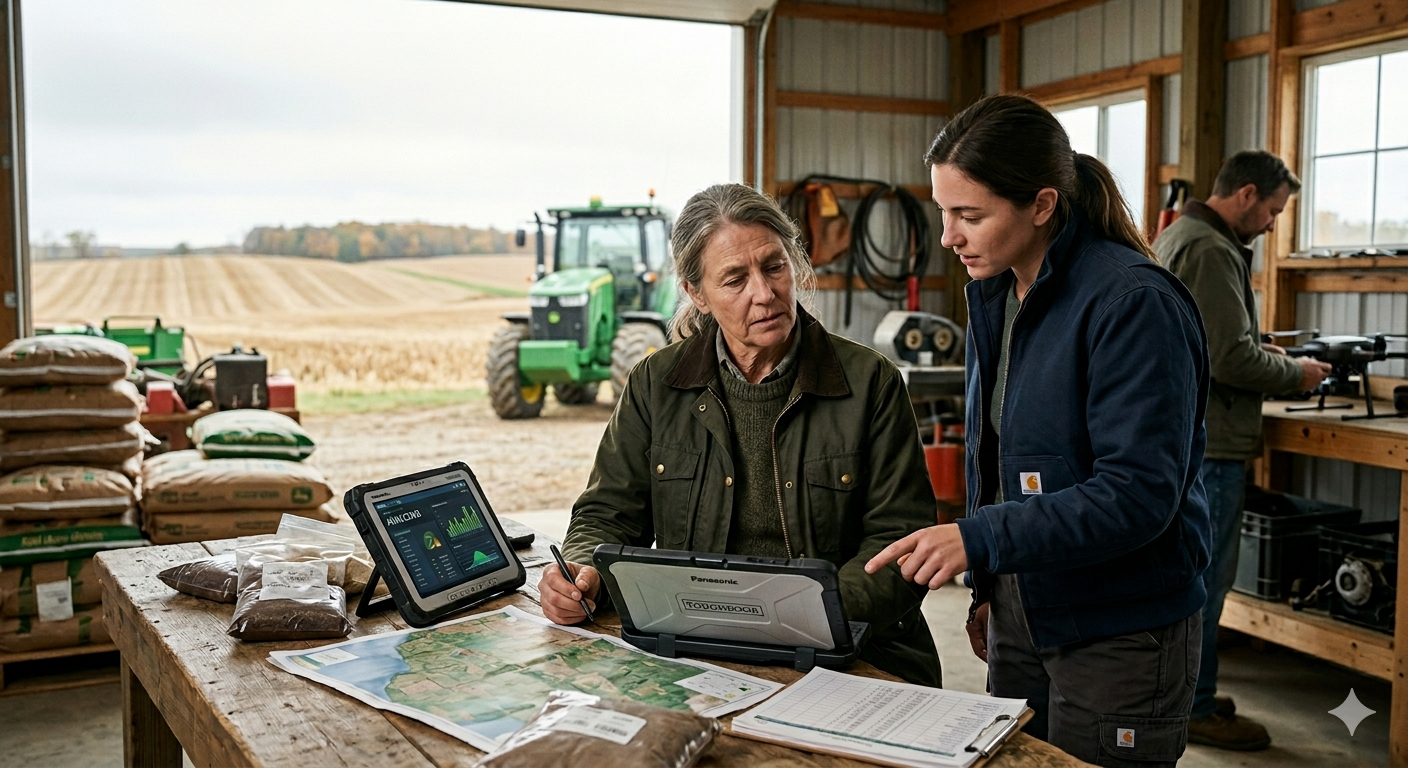
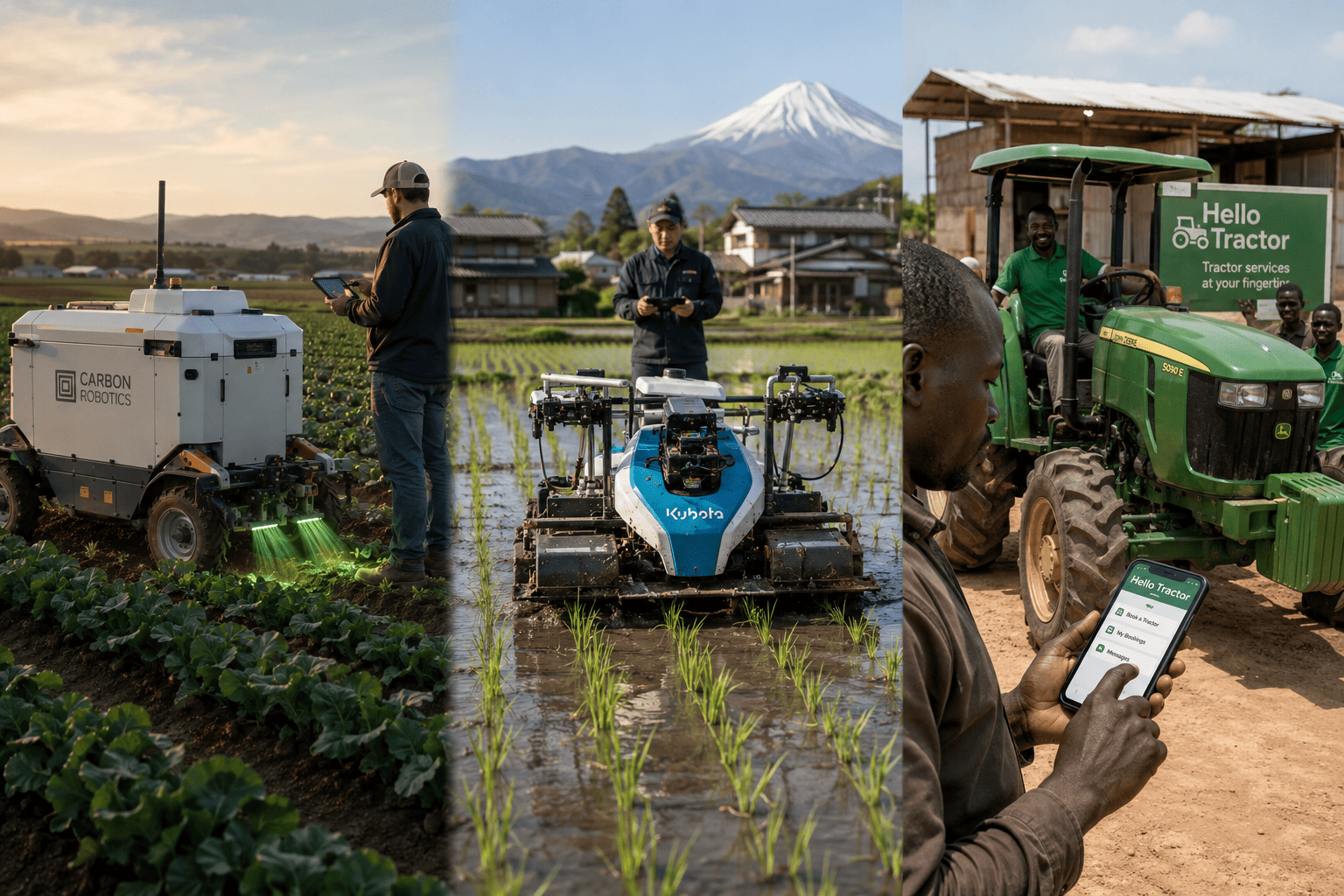
Money followed the gap. Autonomous weeding and field robotics startups pulled in more than $180 million in 2025 alone, and a broader group of 26 labor-replacement agtech companies raised a combined $393 million between January 2025 and the first quarter of 2026. At Duncan Family Farms in Phoenix, a single operator with a tablet now runs a laser weeder that used to need twenty hand weeders. The job didn't move elsewhere. It just stopped needing twenty people.
The [workers] that are here are just not enough for what we need to harvest. — A California strawberry and vegetable grower
Asia: the workforce is aging faster than it can be replaced
Japan and South Korea are further down this road than almost anywhere else. Rural populations are old, rural youth have left for cities, and there simply aren't enough young farmers left to inherit the family plot. Governments in both countries have responded by funding robotics directly, not waiting for private capital to arrive on its own.
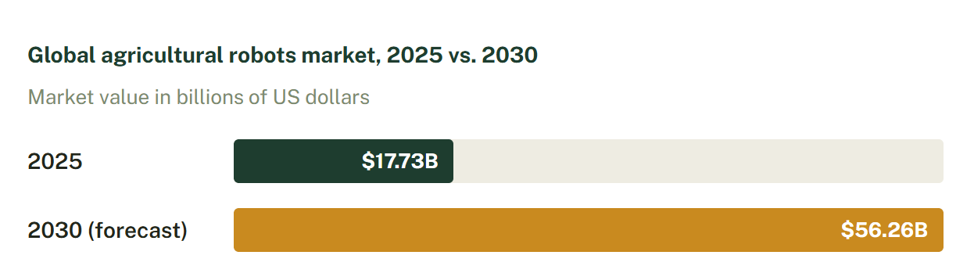
The scale of the response is striking. The Asia-Pacific agricultural robots market was valued at roughly $17.7 billion in 2025 and is projected to reach $56.3 billion by 2030, a faster growth rate than almost any other region tracked. India alone is expected to grow its own market from $1.4 billion to $4.6 billion over the same stretch, outpacing the regional average, driven by government mechanization subsidies and a wave of homegrown robotics startups building machines sized for smaller plots than anything coming out of a US or European factory.
That last detail matters. A robot built for a thousand-acre Iowa cornfield is the wrong shape for a two-acre rice paddy. Asia's robotics boom isn't importing Western machines. It's building its own.
Africa: the labor is there. The machines aren't.
Flip the story again in sub-Saharan Africa, and the shortage runs in the opposite direction. About 33 million smallholder farmers grow roughly 80 percent of the region's food, mostly by hand. Some 70 percent of African farmers work plots smaller than two hectares using a hoe, not a tractor.
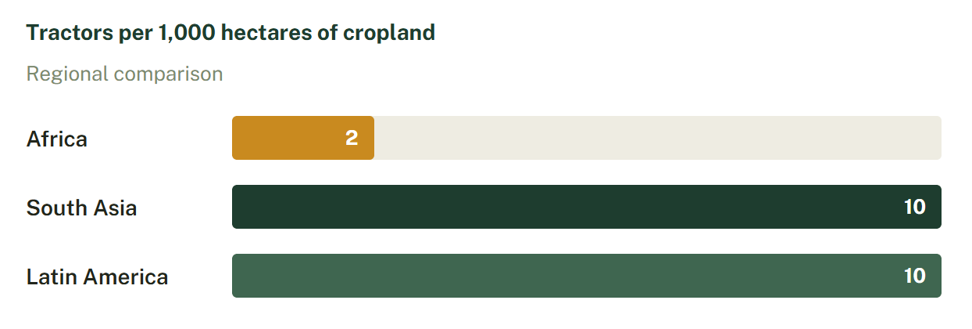
The numbers on machinery are stark. Africa has fewer than two tractors for every 1,000 hectares of cropland. South Asia and Latin America each have five times that. A single tractor can cost $30,000 to $50,000, which for a farmer living on a few dollars a day is not a stretch purchase. It's a lifetime away.
The gap is expensive in ways that show up on dinner tables far from any farm. Sub-Saharan Africa holds about a quarter of the world's farmable land but produces only around 10 percent of global agricultural output, and the region spends close to $75 billion a year importing food it has the land to grow itself.
So what does a robot look like when the problem is machine scarcity, not labor scarcity, and the customer earns two dollars a day? Not a $200,000 autonomous harvester. In Kenya and Nigeria, platforms like Hello Tractor have taken a simpler approach: let farmers book a tractor by phone the way you'd book a ride, and let one machine serve dozens of smallholders instead of sitting idle on one farm. It's less glamorous than a laser-guided weeder, but it solves the actual bottleneck, which is access, not intelligence.
One technology stack, three different products
What ties these stories together isn't the problem. It's the toolkit. Cheaper sensors, better AI vision, and off-the-shelf computing have made it possible to build a working robot faster and for less money than five years ago, everywhere at once. What each region does with that toolkit depends entirely on what's actually missing.
In California, that means replacing a worker who no longer exists. In Japan, it means keeping a farm running after the last generation retires. In Kenya, it means making a $40,000 machine reachable for a farmer who could never buy one outright.
Ask which of those problems your own region is actually facing before you ask which robot to buy. A weeding robot built for Salinas won't fix a mechanization gap in Machakos, and a tractor-sharing app won't solve a labor shortage in Fresno. The technology is converging. The problems it needs to solve are not.