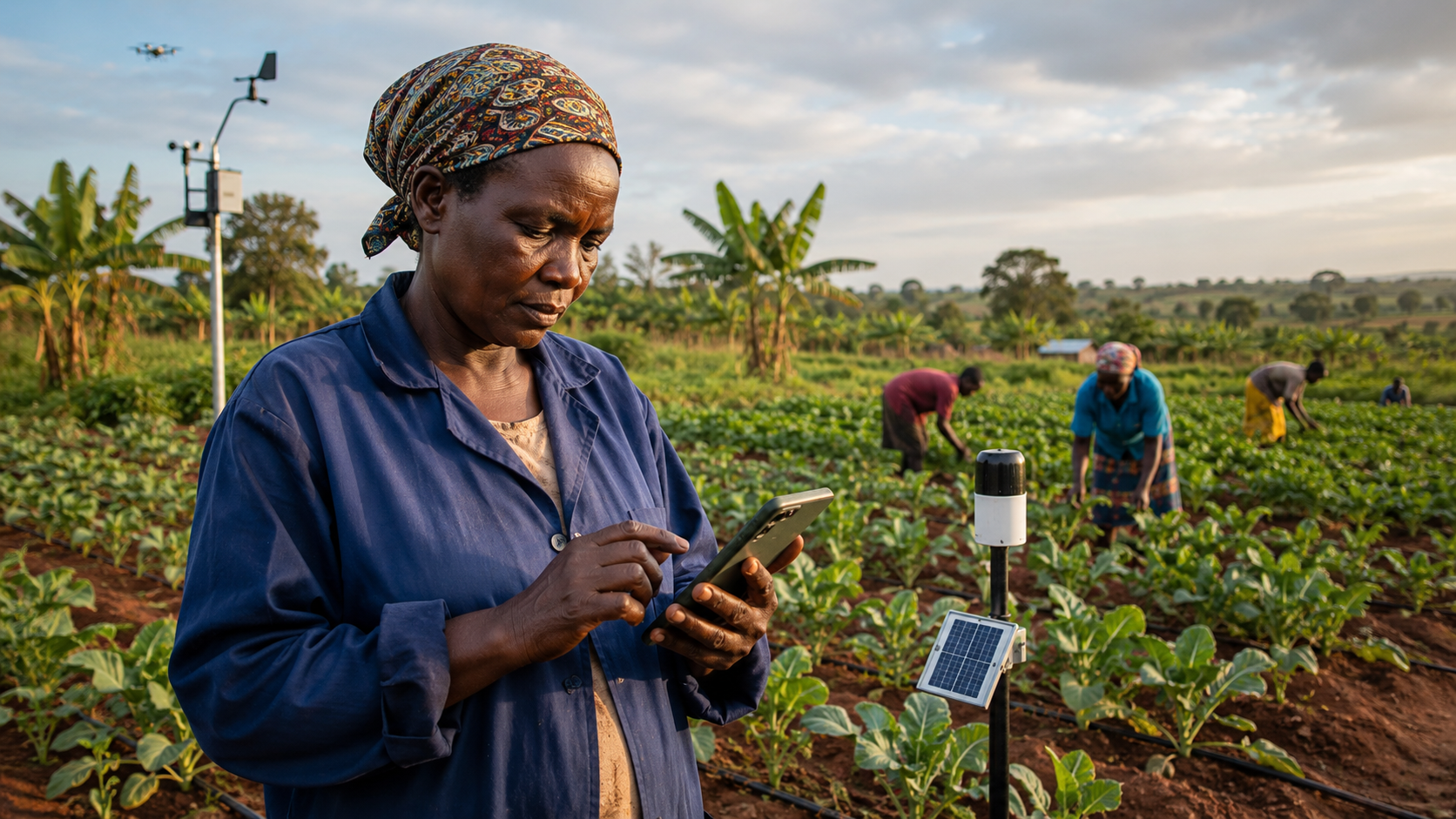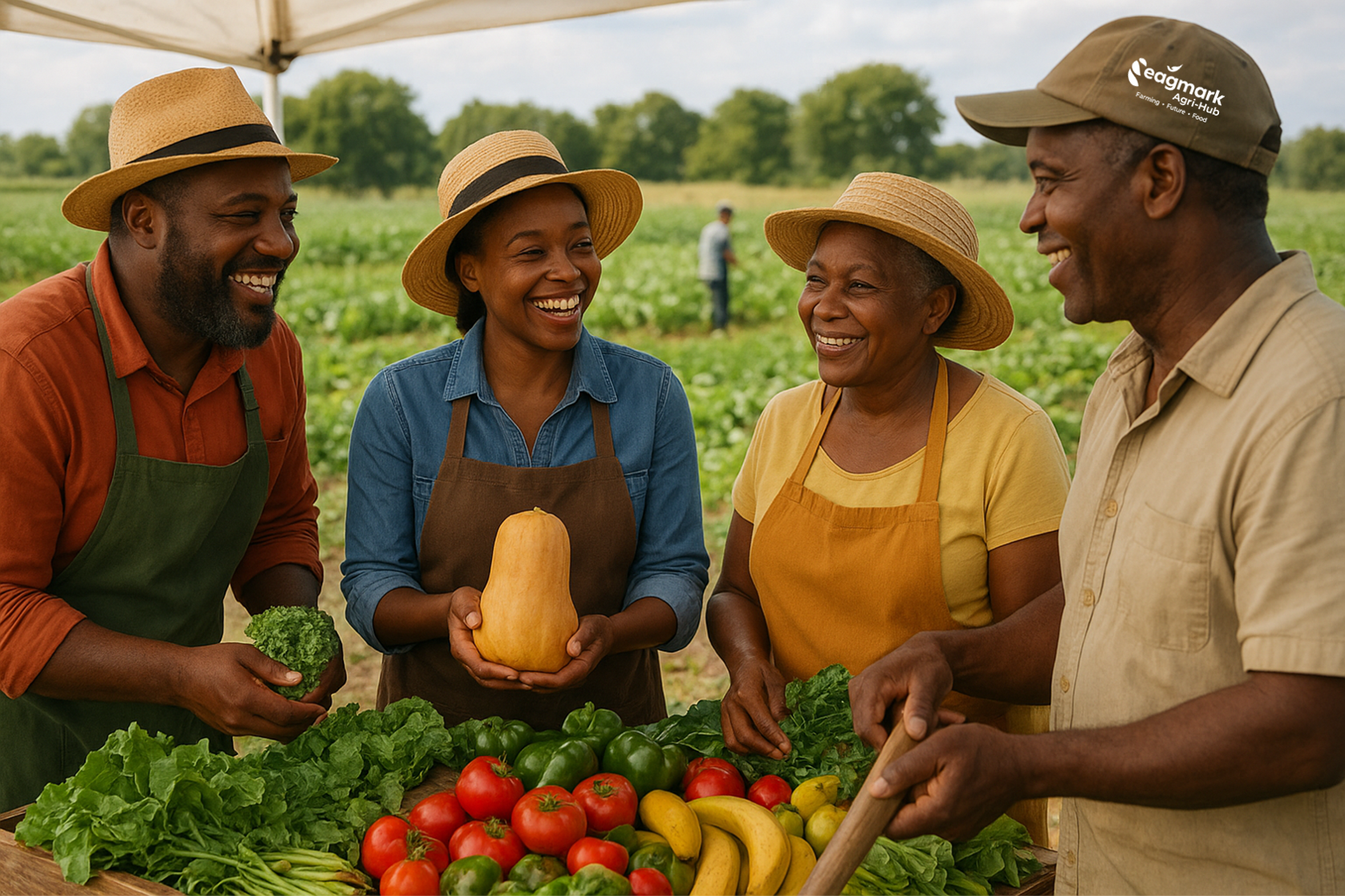
Farmers across the world—whether tending two hectares in Kenya, managing rice paddies in Bangladesh, or running large-scale operations in Brazil—face converging pressures that make peer-to-peer learning and collaboration more valuable than ever. Agricultural commodity prices have fallen nearly 7% since the start of 2025, according to the World Bank, while climate volatility, rising input costs, and shifting markets test producers of all scales.
A Global Challenge Across Farm Sizes
The scale of farming varies enormously, but the need for connection does not. Approximately 570 million farms operate worldwide, with 84% classified as smallholdings—typically under two hectares. In sub-Saharan Africa and parts of Asia, smallholder farmers produce up to 80% of the food supply. These producers form the backbone of local food systems, yet often lack access to the finance, inputs, and market connections that larger operations take for granted.
At the same time, larger commercial farms face their own pressures. In Latin America, drought conditions have disrupted major producing regions in Brazil and Argentina. In North America and Europe, crop producers contend with depressed grain prices while livestock operations benefit from strong demand. The OECD-FAO Agricultural Outlook 2025-2034 emphasises that sustained improvements in efficiency, technology adoption, and market access are critical for all farm types—but none of these happen in isolation.
Peer Learning Works—At Every Scale
Research consistently shows that farmers adopt new practices more readily when learning from peers. A 2025 study in the Journal of Development Economics found that simple SMS-based discussion groups among smallholders increased adoption of sustainable practices by 11-18 percentage points compared to one-way information delivery. The finding confirms what farmers have long known: learning is more effective when it flows between people facing similar challenges.
The FAO's Farmer Field Schools operate in over 90 countries, bringing farmers together for hands-on, season-long learning in their own fields. What started in Indonesia in the 1980s for rice pest management has expanded to address soil fertility, water management, agroforestry, and market linkages across Asia, Africa, Latin America, and Eastern Europe. The model works because it treats farmers as experimenters and problem-solvers, not passive recipients of external advice.
In July 2025, FAO launched a global webinar series exploring how Farmer Field Schools can integrate sustainable mechanization for small-scale producers—addressing labor shortages, climate pressures, and limited technology access through collaborative learning.
2025: The International Year of Cooperatives
The United Nations designated 2025 as the International Year of Cooperatives, recognizing these farmer-owned organizations as engines of rural development. Agricultural cooperatives serve different functions in different contexts: in Latin America, coffee and cocoa cooperatives connect smallholders to export markets; in South Korea, NongHyup serves 2.5 million farmer-members with marketing, banking, and technical support; in Africa, cooperatives help producers pool resources to access inputs and negotiate better prices.
The World Bank's Productive Alliances model, which has supported over 1.6 million family farmers in Latin America since 2002, is now expanding to Africa, Asia, and Eastern Europe. The approach brings together producer organizations, buyers, service providers, and government around shared business plans—helping smallholders move from subsistence farming toward commercial viability.
Passing Knowledge Between Generations
Agriculture faces a generational challenge worldwide. The average age of farmers continues to rise—58 years in the United States, 57 in the European Union, with similar patterns across regions. The FAO estimates the global average age of farmers at 60 years, while young people aged 15-24 represent only 2% of agricultural workers despite comprising 15% of the population.
This matters because older farmers hold knowledge that cannot easily be replaced—understanding of local soils, weather patterns, pest cycles, and which practices work under which conditions. The UN Decade of Family Farming emphasizes the importance of intergenerational transfer of both tangible assets (land, equipment) and intangible ones (skills, relationships, local knowledge). Young farmers who can combine traditional wisdom with new technologies and approaches are better positioned for long-term success.
The European Commission has made generational renewal a strategic priority, aiming to double the share of young farmers by 2040. But formal programs only go so far. Much of the most valuable learning happens informally—through conversations at local markets, visits to neighboring farms, and phone calls between generations.
Climate Adaptation Through Shared Learning
Climate change amplifies the value of farmer networks. When weather patterns shift, farmers need to adapt quickly—and those with access to peer knowledge adapt faster. A study of smallholder farming systems in Africa, South Asia, and Latin America found that most households (57%) are simply "hanging in"—maintaining subsistence farming without advancing. Those who progress typically benefit from better connections to knowledge, markets, and support systems.
In November 2025, the Gates Foundation announced $1.4 billion for climate adaptation among smallholders in sub-Saharan Africa and South Asia—regions where less than 1% of global climate finance currently flows to agricultural adaptation. The investment focuses on climate-resilient crops, digital advisory services, and soil health innovations—but delivery depends on farmer networks that can spread knowledge at scale.
Diversification offers another path to resilience. Research from the AGree Coalition shows that diversified farming systems produce higher net incomes and experience less year-to-year volatility. Adding livestock to crop operations, integrating trees through agroforestry, or producing for local markets alongside export crops—these strategies spread risk across multiple income streams. Farmers learn these approaches most effectively from others who have tried them.
Building Networks in Practice
What does this mean for individual farmers? The specifics vary by context, but the principles are consistent. For smallholders in developing regions, joining or forming farmer groups—whether formal cooperatives or informal savings and learning circles—provides access to inputs, markets, and knowledge that individual producers cannot access alone. Women, who comprise an estimated 62% of the agricultural labor force in Africa yet face greater barriers to land, credit, and extension services, often benefit most from group-based approaches.
For larger commercial operations, the networks may look different but serve similar functions. Conversations with neighbors about what varieties performed well, attendance at agricultural events and field days, and relationships with input suppliers and buyers all contribute to better decision-making. Even farmers with access to sophisticated data and advisory services benefit from ground-truthing that information against the experience of others in similar conditions.
Across all farm types, intergenerational connection matters. Experienced farmers hold knowledge worth documenting and sharing. Younger farmers bring fresh perspectives on technology, markets, and sustainable practices. Neither succeeds as well in isolation as in combination.
The farms that will thrive in the coming years—whether two hectares or two thousand—are those embedded in networks of knowledge and mutual support. The question for every producer: Who are you learning from, and who is learning from you?