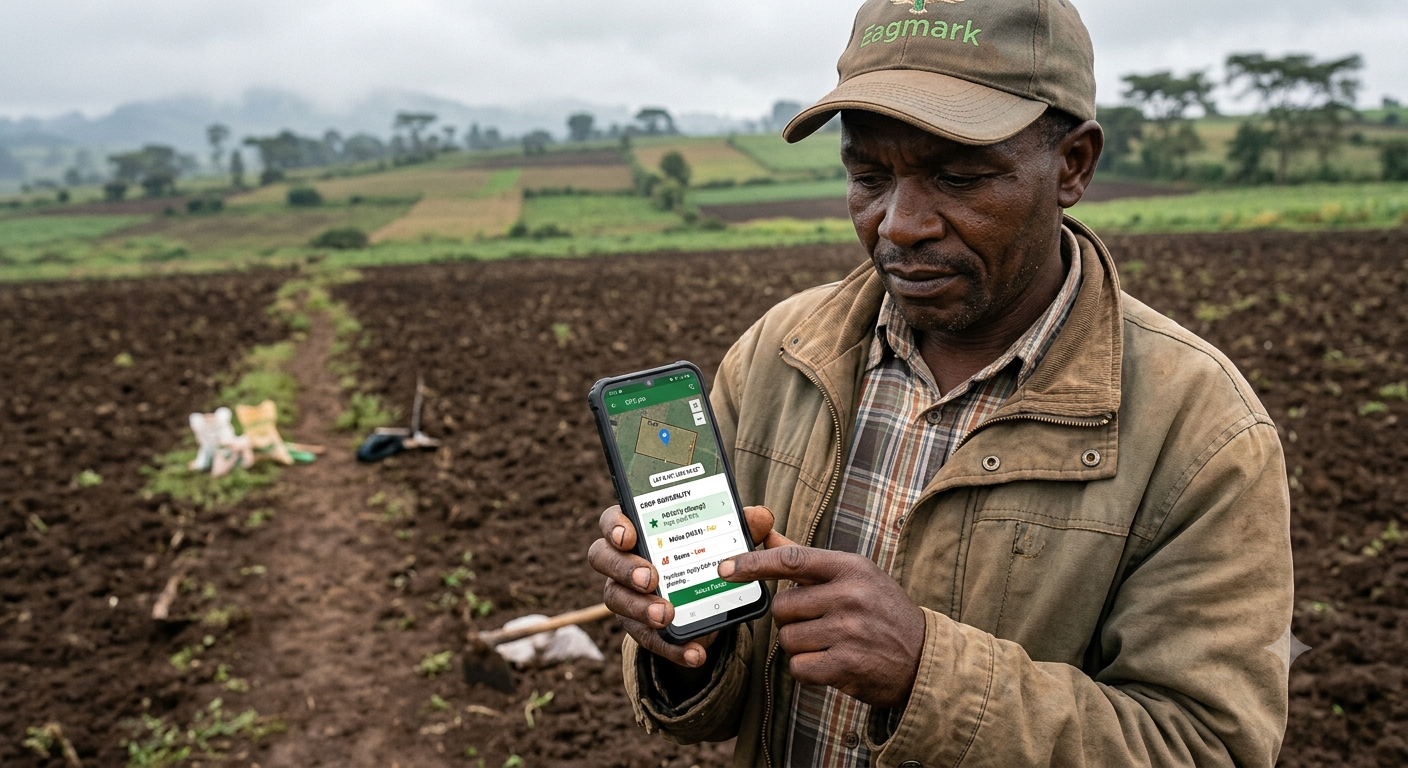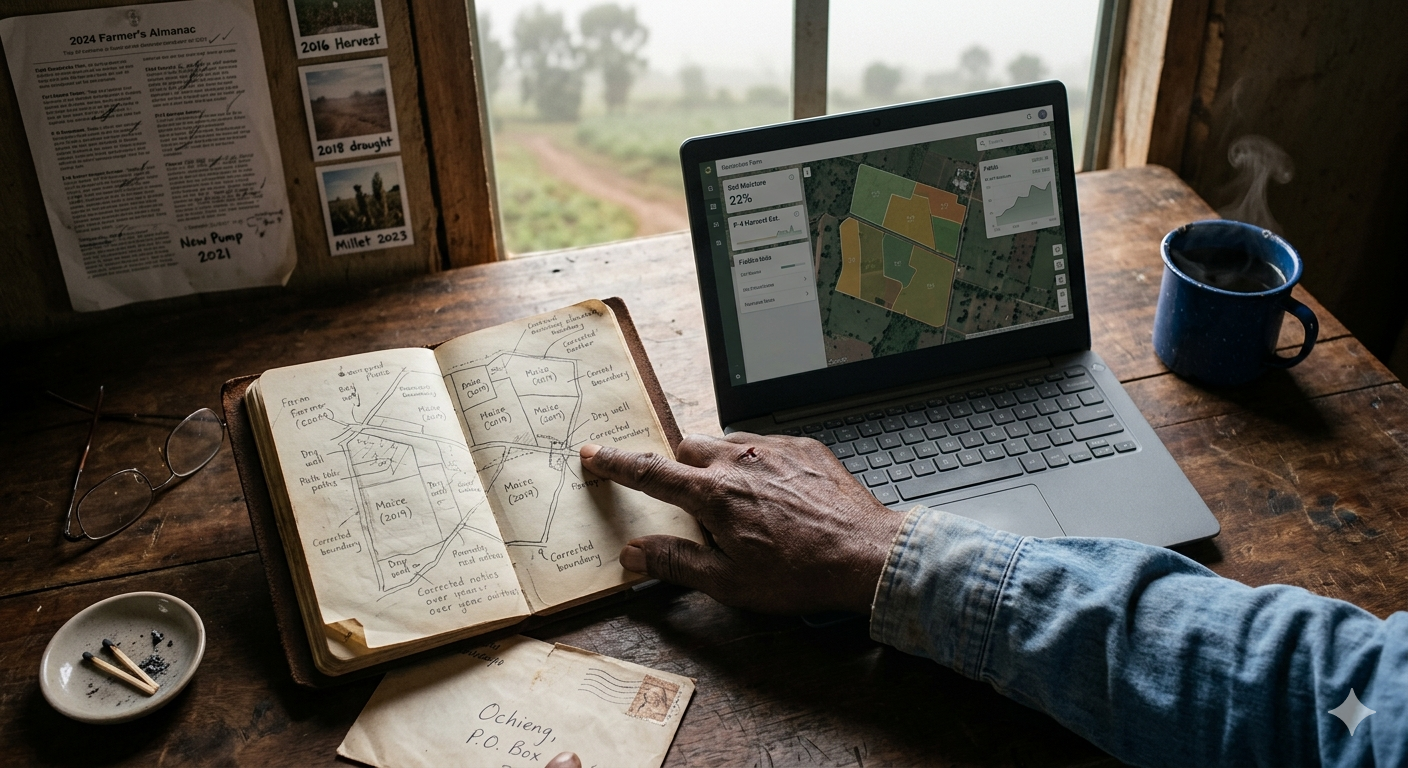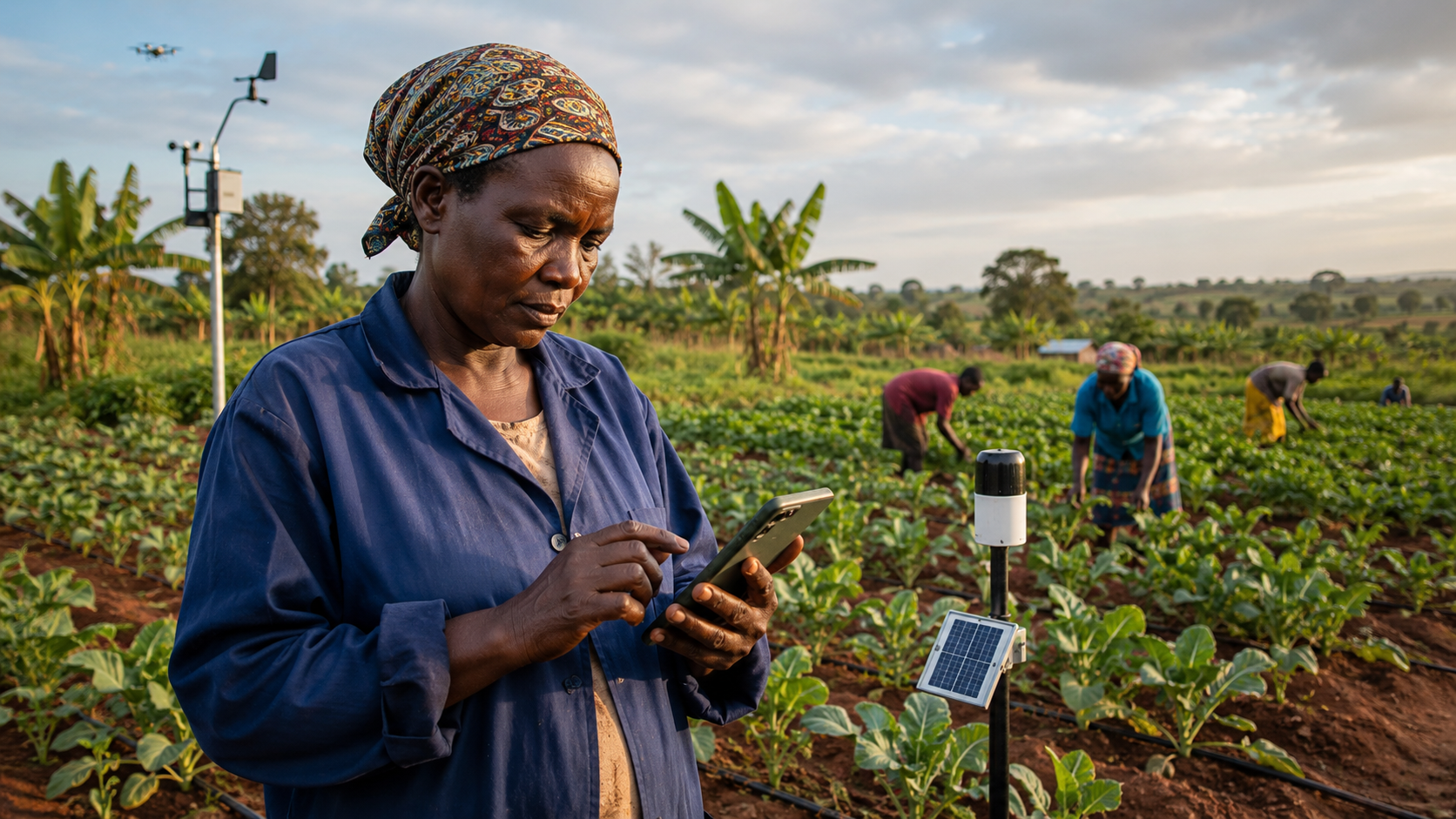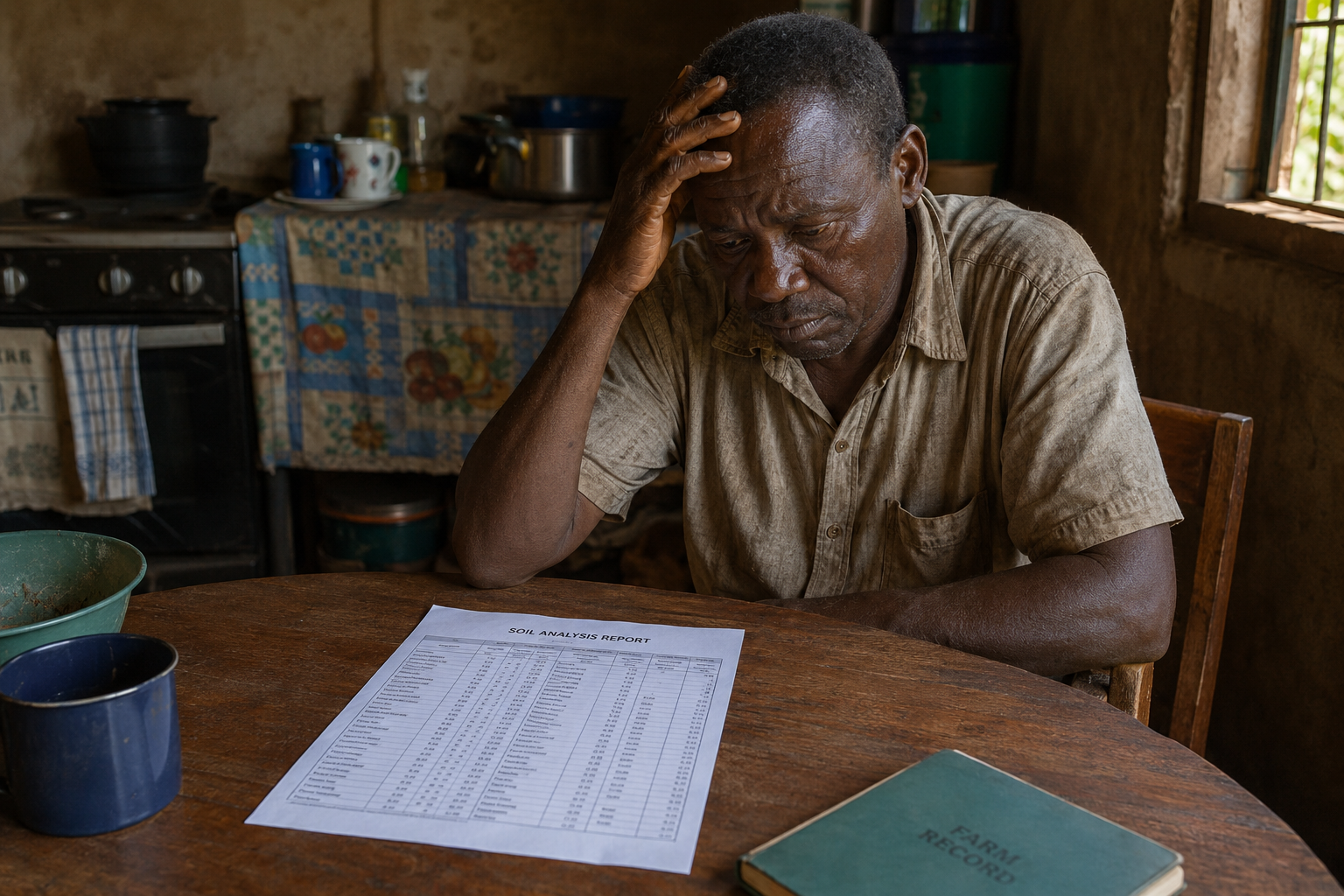
A farmer stands at his kitchen table with a soil report in front of him. Two columns, dozens of rows. He has worked this land for thirty years. He cannot tell, from looking at the page, whether the field he walked yesterday morning is healthy or in trouble.
This is the moment where most agricultural technology actually fails. Not at the sensor. Not at the algorithm. Not at the price point. At the kitchen table, where a working farmer is handed numbers and asked to act on them.
The industry tends to talk about this as a future problem, something that will be solved when interfaces get friendlier or training programmes get sharper. The truth is closer to the bone. It is the central failure of the past fifteen years of agricultural technology. Tools have multiplied. Sensors have shrunk. Predictions have grown more accurate. None of it has translated into farms that operate differently, because the people the tools were built for cannot read what the tools produce.
Marketing alone cannot solve this. The gap is literacy, and it sits a layer below every conversation the industry is currently having about adoption.
The story the industry keeps telling itself
Most discussions of agricultural technology frame the farmer as the obstacle. The phrase "conservative grower" appears in countless industry reports and pitch decks. The story it tells is one of resistance: the technology is sound, the value is clear, and only farmer hesitation prevents progress.
That story is wrong, and it has been wrong for as long as it has been told.
The real obstacle is something the industry rarely says out loud. The technology assumes a baseline of numerical literacy that very few of its intended users have. Not because those users are unintelligent, but because the educational path that produces working farmers has, for generations, focused on the practical knowledge of land, crops, weather, soil texture, and the behaviour of animals. None of those paths teach how to read a probability distribution. None teach what an average can hide about a noisy field. None teach the difference between a forecast you can act on and a forecast you can only file away.
The difference between reading and not reading
A fluent reader of farm data does something specific when looking at a soil report. They look at the average, then almost immediately at the spread around it. They notice that some samples were taken in October and some in March, and weight the comparison accordingly. They check whether the laboratory's method matches the one used last season. They consider whether the recommendation engine has been calibrated for soils anything like theirs.
Most farmers do none of this. Not because they refuse to, but because they have never been shown that any of it matters. To them, the report is a verdict, not a starting point. They either trust it entirely or distrust it entirely. There is no middle ground, because the middle ground requires statistical reasoning that has been quietly absent from agricultural education for a hundred years.
The cost of that invisibility is large and accumulating. A farm operating without numerical literacy treats every new tool as a black box. The black box either confirms what the farmer already believed or it contradicts. If it confirms, they keep using it. If it contradicts, they ignore it. Either way, the tool's contribution to better decisions is roughly zero, no matter how clever the model inside it is.
An uncomfortable observation about who benefits
There is a quieter point worth making here, even if it is awkward. The technology vendors who sell into agriculture have not, in aggregate, been particularly motivated to fix this. A farmer who cannot evaluate competing tools is a farmer locked into the tool they bought first. A farmer who cannot critically read a report cannot challenge whether the report's recommendations actually pay off. A farmer who needs someone to interpret their own data on their behalf is a farmer who keeps paying for that interpretation.
This is not a conspiracy. It is the natural shape of an industry where most customers cannot independently verify whether what they are buying works. Vendors respond to that shape the way any business would. They build features. They run trainings. They publish testimonials. They very rarely teach the underlying skill that would let their customers evaluate them on the merits, because doing so would invite scrutiny that many products would not survive.
What changes when a farmer becomes fluent
The interesting question is not whether agriculture should close this gap. It is what agriculture begins to look like once it does.
A farmer who is fluent with numbers does not become a data scientist. They become something narrower and more useful: a person who can look at a measurement and ask whether the measurement was taken carefully, whether the conclusion drawn from it rests on enough observations, and whether the recommended action has a real track record. They become resistant to bad data without becoming resistant to good data. They start treating each season as a small experiment rather than a verdict, with corners of the field set aside to learn from rather than left to chance.
That shift in posture changes what they buy and how they work. They stop chasing the newest sensor and start using the few sensors they have more deliberately. They keep simpler records but read those records more carefully. They become willing to run small, contained trials before committing a whole season. Over a decade, the difference in farm performance between a grower who works this way and one who does not is not subtle.
A familiar pattern, finishing its turn
This is not a new dynamic in the broader history of work. Every industry that has gone through a measurement revolution has had to teach its workforce a layer of interpretive skill before the technology actually paid off. Manufacturing went through it in the early twentieth century when statistical quality control became standard. Aviation went through it as instruments multiplied in the cockpit. Medicine went through it across the latter half of the twentieth century, as the randomised trial moved from novelty to baseline.
In each case the pattern was the same. The instruments came first. The interpretation came later, often through public effort rather than commercial training. And each time, the productivity gains the new instruments promised only arrived after the interpretation gap had been closed.
Agriculture is currently somewhere in the messy middle of its own version of this transition. The instruments exist. The interpretation does not. Conversations about productivity, sustainability, and resilience all stumble in the same place, because the people those conversations need to land on cannot fully read the evidence being marshalled at them.
The work that actually closes the gap
The work of closing this gap is unglamorous. It looks like short, plain-language modules on what averages hide and what they reveal. It looks like worked examples using real farm data rather than synthetic textbook problems. It looks like teaching the difference between a measurement that is wrong and one that is merely noisy. It looks like a shared vocabulary that lets farmers, agronomists, and tool builders argue about the same things using the same words.
None of this is technically difficult. Most of it overlaps with the statistical reasoning taught to first-year medical students or factory-floor supervisors. What makes it hard is that nobody has been willing to lead it at the level of the whole industry. Each vendor builds for its own customers. Each agricultural college teaches its own version. There is no shared baseline, and so practical data fluency on farms remains rare and unevenly distributed across geographies, generations, and farm sizes.
The thing worth saying clearly
The next meaningful leap in farming will not come from a better sensor. It will come from a generation of farmers who can read what their sensors are already saying. Until that generation exists, the technology will keep promising more than it delivers, and the gap between the conference talks and the actual fields will keep widening.
This is a fixable problem. It will not be fixed by the people currently profiting from leaving it broken. It will have to be fixed by everyone else.