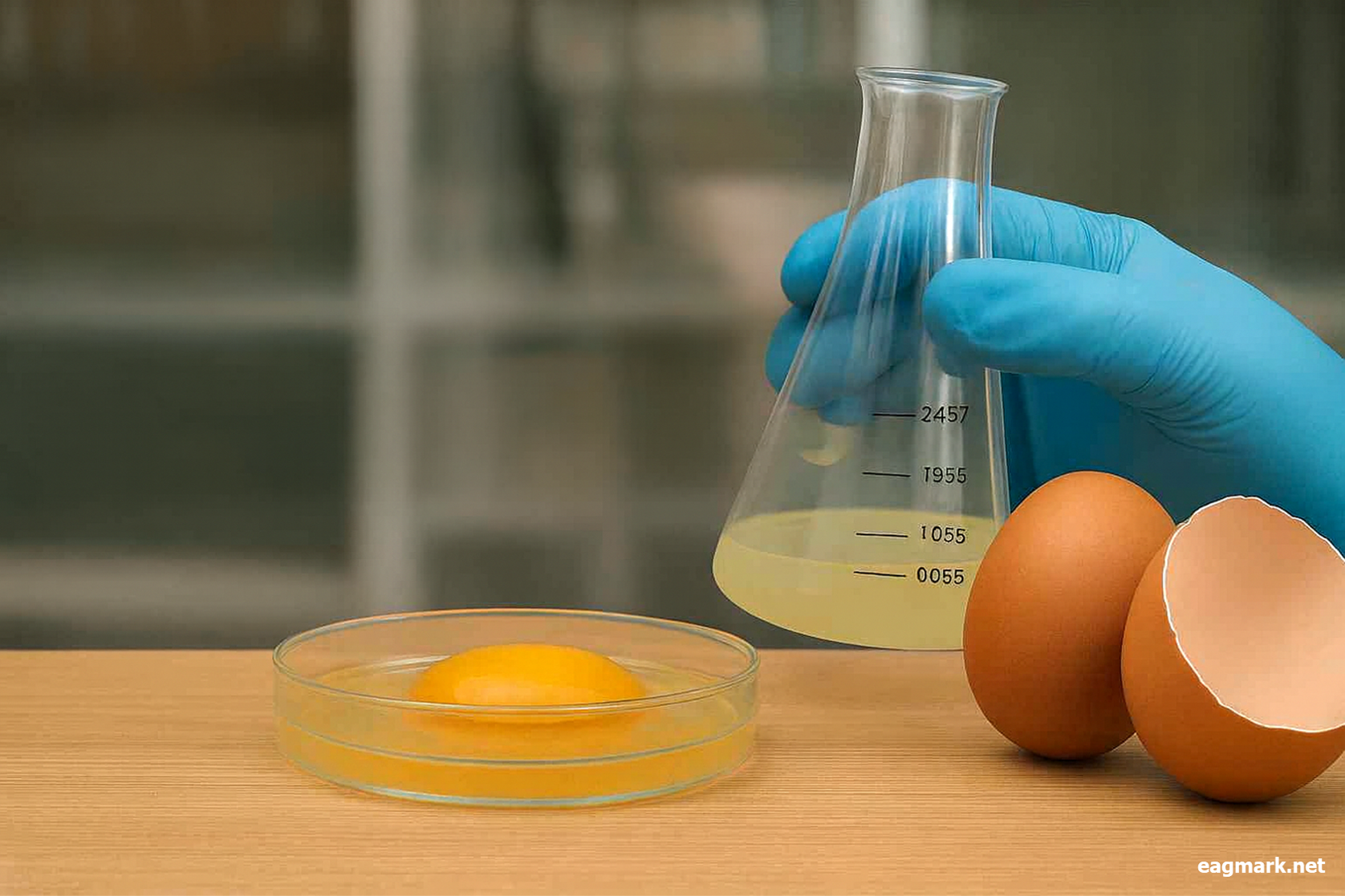
The global food industry is witnessing a fundamental shift in how proteins are produced. Precision fermentation, a biotechnology process that has been used for decades to create ingredients like cheese rennet and insulin, is now being deployed to manufacture egg proteins without any involvement from chickens.
This technology works by genetically engineering microorganisms—typically yeast or specialized fungi—to produce specific proteins found in eggs. The process begins when scientists identify and isolate the gene responsible for producing a target egg protein, most commonly ovalbumin, which comprises roughly 54% of egg white protein content. This genetic blueprint is then introduced into a host microorganism's DNA.
The Production Process
The engineered microorganisms function as biological factories inside large fermentation tanks. Fed with simple carbon sources like sugar, these microbes multiply and begin expressing the desired egg proteins as they grow. The fermentation process mirrors traditional brewing methods used in beer and wine production, though the end product is protein rather than alcohol.
According to research published in the Annual Review of Food Science and Technology, achieving commercial viability requires production titers above 50 grams per liter—several orders of magnitude higher than pharmaceutical protein manufacturing. Companies in this space are now reaching titers of 60 to 100 grams per liter while maintaining good yields and productivity.
Once fermentation is complete, the proteins are separated from the microbial biomass through extraction and purification processes. The result is a powder or liquid protein that is molecularly identical to conventional egg proteins, capable of performing the same functional roles in food applications—from binding and emulsifying to foaming and gelling.
Market Leaders and Commercial Progress
Two companies currently dominate the precision-fermented egg protein sector. California-based The EVERY Company (formerly Clara Foods) pioneered this technology and has secured multiple FDA approvals for its ovalbumin produced from Komagataella phaffii yeast strains. The company recently raised $55 million and has partnered with major food manufacturers including Spain's Grupo Palacios and Unilever's The Vegetarian Butcher brand.
Finland-based Onego Bio takes a different approach, using strains of the fungus Trichoderma reesei to produce its Bioalbumen product. In 2025, the company received a "No Questions" letter from the FDA, confirming its product is Generally Recognized as Safe (GRAS) for use in baked goods, beverages, meat alternatives, confections, and sauces. Onego Bio raised $40 million in Series A funding in 2024 and is building a flagship manufacturing facility in Wisconsin with a planned investment of up to $300 million.
Environmental and Economic Drivers
The environmental case for precision-fermented proteins is supported by peer-reviewed research. According to studies cited by the Good Food Institute Europe, precision fermentation egg and dairy proteins could generate 70% fewer greenhouse gas emissions while using 95% less land and 80% less water compared to conventional animal agriculture.
Research published in ScienceDirect projects that precision fermentation for animal proteins could be up to 100 times more land-efficient, 10-25 times more feedstock-efficient, 20 times faster, and 10 times more water-efficient than traditional animal farming.
Beyond environmental considerations, recurring avian influenza outbreaks are driving commercial interest. GEA reports that between October 2024 and January 2025, 14.9 million poultry birds died or were culled due to bird flu, primarily in the Americas. The USDA reported egg prices in January 2025 were 53% higher than the previous year, with another 41% increase projected for 2025. These supply disruptions create demand for alternative protein sources that aren't vulnerable to zoonotic disease outbreaks.
Production Scale and Market Outlook
The precision fermentation market is expanding rapidly. According to Straits Research, the global market is projected to grow from $5.82 billion in 2025 to $151.01 billion by 2034, exhibiting a compound annual growth rate of 43.6%. Fortune Business Insights estimates the market reached $3.03 billion in 2024 and projects it will hit $54.04 billion by 2032.
Europe currently leads in market share and policy support. The Dutch government announced €60 million in public funding in 2022 to support precision fermentation and cultivated meat—the world's largest public investment in cellular agriculture. The UK government has invested in multiple research centers, while Catalonia committed €7 million to its Center for Innovation in Alternative Proteins. The European Commission's EIC Accelerator allocated €50 million in 2024 for precision fermentation and algae-based foods.
Technical Foundations
This technology is not experimental. Precision fermentation has been used commercially since the 1990s to produce chymosin (rennet) for cheese-making, replacing calf-derived rennet. According to a review published in MDPI's Fermentation journal, the same fundamental approach is used to manufacture vitamins, enzymes, and natural flavors that have been in the food supply for decades.
The key difference in producing egg proteins lies in the complexity and scale required. Egg proteins must maintain specific functional properties—the ability to foam for meringues, bind ingredients in baked goods, or emulsify mayonnaise. Achieving these properties requires precise control over protein folding, post-translational modifications, and maintaining protein purity through downstream processing.
Regulatory Framework
Products derived from precision fermentation must undergo regulatory approval before entering markets. In the United States, companies can pursue self-affirmed GRAS status or submit GRAS notifications to the FDA. In the European Union, these products fall under the Novel Foods regulatory framework, which requires evidence-based assessment of safety and nutritional value. The approval process typically takes at least 18 months, and once approved, products can be sold across all 27 EU member states.
Future Trajectory
As the technology matures, production costs are expected to decline through improved fermentation efficiency, better host strain engineering, and economies of scale in manufacturing. Companies are also exploring alternative feedstocks beyond corn sugar to further reduce environmental footprint and production costs.
The development of precision-fermented proteins represents a convergence of biotechnology, food science, and agricultural economics. Whether driven by environmental sustainability goals, supply chain resilience, or cost considerations, this technology is moving from laboratory proof-of-concept to commercial-scale production, fundamentally changing how we think about protein manufacturing in the 21st century.
Note: This article is based on peer-reviewed research, industry reports, and regulatory filings available as of November 2025. Market projections and company information reflect the latest available data but are subject to change as the industry evolves.