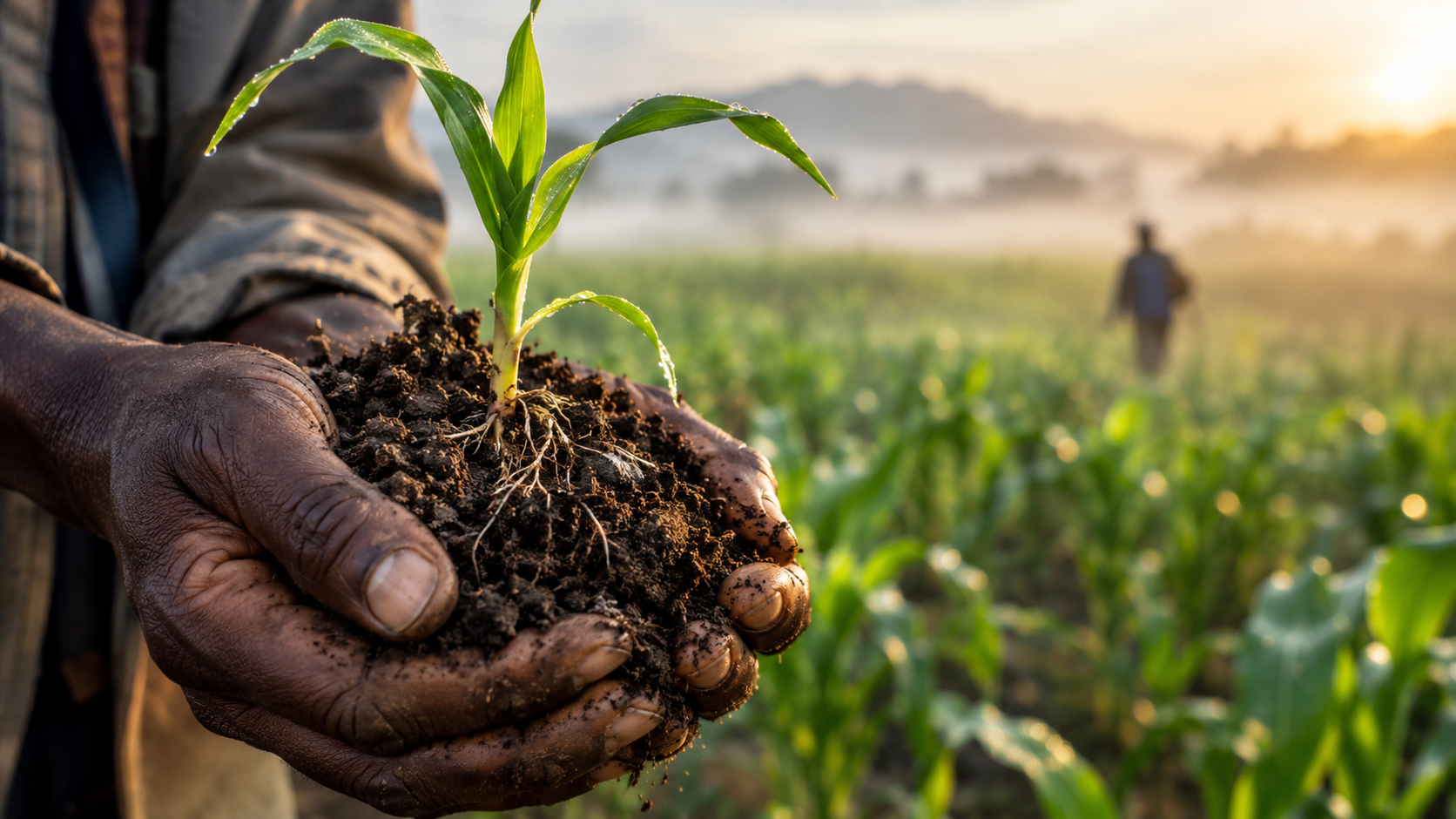
Global agriculture stands at a critical juncture. The world produces approximately 188 million metric tons of nitrogen fertilizer annually, with consumption reaching 65.4 kilograms per hectare of cropland in 2022. This fertilizer feeds nearly half the global population, yet its production carries a staggering environmental cost: the Haber-Bosch process used to manufacture synthetic nitrogen accounts for 1.2% of global greenhouse gas emissions, releasing approximately 1.6 to 2.16 tonnes of CO₂ for every tonne of ammonia produced.
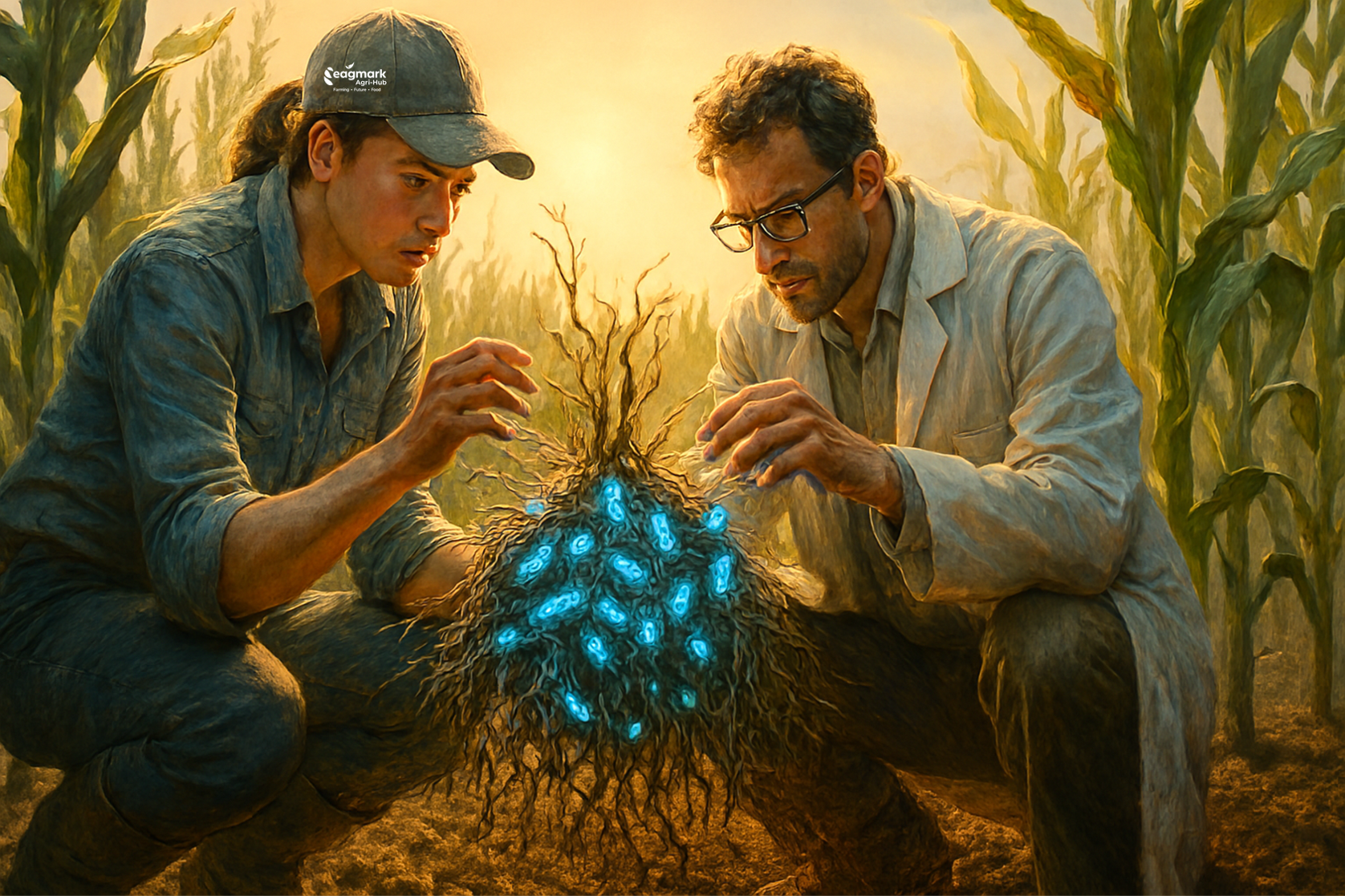
Against this backdrop, agricultural biotechnology firms are racing to develop engineered microorganisms that could fundamentally change how crops access nitrogen. The promise is compelling: microbes that colonize plant roots and convert atmospheric nitrogen into ammonia throughout the growing season, reducing synthetic fertilizer dependence while cutting emissions and nutrient runoff.
But delivering on this promise requires overcoming formidable technical challenges that have proven more difficult than anticipated.
The Biological Blueprint
Nature has already perfected nitrogen fixation in legumes. Plants like soybeans and peas host naturally occurring rhizobia bacteria in specialized root nodules. These microbes produce nitrogenase, an enzyme that catalyzes the conversion of atmospheric nitrogen (N₂) into ammonia (NH₃), providing nitrogen directly to plant roots in sync with demand. This biological process is remarkably efficient—legumes can fix between 250 and 500 pounds of nitrogen per acre through these symbiotic relationships.
The system works because legume nodules provide two critical elements: a source of energy (photosynthates from the plant) and an anaerobic environment that protects the oxygen-sensitive nitrogenase enzyme. A specialized protein called leghemoglobin manages this delicate balance, controlling oxygen flow to allow bacterial respiration while preventing nitrogenase inactivation.
Cereal crops like corn and wheat, however, don't naturally form these nitrogen-fixing partnerships. As a result, they account for the vast majority of synthetic nitrogen fertilizer consumption worldwide.
Engineering the Fix
Agricultural biotechnology companies have been working for years to engineer microbes capable of fixing nitrogen in non-legume crops. The first wave of commercial products entered the market three to four years ago, but their performance has revealed the complexity of translating laboratory success into field efficacy.
Industry experts working on these technologies acknowledge that current products fall short of transformative impact. The target has consistently been replacing 30-40% of synthetic fertilizer application, but no solution has yet achieved this level of performance consistently across different environments and crop systems.
The Technical Gauntlet
Creating commercially viable nitrogen-fixing biologicals requires clearing multiple technical hurdles simultaneously:
Shelf Stability and Application Method
For widespread adoption, engineered microbes need shelf lives measured in years, not months. The product must be applicable as a seed coating—the most cost-effective and environmentally sound delivery method for broad-scale agriculture. Alternative applications like in-furrow or foliar treatments work, but they add cost and complexity that limit commercial viability.
Colonization and Persistence
Once applied, the microbes must successfully colonize plant roots and maintain their position throughout the growing season. This is particularly challenging because native soil microbes can outcompete introduced organisms surprisingly quickly in field conditions. What succeeds in controlled laboratory environments often fails when confronting the biological competition and environmental variability of real agricultural soils.
Nitrogen Transfer Efficiency
The microbes must not only fix nitrogen but transfer it efficiently to host plants. Corn, for example, requires approximately two-thirds of its total nitrogen uptake during the final third of its growth cycle. Farmers currently compensate by applying excessive amounts of synthetic fertilizer early in the season, knowing that much will be depleted, washed away by rainfall, or diluted before the peak demand period arrives.
A biological solution that could supply nitrogen throughout the entire growth cycle would fundamentally change fertilizer economics and environmental impact. But engineering microbes that maintain both colonization and nitrogen production from planting through harvest remains an unsolved challenge.
Environmental Adaptability
Perhaps most vexing is the need for consistency across diverse agricultural environments. Synthetic fertilizers work reliably in virtually any context—from home gardens to industrial cornfields, from tropical settings to temperate zones. Biological solutions show much greater variability.
Water content, soil composition, temperature, pH, native microbial populations—all influence the performance of engineered nitrogen-fixing organisms. Microbes that perform well in tropical climates may fail completely when deployed in northern European conditions. Field trials remain the definitive test, and many promising laboratory candidates underperform or work inconsistently when facing the full complexity of agricultural environments.
Additional variables complicate the picture. Phosphate availability, for instance, affects nitrogen-fixing microbe performance—when phosphate is limited, the bacteria lack energy to power nitrogenase activity. This means successful biological nitrogen solutions may need to account for multiple soil nutrients simultaneously.
Competing Approaches
Different research teams are pursuing distinct strategies to overcome the colonization challenge. Some approaches focus on engineering microbes that first establish themselves on plant roots before "switching on" nitrogen production. Others prioritize engineering inherently better colonization properties directly into the microorganisms.
The diversity of approaches reflects both the complexity of the problem and the likelihood that multiple solutions may be necessary. Given the range of environmental variables at play, no single engineered organism will likely work optimally across all soil types, climates, and crop varieties.
The Economic and Environmental Calculus
Even a 25% reduction in synthetic fertilizer inputs would create compelling economics for growers, though the exact value fluctuates with volatile fertilizer prices. The environmental benefits, however, remain constant and significant.
Reducing nitrogen fertilizer application by 25% on major cereal crops would substantially decrease nutrient runoff into waterways, helping address the coastal dead zones and aquatic ecosystem damage caused by agricultural nitrogen pollution. It would also cut greenhouse gas emissions from ammonia production, which currently accounts for approximately 1.13 gigatonnes of CO₂ equivalent annually when considering manufacturing, transportation, and field emissions.
The nitrogen use efficiency of biological fixation offers another advantage. Synthetic fertilizers applied to fields are typically less than 50% efficient—much of the applied nitrogen never reaches plants, instead leaching into groundwater, running off into surface waters, volatilizing into the atmosphere, or being denitrified by soil microbes. Biological nitrogen fixation delivers ammonia directly to roots as needed, potentially achieving much higher efficiency.
The Regulatory Landscape
The path to commercialization includes navigating complex regulatory requirements, particularly for genetically engineered microorganisms released into the environment. While biofertilizers generally face less stringent oversight than biopesticides, introducing genetically modified organisms into agricultural ecosystems requires thorough environmental safety assessments.
This regulatory complexity affects where and how field trials can be conducted. Some researchers must conduct trials outside their home countries due to regulatory constraints, potentially slowing product development. The regulatory approval process itself can significantly delay commercial launches, even for products that have demonstrated technical feasibility.
The situation differs somewhat for biological products where genetically engineered microbes produce metabolites or peptides for harvest—in these cases, the GMO itself doesn't enter the market, simplifying regulatory pathways.
Beyond Nitrogen Fixation
The same technological platforms being developed for nitrogen-fixing biologicals have applications across agricultural biotechnology. Companies are developing metabolites and peptides as biochemical pesticides, produced by microbes in fermentation tanks and isolated for use. These products aim to compete with synthetic pesticides on both efficacy and cost.
The integration of automation and artificial intelligence in biological product development promises to accelerate progress. High-throughput screening combined with machine learning could dramatically improve research productivity, potentially leading to better-performing, more consistent biological products over the next five years.
The Path Forward
The race to create effective nitrogen-fixing biologicals for cereal crops continues, but participants acknowledge the timeline to transformative impact extends further than initial optimism suggested. Current products represent important first steps, but substantial technical improvements are needed before biological solutions can replace 30-40% of synthetic fertilizer on major crops.
The challenges are formidable: extending shelf life from months to years, ensuring consistent colonization across diverse soil microbiomes, maintaining nitrogen production throughout the growing season, and achieving reliable performance across different climates, soil types, and crop genotypes. Each represents an unsolved engineering problem, and addressing all simultaneously in a single organism may not be feasible.
Yet the potential rewards justify continued effort. Global nitrogen fertilizer consumption continues rising, projected to increase from 110 million tonnes in 2015 to 119 million tonnes by 2025. Each tonne of synthetic nitrogen produced via the Haber-Bosch process carries an unavoidable carbon footprint and contributes to the reactive nitrogen flooding global ecosystems.
Biological nitrogen fixation offers a path toward more sustainable agriculture, but realizing its promise requires solving fundamental biological and engineering challenges. The question is not whether engineered microbes will contribute to future agricultural systems—incremental improvements are already providing value—but rather how long it will take to develop solutions that genuinely transform fertilizer use at global scale.
For now, the race continues, with research teams pursuing multiple approaches and technologies that could eventually converge on effective solutions. The timeline remains uncertain, but the potential impact on global food security, agricultural economics, and environmental sustainability ensures that the effort will persist.