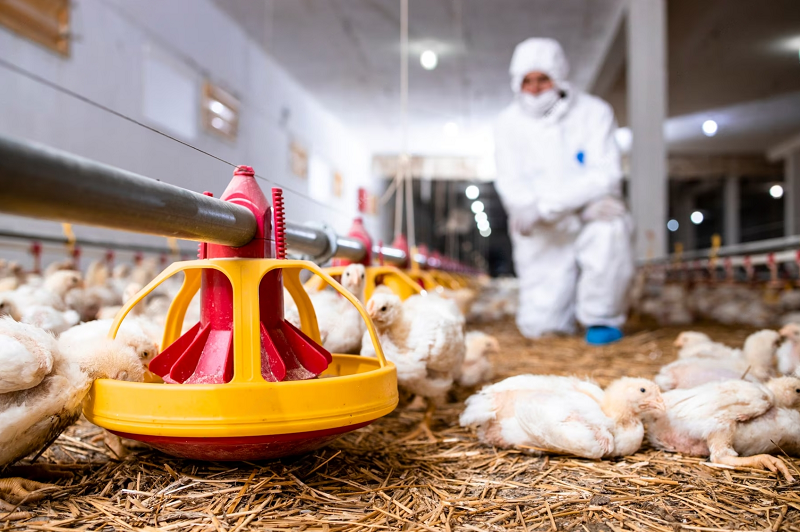
British poultry producers confronted a sobering reality this week: prepare for what may become one of the most challenging avian influenza seasons on record. Eight new cases were confirmed across England, Wales, and Northern Ireland within the first three days of November alone, signaling the start of what experts warn could be a devastating outbreak period.
Speaking at the Egg and Poultry Industry Conference in Newport, Gwent, on November 3, Professor Ian Brown from the Pirbright Institute delivered a stark assessment of the current H5N1 strain. Brown, an internationally recognized avian virology expert, described the virus as "punching well above its weight" and characterized it as "the most dangerous highly pathogenic virus we've ever encountered".
The Scale of the Threat
The virulence of this strain cannot be overstated. Just one teaspoon of infected poultry feces contains enough viral particles to kill one million turkeys, Brown explained to the assembled industry representatives.
What makes this outbreak particularly concerning is its persistence. Wild bird cases have remained at consistent levels throughout the year, marking only the second time this pattern has occurred. This year-round presence of the virus in wild bird populations creates a continuous threat to commercial flocks.
By early November, the UK had already recorded 20 cases since October—matching the entire 2020-21 season's total. The trajectory suggests the country could equal or surpass the catastrophic "skyscraper" years of 2021-22 and 2022-23, when the industry saw unprecedented losses.
The situation extends beyond Britain's borders. Since October 2024, there have been 74 confirmed H5N1 cases reported across the UK, with 65 in England, three in Scotland, two in Wales, and four in Northern Ireland, plus one H5N5 case in England. Nearly 2.3 million birds have been culled since October 2024. Continental Europe, particularly the Baltic Sea region and Germany, has experienced an ongoing spike in outbreaks.
Biosecurity Remains the First Line of Defense
Brown emphasized that maintaining maximum biosecurity standards must remain the absolute priority for producers. However, he acknowledged a troubling trend: with the relentless pressure facing the industry, some degree of "biosecurity fatigue" may be setting in among producers who have maintained heightened vigilance for months or even years.
The economic strain on producers has been substantial, with taxpayers alone bearing significant compensation costs for culled flocks.
Vaccination: A Complex Solution
Vaccination has emerged as a more realistic option, Brown explained, though it comes with significant complications. France began mandatory vaccination of duck flocks in October 2023, making it the first European country to implement preventive vaccination on a large scale.
The French experience has shown promising results. Research published in Emerging Infectious Diseases predicted that 314-756 outbreaks were averted in France during the 2023-2024 season, representing a 96-99% reduction in outbreak size, likely attributable to the vaccination program.
However, the UK faces substantial barriers to implementing a similar program. Current EU protocols require ongoing monitoring of vaccinated birds every 30 days, and this surveillance would account for 44% of the estimated £345 million total cost of rolling out vaccination in the UK, according to the joint industry/government avian influenza task force.
Trade implications remain a critical concern. While the World Organization for Animal Health has recognized the need to consider vaccination and stated that its use should not be a barrier to trade, individual trading partners maintain their own restrictions.
The UK's avian influenza vaccination task force, established to explore vaccination options, continues to evaluate these complex factors. Brown noted growing international enthusiasm for vaccination despite these obstacles, but stressed that even with improved surveillance protocols, vaccination would not be a simple fix and cannot replace robust biosecurity measures.
Airborne Transmission Debate
Brown also addressed recent speculation about airborne spread of the virus. Previous studies by the Animal and Plant Health Agency around infected premises failed to find airborne infection beyond 12 meters from barns.
"I'm not saying it can't happen, but it is not the first port of call," Brown clarified, suggesting that direct and indirect contact remain the primary transmission routes.
Looking Forward: Building Resilience
Beyond immediate disease control measures, Brown advocated for longer-term strategies to build flock resilience. He suggested that lower stocking densities and using more resilient breeds might improve natural resistance to avian influenza.
"If we can improve other facets of our production so that we have really healthy birds, that vigor will contribute to increased resistance to infection, including to the virus," Brown explained. "Adding vaccination on top of those improvements is definitely going to be beneficial."
This integrated approach—combining traditional biosecurity, potential vaccination programs, and improved bird health—represents the industry's best hope for managing what has become an endemic threat rather than a seasonal challenge.
As the UK moves deeper into the high-risk winter season, the message from experts remains clear: vigilance cannot waver. With the virus circulating year-round in wild bird populations and showing no signs of abating, the poultry industry faces an ongoing battle that demands sustained attention, resources, and adaptation.